

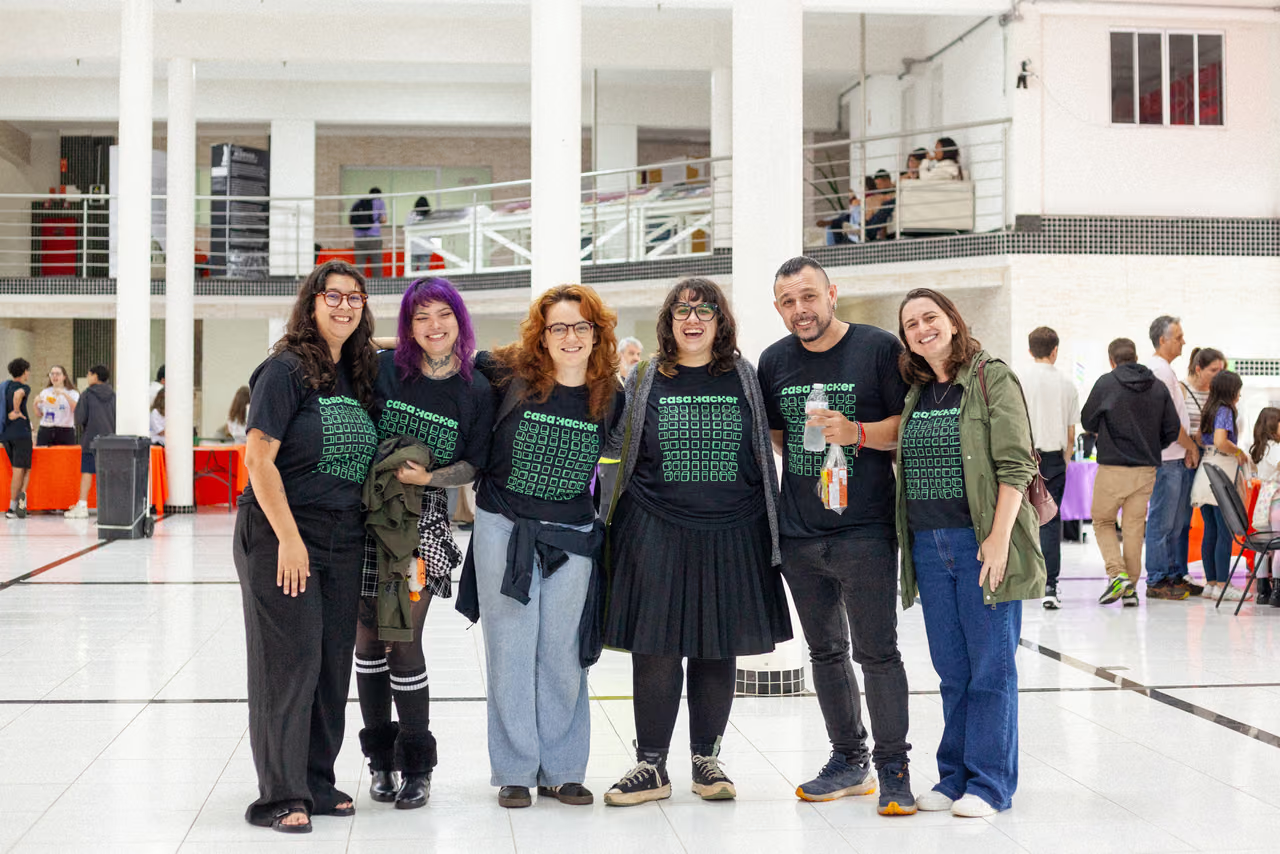
At Casa Hacker, we believe that an educator’s work is also built through relationships with other educators. Each professional arrives with their own experiences, knowledge, and ways of leading an activity. Creating spaces to share these experiences is, for us, a way to strengthen the team’s work and to continue developing our educators.
That is why we hold meetings where educators can talk about what is happening in their classes, present activities, share difficulties, and recount what they discovered during lessons. These are not just moments to organize work. They are spaces to look at what we do and think about our own practice.
In one of these meetings, for example, an educator presented an electronic component to the group, explaining how it works and its potential uses. At another time, an educator shared how she had led a 3D modeling and printing class. We also had a conversation about a programming language class and the choices made to work on that content with the students.
When educators share an experience, they also need to look back at what they did. By recounting how they led a class, they begin to notice the choices they made, the approaches that worked, the difficulties that arose, and what could have been done differently. The very narrative of the experience can trigger reflection on practice.
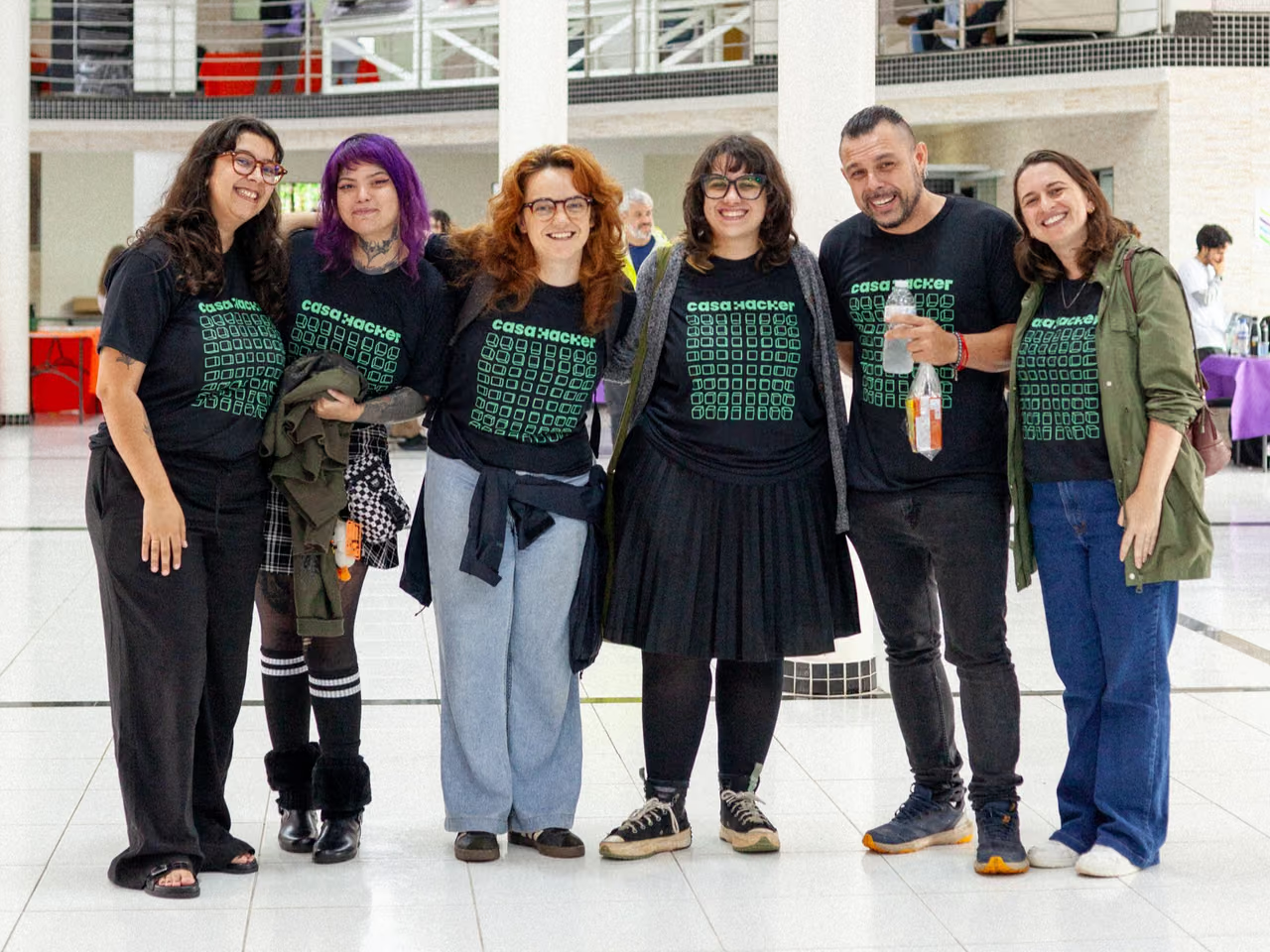 Casa Hacker educator team
It is in this sense that Paulo Freire’s idea of ongoing professional development helps us think about this movement. According to the author, educators develop continuously through practice and reflection upon it. There is no rigid separation between learning and teaching, between theory and practice. Educators are formed precisely through this movement of doing, reflecting on what was done, and returning to practice in a different way.
However, this reflection does not happen only individually. When another educator listens to an experience, they also begin to look at their own practice. They may realize they face a similar situation, that they would make a different choice, or that a strategy used by a colleague can help spark a new idea. At the same time, they may recognize that what worked in one class would not necessarily work the same way in another.
Exchange, therefore, does not simply mean reproducing someone else’s activity. It means putting different experiences into dialogue. What is similar? What is different? Why was a particular choice made? What can we learn from this experience? What other possibilities can we build?
It is precisely in this dialogue that theory and practice meet. Concrete experience brings issues to be pondered, and the knowledge educators already possess helps interpret these situations and seek new ways to act. Afterward, these new ideas return to practice, where they can be tested, modified, and discussed once again.
Freire synthesizes this understanding by stating that “who teaches learns while learning, and learns while teaching” (FREIRE, 2011). By educating, educators also transform themselves. By teaching, they learn. And by sharing their experience with other educators, they can find new ways to understand what they were already doing.
At Casa Hacker, this is what we strive to build during these moments of exchange. One educator presents an electronics activity, another shares an experience with 3D printing, another talks about programming. But what circulates among us is not just content or tools. We also share questions, choices, difficulties, solutions, and different ways of understanding educational work.
This exchange is especially important in a STEAM approach, which brings together different fields of knowledge and ways of doing things. We do not expect every educator to have all the answers or to master all possibilities alone. One person’s experience can help another think through an issue that came up in their classroom, just as a shared difficulty can turn into a collective inquiry.
We understand, therefore, that no educator produces their practice in isolation. It is built through daily experiences, but also through the relationships we establish with other educators. By talking about what we do, listening to what others do, and reflecting on these experiences, we expand our repertoire and create new possibilities for our work.
Bringing STEAM educators together means, in this sense, creating spaces to learn from one another. It means understanding that development does not only happen in courses or specific moments, but also in everyday life, when we stop to talk about what we do and think together about what we can still achieve.
References
FREIRE, Paulo. A educação na cidade. São Paulo: Cortez, 1991.
FREIRE, Paulo. Pedagogia da autonomia: saberes necessários à prática educativa. São Paulo: Paz e Terra, 2011.
LIBÂNEO, José Carlos. Didática. São Paulo: Cortez, 1994.