skip to content

PUBLICATIONS

Research, field reports and essays on technology, territories and citizenship.

page 01 / 13 · 114 publications

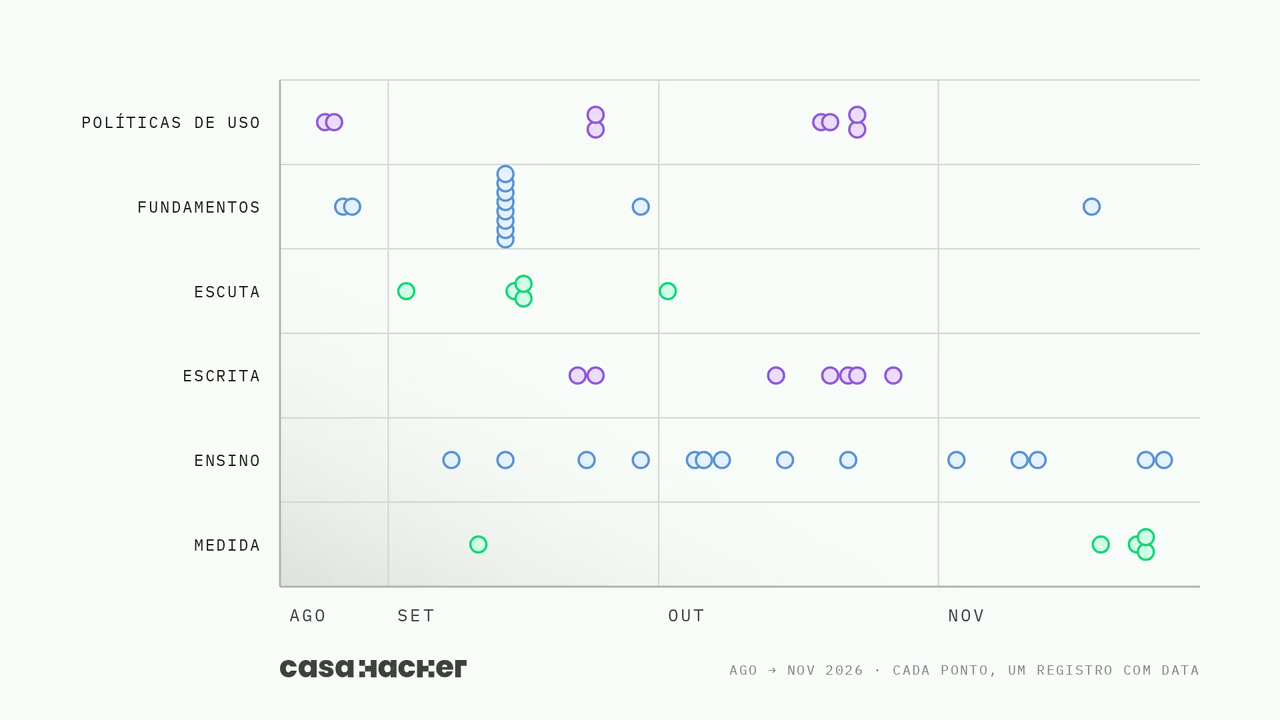
Dot plot on a light background showing the timeline of artificial intelligence work at Casa Hacker from August to November 2026. Six horizontal bands, one for each step (usage policies, fundamentals, listening, writing, teaching and measurement), contain hollow circles in violet, blue and green, one for each dated record. The highest stack, with eight circles on 14 September in the fundamentals band, marks the people who completed the course in the live cohort. In November, the dots concentrate on teaching and measurement. At the bottom left, the Casa Hacker logo.
FEATURED
Institutional Developmentinteligencia artificialgestao

The artificial intelligence that interests us works our way: skills, training and usage policies at Casa Hacker

In August, we shared how we prepared Casa Hacker's database before asking a single response from artificial intelligence. This text is the other half: the people. During a three-month artificial intelligence internship, we listened to the departments, wrote 17 skills for our artificial intelligence assistant, four manuals and 17 exercises, and evaluated usage with the team. The scores were good and the foundation is still small. We tell all, explaining each step for anyone who wants to do the same.

Raquel Garboggini, Geraldo Barros
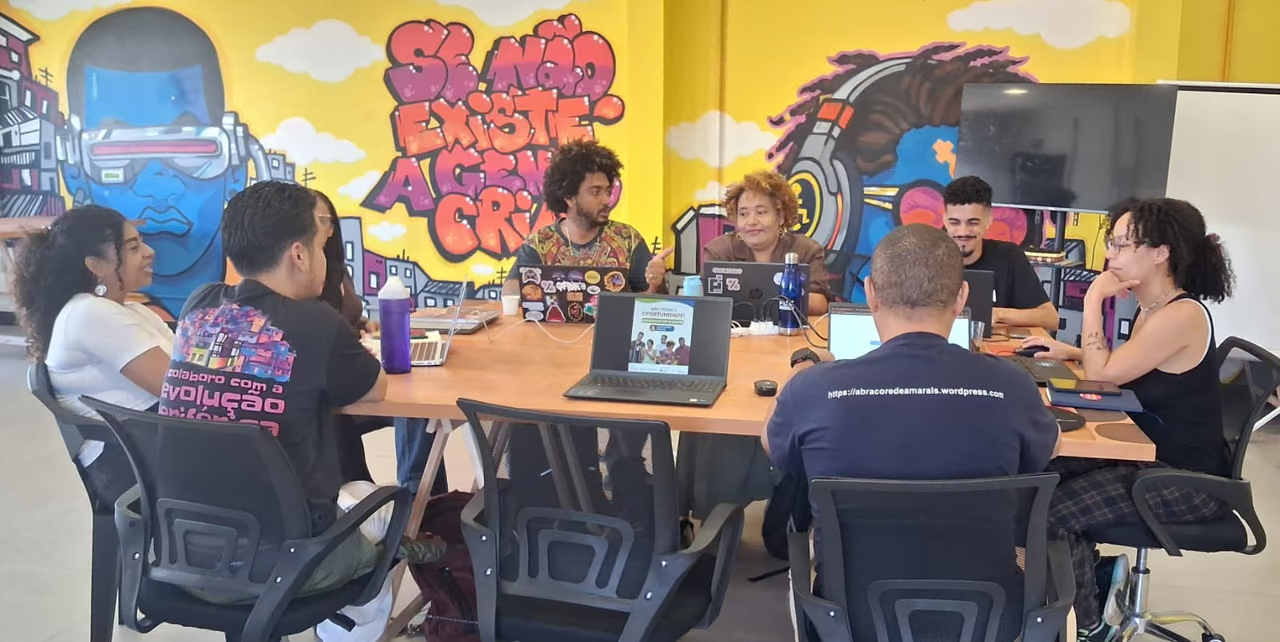
Group of people taking part in a meeting around a table with laptops and work materials. Participants are chatting in a room with walls decorated with colourful graffiti, including references to Black culture and identity.
Social Innovation

Shared governance in practice: how we build decisions, responsibilities and learnings in the Hubs de Cidadania Ativa

Shared governance goes beyond bringing organisations together around a project. In the experience of Hubs de Cidadania Ativa, it is built on a daily basis, through collective decisions, clear responsibilities, transparency, management tools and active participation. In this article, Marcelo Oliveira shares insights on how to integrate different organisations and territories without losing sight of the focus on the beneficiary.

Marcelo Oliveira
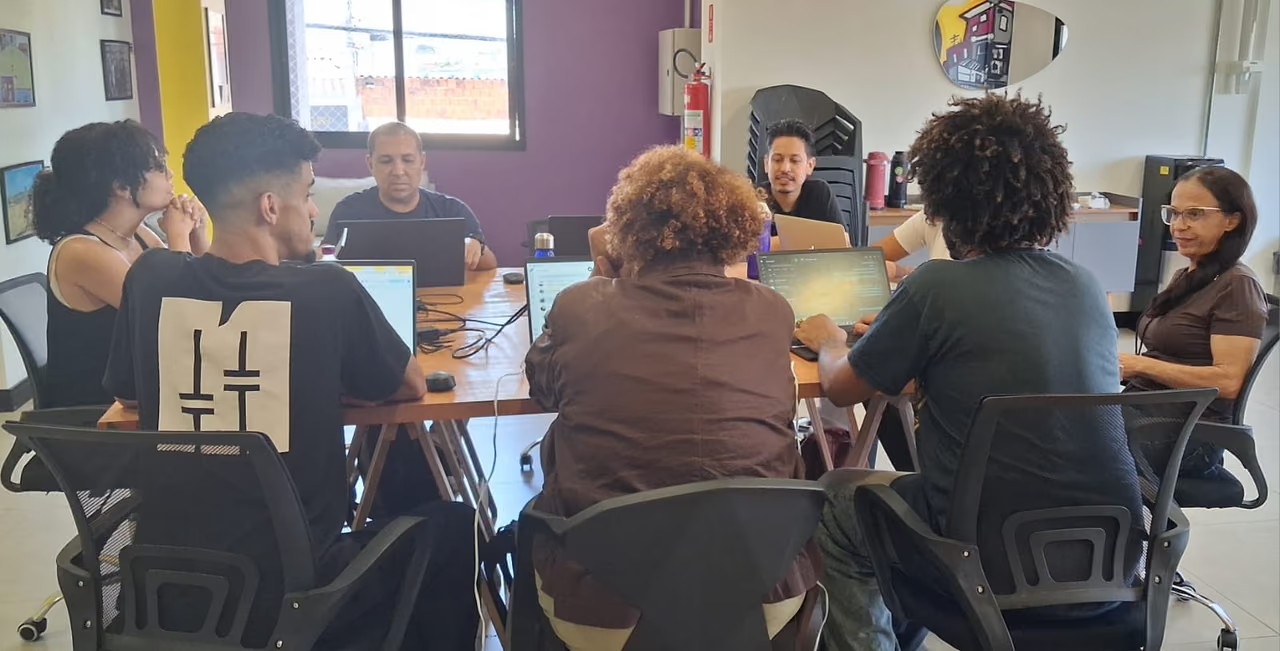
Group of seven people gathered around a table in a workspace. Participants are using laptops and taking part in a collective activity while talking and sharing information.
Social Innovation

Between what is proposed and what is achieved: the importance of budgeting in social impact projects

A consistent budget connects an initiative's objectives with the resources required for its implementation. Drawing on the experience of the Fundo de Cidadania Ativa 2026, the article explores the relationship between planning, costs, and execution, highlighting the importance of considering local territorial conditions, price variations, and the financial capacity of social impact projects.

Karla Marques
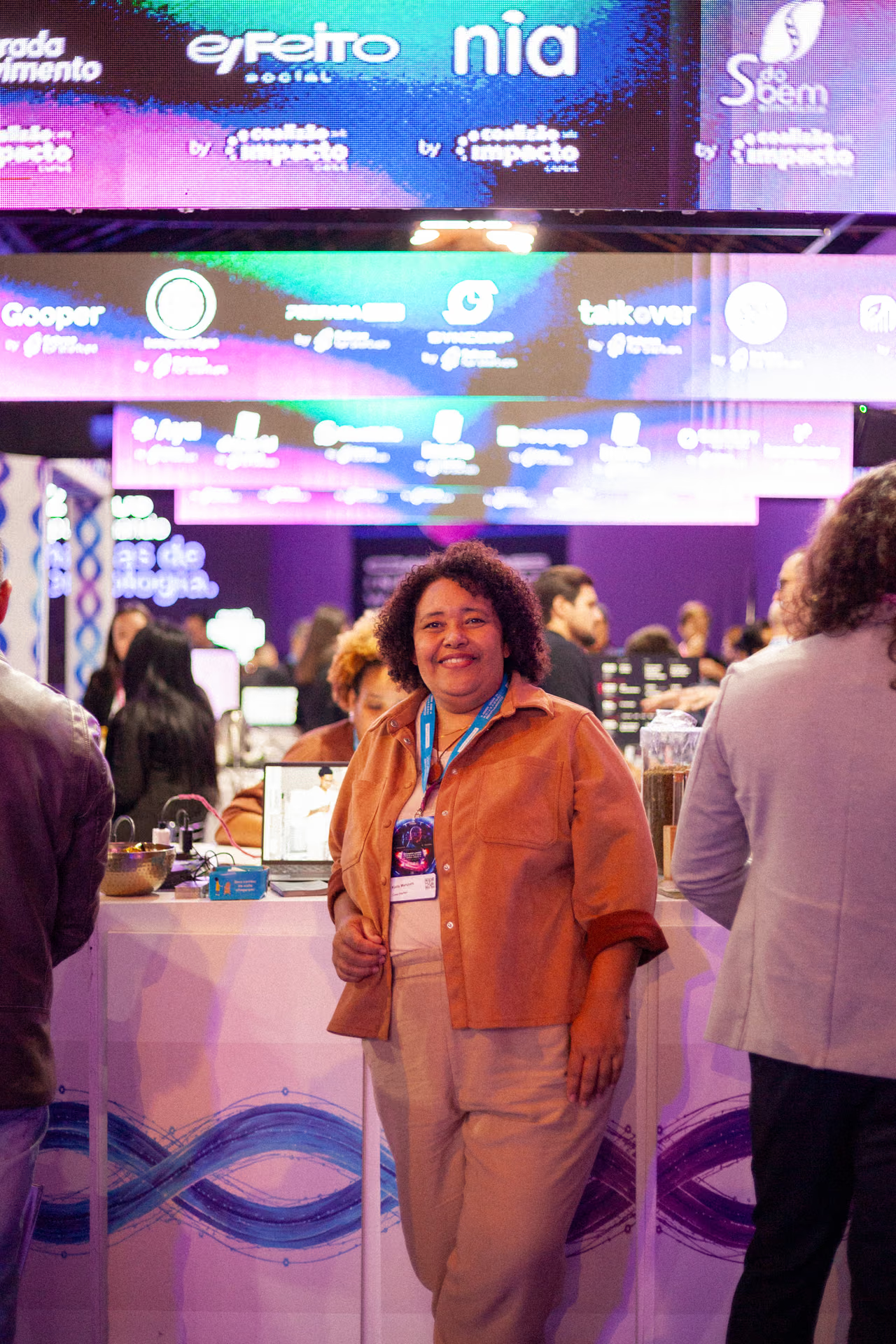
Karla Marques poses for a photograph in front of an exhibition counter during Campinas Innovation Week 2026. She is wearing a terracotta-toned shirt, beige trousers and an event badge. In the background, colourful panels display the branding of participating organisations and initiatives.

Self-Knowledge in Practice: When Knowledge and Territory Meet

The Self-Knowledge in Practice project, created by Karla Alexandra Marques, stemmed from a personal quest for emotional understanding and evolved into a methodology aimed at democratising access to self-knowledge. Carried out in Campo Grande with support from the Fundo da Quebrada, the project brought together tools from Neuro-Linguistic Programming, people management, philosophical anthropology and open therapy within an accessible training programme applied to everyday life. The experience also marked an important milestone in Karla's journey, transitioning from a beneficiary of training processes and programmes at Quebrada em Movimento to a professional role in social project management.

Celso Niger
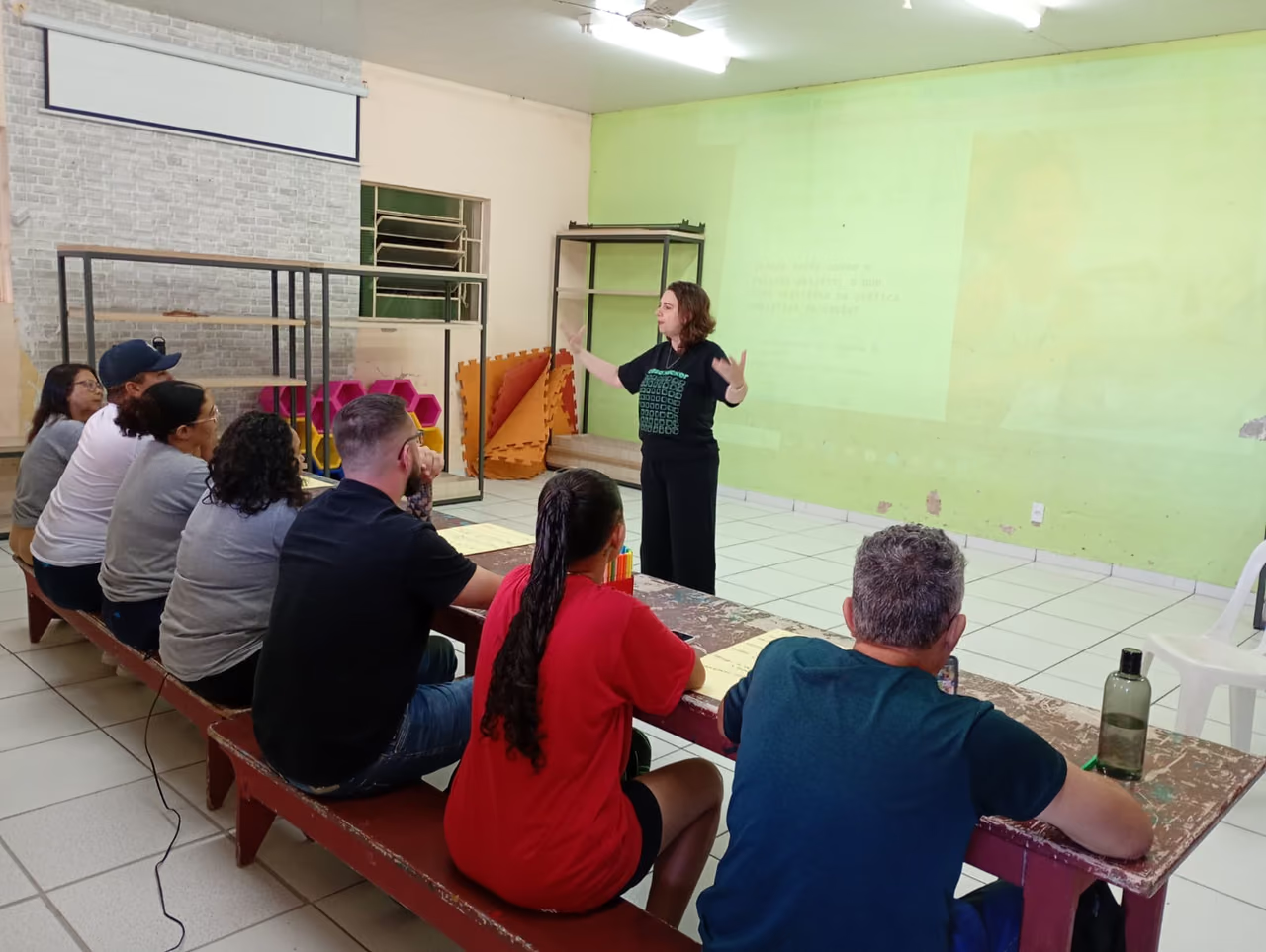
Participants in a collaborative activity record ideas on sheets of paper, using writing materials to develop proposals and organise thoughts.
STEAM Education

Educommunication in the territory, communicating and transforming reality

Through training with teachers from Vila Brandina, in Campinas, Casa Hacker works on digital skills, digital safety and educommunication. The project combines project-based learning and research into the territory, involving children and adolescents in producing an opinion poll and communication materials to share their perceptions with the community.

Aliene Villaça
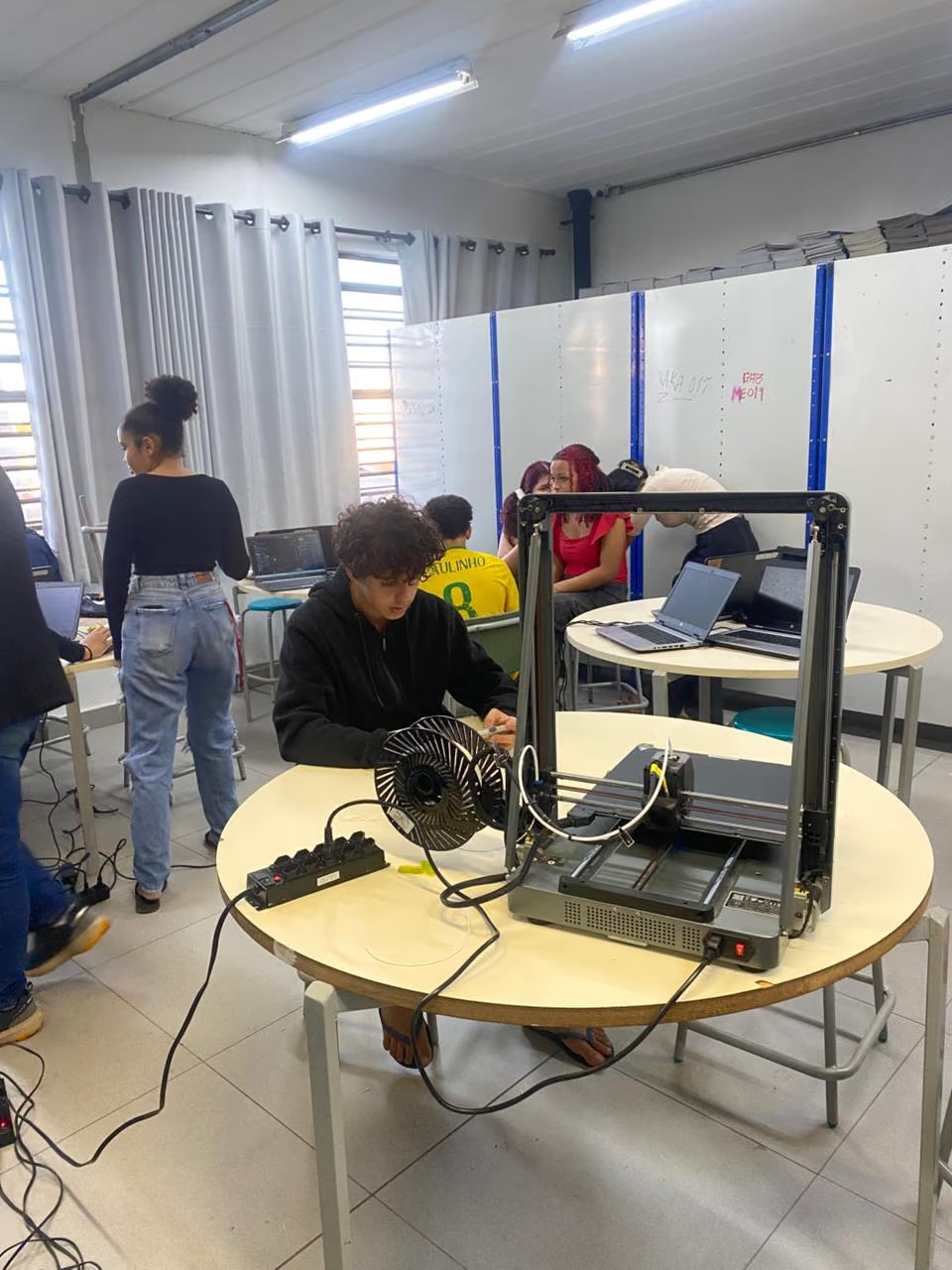
Students working on various activities in a room equipped with computers and 3D printers, exploring tools and the possibilities of technological creation.
STEAM Education

Hackathon in Nova Odessa: when an idea begins to take shape

Following months of training, students from the Hackerclubes in Nova Odessa have begun developing their final Hackathon projects. Starting from everyday problems observed in their surroundings, the groups created proposals involving sustainability, climate, recycling and emotional health. The process also brought valuable insights into experimentation, problem-solving, collaboration and the importance of handling errors and setbacks while building an idea.

Ocian Junior
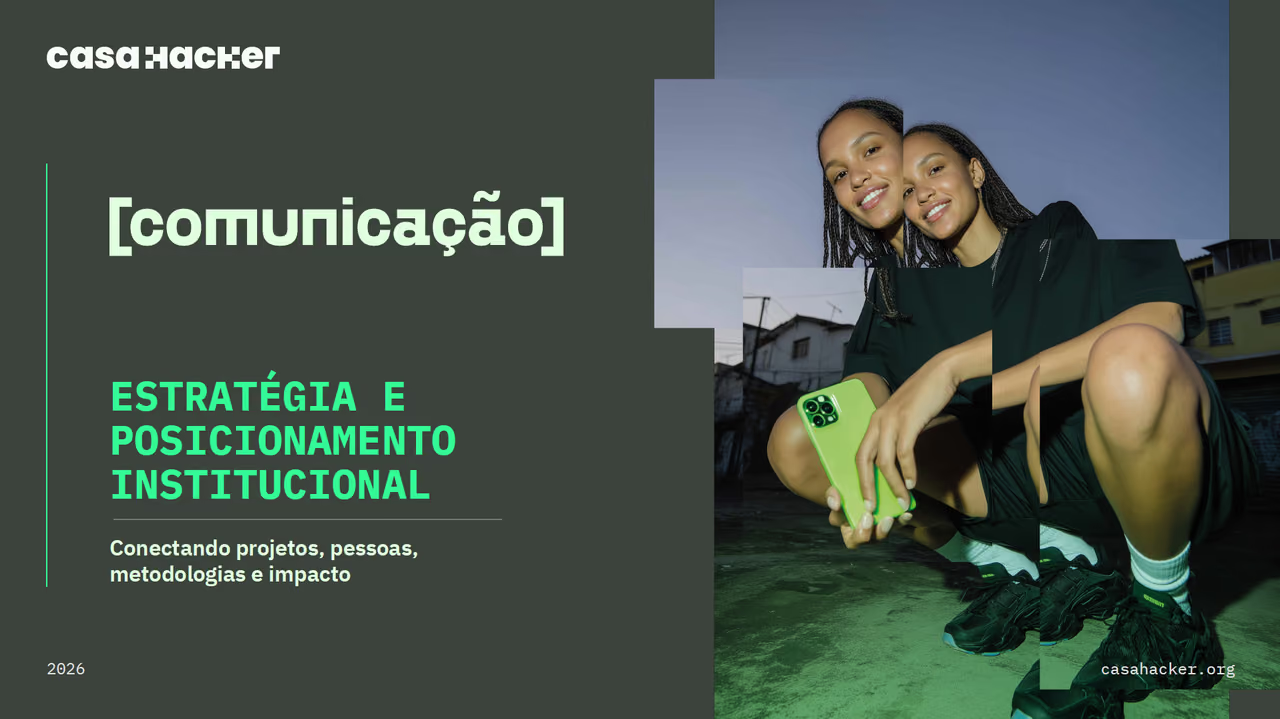
Cover of a Casa Hacker presentation titled "[communication] Institutional strategy and positioning", with the subtitle "Connecting projects, people, methodologies, and impact". To the right, there is a photograph of two young women in an urban environment, one of them holding a green cell phone.
Communication

Communication under construction: learnings from presenting our challenge

Casa Hacker's participation in the Third Sector Communication Forum opened space to share the challenge of structuring Communication amid the organization's transformations. The experience brought new provocations on positioning, institutional narratives, knowledge production, and the relationship between Communication and the projects developed in the territories.

Vitor Coelho
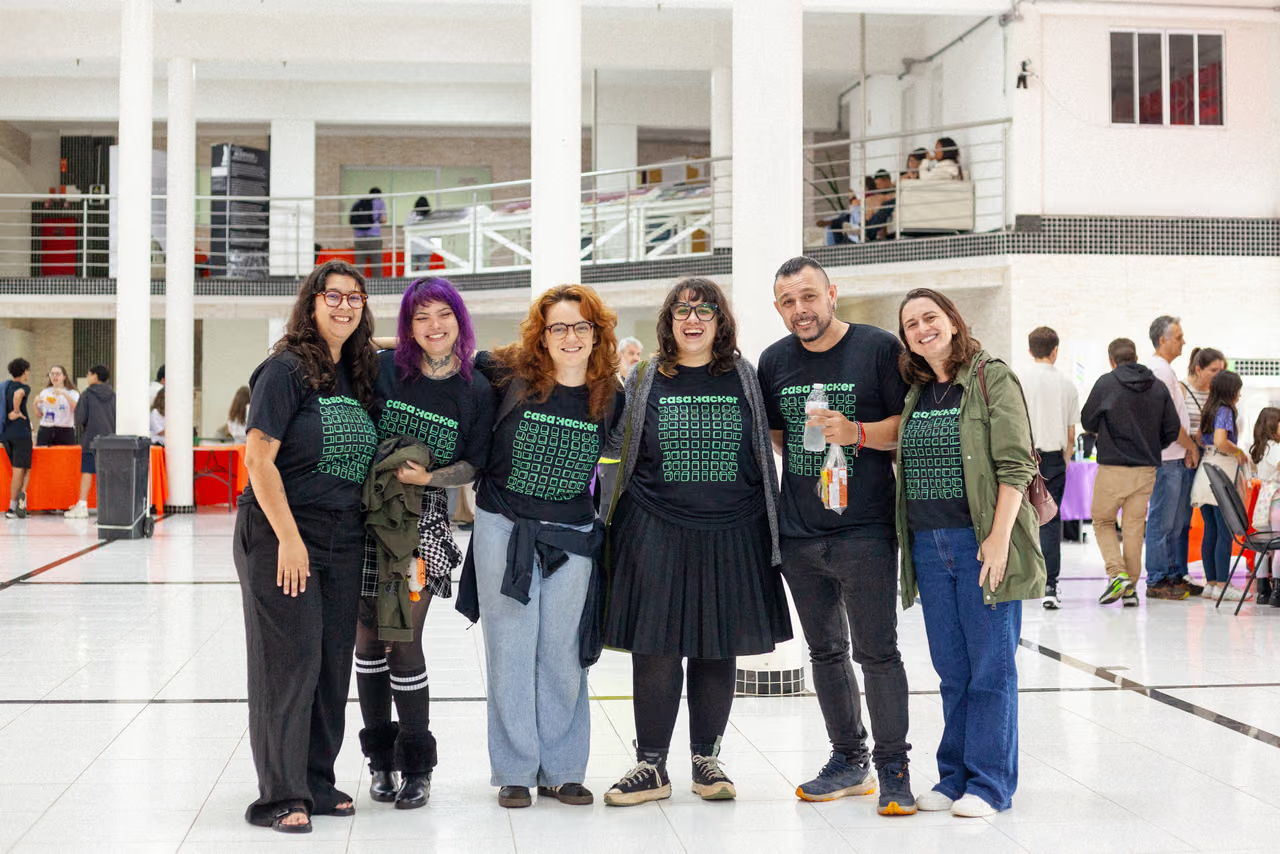
Six members of Casa Hacker pose together at the space of the II InterCOCEN Science Fair. They wear black t-shirts with the organization's visual identity and are in a hall with booths and event participants in the background.
STEAM Education

Connecting STEAM Educators: Learning from Practice and from Each Other

At Casa Hacker, meetings between educators create spaces to share experiences, challenges, activities, and lessons learned in the classroom. Through these exchanges and reflection on their own practice, educators expand their repertoires and collectively build new possibilities for STEAM education work.

Aliene Villaça

Donate

The link opens the BTG Pactual donation page, with the payment methods available there.

Donate in reais

From outside Brazil

For an international transfer, use the details below. Pick the currency: what changes between them is the intermediary bank.

The field names are in English because that is how they appear in your bank’s transfer form.

The same for both currencies

Creditor Agent (BICFI)BPABBRRJ
Creditor AgentBANCO BTG PACTUAL S.A.
Bank addressPraia de Botafogo, 501 — Rio de Janeiro — Brazil
IBAN / OtherBR8130306294000500002143176C1
BeneficiaryASSOCIACAO CASA HACKER
Beneficiary addressRua Doutor Renato Paes de Barros, 618 — Itaim Bibi — São Paulo — SP — 04530000 — Brasil

USD

Intermediary Agent (BICFI)CITIUS33
Intermediary AgentCITI, NEW YORK — US
BTG account with intermediary36317173

EUR

Intermediary Agent (BICFI)CHASDEFX
Intermediary AgentJP MORGAN FRANKFURT — DE
BTG account with intermediary6231431278

Remittance Information is optional: use it to identify the payment if you want to.

Check the details on your bank’s screen before confirming the transfer.

see the full page →