September was an unusual month in Nova Odessa.
After months of working with different technologies, tools and concepts, the time had come to put their knowledge into practice and start developing the final Hackathon projects.
The brief was simple to explain, but much harder to execute: each group had to start from a problem or a need, think of a solution, build an MVP and present how that idea could work in the real world.
Yet once we started putting ideas on paper, we realised that the Hackathon would be much more than assembling circuits, programming Arduinos, modelling 3D parts or preparing a presentation.
It would also be an exercise in persistence.
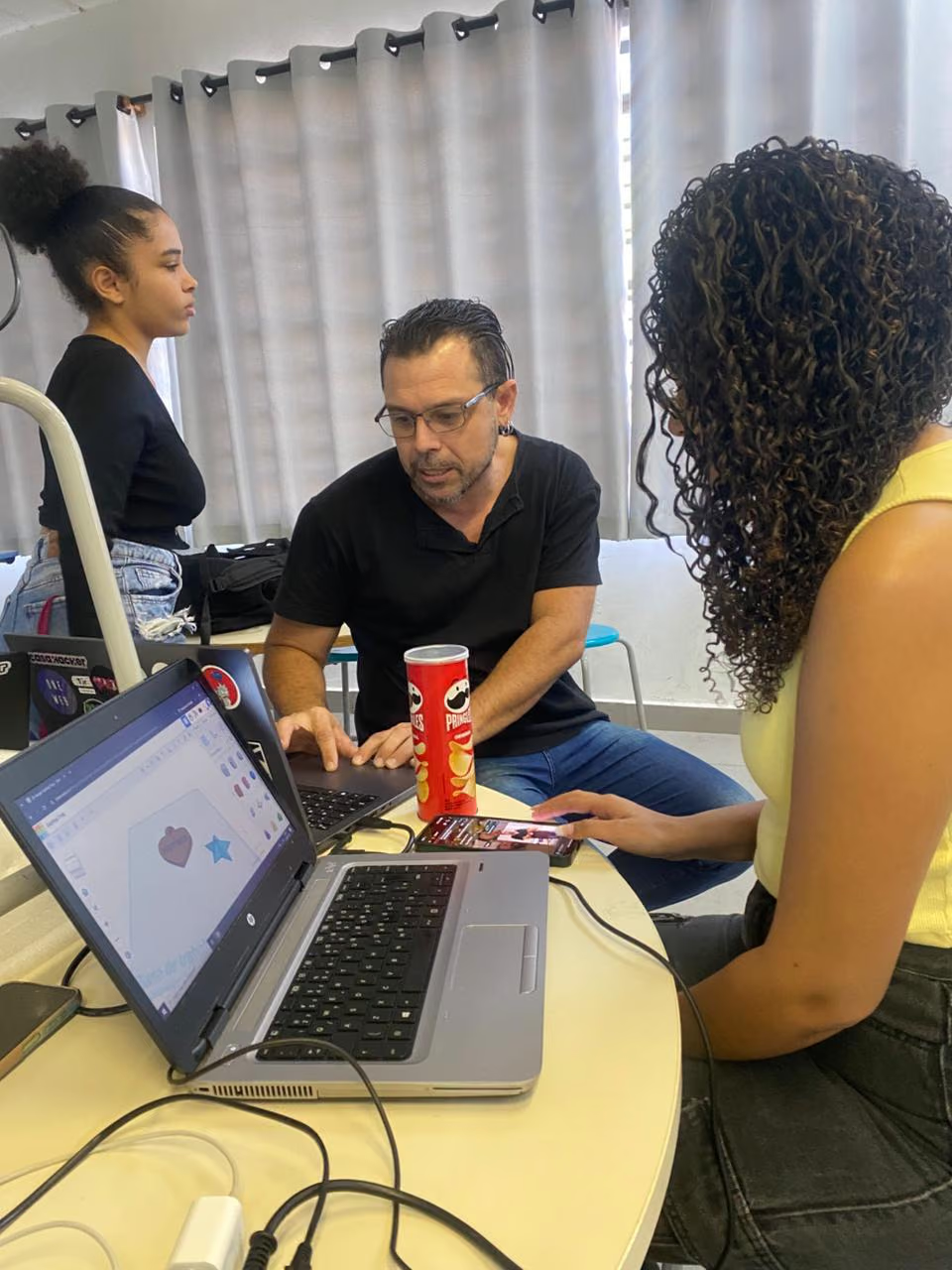
From idea to project
Each group began developing their own project, drawing on the various skills covered during classes.
The premise was that they should not build something just because it seemed interesting; they needed to understand what problem the project aimed to solve, who it would be useful for, and why that solution made sense.
That is why the Sustainable Development Goals (SDGs) also became part of the process. The students had to relate their ideas to real societal issues and realise that technology can be used for far more than creating a product. It can be used to observe a problem, devise a solution and try to improve a reality.
And that was precisely where the first difficulties arose. Imagining a project working in theory is one thing. Figuring out how to make it actually work is entirely another.
Clima Safe: observing our own city’s problems
The first group developed Clima Safe, proposing to build a weather station as an MVP.
The idea stemmed from a concern very close to the students’ own reality: shifting weather patterns, storms and excessively high temperatures.
Instead of looking for a distant problem, they looked at what was happening in their own municipality and began thinking about how technology could help monitor these conditions.
The project uses modules and sensors to collect information and turn it into accessible data.
The most interesting aspect of this project was the origin of the idea itself. They did not start by thinking about which technology they wanted to use; instead, they began by identifying a genuine, ongoing problem.
From there came the question: “What can we build to try and help?”. This question naturally led the group to sensors, programming, assembly, modelling and everything else needed to turn the initial idea into an MVP.
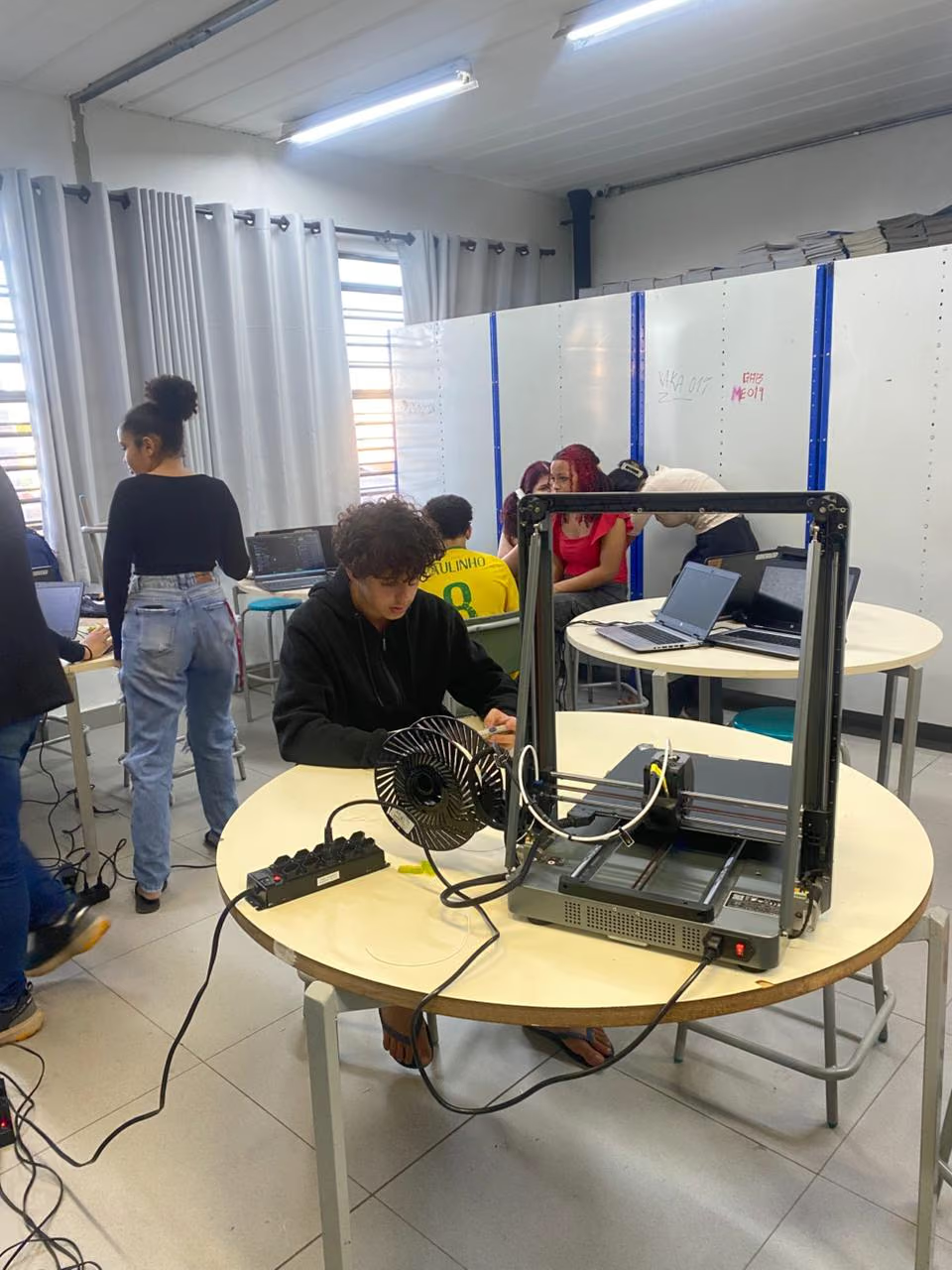
EnerStep: when an idea needs to leave the drawing board
The second group created EnerStep, a project aimed at generating sustainable energy through the pressure exerted on floors.
The idea arose from a very simple observation: watching the volume of people walking along school corridors. The group even measured the corridors and began making estimates based on the number of children passing through those spaces. From there, the possibility emerged of using footsteps to generate power.
This idea caught attention precisely because it started with something they could observe in everyday life.
Yet then came one of the biggest hurdles of any Hackathon: how do you turn an idea that seems to work in your head into something that can actually be built?
That question sparked discussions about materials, mechanics, assembly, power generation and the limitations of the prototype itself.
The project is still an MVP, but that is one of the main objectives of the process. The first prototype will not always work as imagined. Sometimes you need to swap a part, test another solution, rebuild a section or simply realise that a specific idea needs to be modified. Learning that is all part of the project.
EcoLanches: recycling, food and care
The third group developed EcoLanches, a proposal born out of a concern for stray animals and people experiencing social vulnerability.
The idea uses PET bottles as part of a credit system. A person could bring in a certain weight of recyclable material and, in return, receive credits that could be used to redeem a healthy snack from fridges scattered across the city.
Yet the project does not stop there.
The recyclable material could also feed back into the system itself. The PET bottles could be turned into filament for 3D printing, enabling the production of objects such as shelters for stray dogs. In this way, a bottle that would normally be thrown away could go through various stages and return to the community in the form of new products.
This proposal brings together several different issues in a single project: recycling, nutrition, technology, 3D printing and caring for animals and people.
And once again, the question that accompanies every group arose: how to make this actually work? After all, thinking about the system is one thing; defining how the bottles would be collected, processed, turned into filament, used in 3D printing and integrated into the rest of the proposal is quite another.
It is precisely in that gap between idea and execution that learning takes place.
A project about emotions
The fourth group decided to tackle an issue even closer to home: emotional health.
The proposal emerged from concerns surrounding anxiety attacks and the difficulty many people face in recognising their own moments of heightened stress.
The project’s idea is to develop a solution capable of identifying changes that might indicate peaks in anxiety, allowing individuals to notice these moments and seek help, or simply recognise that it might be time to take a break.
Once again, the goal is not to present a finished medical product. It is an MVP. A first model to study the concept, test possibilities and understand which technologies could be used to turn this notion into something functional.
This project also brought important discussions into the classroom, because talking about technology also means talking about people.
Hackathons are also about learning to cope with frustration
During the development of the projects, problems arose that are part of any creative process. Models that did not turn out as expected, code with bugs, parts that had to be remade, components that failed on the first try, 3D prints that went wrong, parts the printer failed to finish properly. And, above all, the need for patience.
Sometimes a student spends a long time working on a part and, after hours of printing, discovers it is no good. At other times, the code looks correct, but the project does not work. There are also situations where an idea seems brilliant at first, only for construction to reveal that it needs tweaking. That brings frustration, and that is completely normal.
The educator’s challenge at that moment is not simply to point out which line of code needs changing or which part needs reprinting. It is to help the student understand that making mistakes during development does not mean the project has failed. It means we are figuring out how to make it work.
The challenge is not always technical
Throughout this process, we also encountered a reality that never shows up when you only look at the final project.
Students come into the classroom carrying their own stories. Family troubles, worries, insecurities, emotional struggles and situations that often go far beyond what we are working on technically that day.
That is why being an educator in this process also means knowing when a student is not simply struggling with an activity. Sometimes something is happening outside the classroom that directly interferes with their concentration, patience, willingness to work in a group, or even their ability to handle a minor setback.
This does not mean the educator has to fix all those problems. But it does mean we must understand we are working with people before we work with technology. At times, it is necessary to pause, talk, listen and reorganise the activity. Afterwards, we return to the code, the modelling, the circuit and the project. That is also a vital part of the educational process.
The home stretch
We are now reaching the final stretch. And a feeling is cropping up more and more among the groups: will we manage to finish in time?
Days grow shorter, and projects need more tweaking. Certain parts must be remade, and code needs testing. Prototypes require assembly, and presentations need preparation.
That idea which seemed so simple a few weeks ago now reveals its full complexity. Yet perhaps that is one of the greatest lessons of the Hackathon. A project is not born ready. It begins as an idea, goes through doubts, mistakes, trials, changes, frustrations and fresh attempts until it starts taking shape. And it is through this process that students realise they are capable of building something that previously existed only in their imaginations.
Our role at this point is also to remind them of that. When the thought “it won’t work” creeps in, the question follows: what do we need to do to try again? When a part breaks: what can we change? When the code throws up an error: let’s track down the problem. When the deadline looks tight: let’s organise what is left to do.
We do not yet know exactly how each project will look at the end. And perhaps that is one of the most exciting parts of the whole process. Because we are still building.
Yet one thing has already happened. The ideas are no longer confined to the students’ minds; they have begun to take shape through code, sensors, electronic components, 3D printed parts, calculations, research, discussions and a lot of teamwork.
Now it is the home stretch. Doubts still linger. Difficulties remain. There is still plenty to do. But they are capable. And we will keep working so that every group can look at their own project at the end and realise that it all began as nothing more than an idea.
And that they were the ones who brought that idea to life.