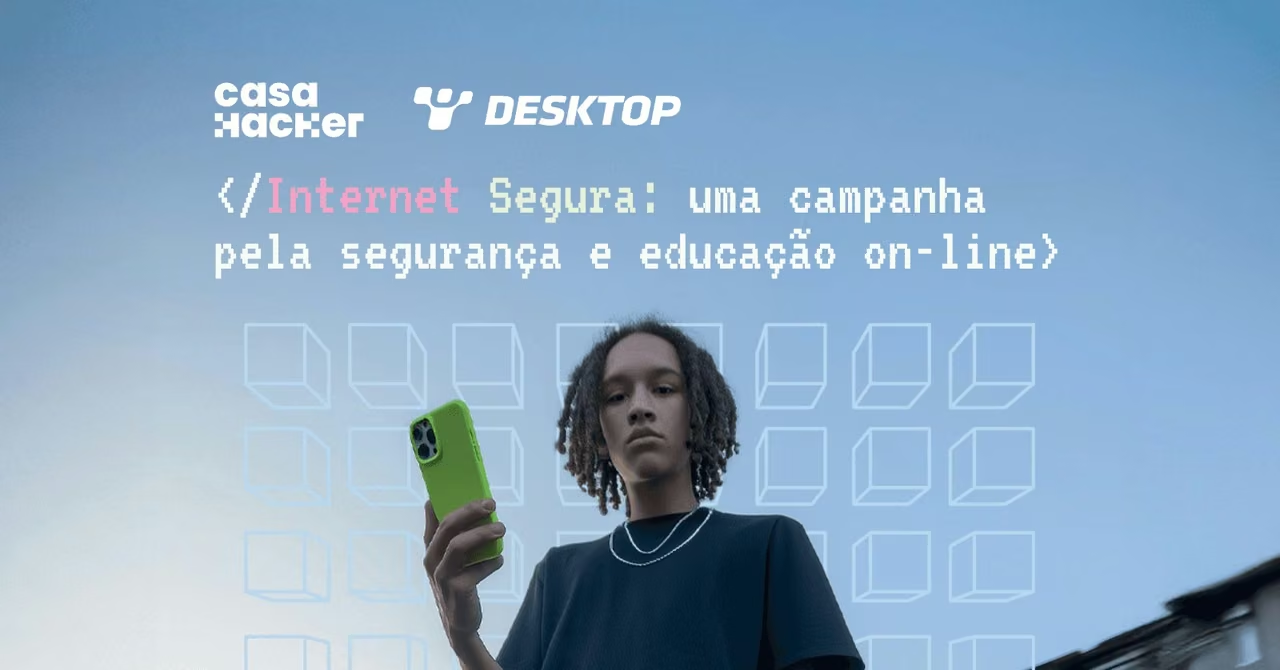
A November initiative to raise awareness among education professionals interested in tackling online risks and promoting digital citizenship in schools and their communities
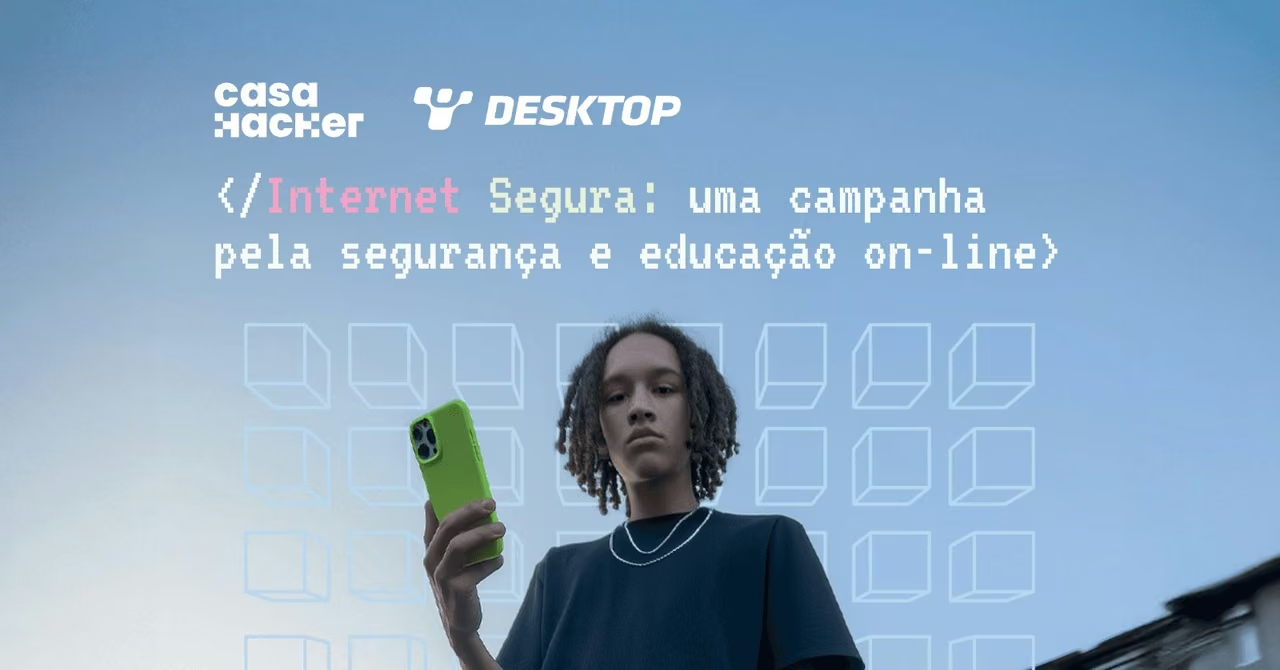
Internet Segura: free training for educators on digital security. A partnership between Casa Hacker and Desktop. Registration open for Sumaré (13/11) and Campinas (17/11).
Casa Hacker and Desktop – voted the best internet provider in the State of São Paulo and present in 200 cities across the interior and coast of São Paulo – are announcing the project Internet Segura: Formação de Educadores. The initiative will offer free, in-person training to teachers, community leaders and anyone else interested in spreading good online security practices on 13 and 17 November. A total of 150 places will be made available for the activities.
These free training sessions aim to provide tools that allow educators to recognise, prevent and confront risks such as cyberbullying, online scams, disinformation and undue exposure, as well as to contribute to reducing social inequalities, since digital education is essential in the formation of young people.
For Gustavo Redondo, Desktop’s director of ESG, People & Management and Integrations, projects like this widen awareness of digital security and strengthen the responsible use of technology. “This project with Casa Hacker is part of our commitment to building and strengthening an ethical, responsible and accessible network for everyone, especially children and young people. We believe that training educators is an important step and confirms everyone’s commitment to digital security,” he says.
According to Casa Hacker’s executive director, Geraldo Barros, “It is not enough simply to install filters or ban access to the Internet: we need to educate, to talk with one another and to build a safe ecosystem together. That is why, alongside technical concepts, each session offers practices and strategies grounded in the reality of schools and peripheral territories.”
The initiative sets out to prepare educators and leaders to guide their communities through the challenges of the digital age. Around 150 people are expected to take part, receiving reliable information from experienced, trained professionals on good privacy practices, tackling cyberbullying, confronting hate speech and disinformation, and promoting digital wellbeing.
The project connects directly to the Estatuto da Criança e do Adolescente (ECA) and to the Constituição Federal, reinforcing the full protection of this group. In this context, Desktop and Casa Hacker take an active role in responsible digital inclusion initiatives, by providing educational materials, guides and awareness programmes on the safe use of technology.
Those interested can register through the link up until the days of the events, subject to availability of places: Registration for Campinas and registration for Sumaré.
Social commitment
The initiative is part of Desktop’s Corporate Social Responsibility and Human Rights agenda, which grows out of the company’s ESG and sustainability strategies. That agenda is aligned with six Sustainable Development Goals (SDGs) that the company has defined as priorities, namely: SDG 8, which promotes inclusive economic growth and decent, productive employment; SDG 9, which strengthens resilient infrastructure, sustainable industrialisation and innovation; SDG 10, which directs efforts towards reducing inequalities; SDG 16, which encourages more peaceful societies and accountable institutions; SDG 12, which fosters sustainable production and consumption patterns; and SDG 5, which upholds gender equality and the empowerment of women and girls.
Through this training, Desktop and Casa Hacker strengthen their commitment to building a fairer, safer and more inclusive digital environment, aligned with the global targets of the 2030 Agenda.
About Desktop
Desktop is the telecommunications company voted twice (2024 and 2025) the Best Internet in the State of São Paulo by the Prêmio Melhor Escolha (link). The company has also received the Certificação Experience for four consecutive years, for its closeness to and relationship with its customers, recognised by the Experience Awards. It has one of the sector’s highest rates of organic customer growth (in percentage terms vs the TOP 10 telecommunications companies in Brazil, and in absolute volumes within its area of operation), according to ANATEL data. Founded in 1997 in the city of Sumaré, in the interior of São Paulo, the company offers internet access 100% via optical fibre.
Present in 200 cities, Desktop has more than 4,500 employees and connects more than 1.1 million residential and corporate customers through 57,000 kilometres of its own optical fibre networks. Recognised among the best companies in the sector, Desktop maintains high standards of excellence in customer service.
Since 21 July 2021, the company has been listed on the Brazilian stock exchange.
About Casa Hacker Casa Hacker is a non-profit organisation, founded and led by people from the periphery and born in the periphery of Campinas (SP). Operating in Campinas, São Paulo and Rio de Janeiro, its mission is to make technology and social innovation a place for everyone, through digital education and education in STEAM (Science, Technology, Engineering, Arts and Mathematics). It believes in education as a tool of transformation towards building a fairer and more sustainable future. In recent years, more than 120 young people have been trained in STEAM; more than 400 people – from children and adolescents to older adults – have been digitally included through basic digital education programmes across more than 10 peripheral territories. The organisation has also trained more than 600 educators to protect the privacy and safety of children and adolescents online, and has passed on more than R$ 500 mil directly to organisations, impact leaders and collectives for the development of innovative social impact initiatives in the peripheries.
About Casa Hacker Casa Hacker is a non-profit organisation, founded and led by people from the periphery and born in the periphery of Campinas (SP). Operating in Campinas, São Paulo and Rio de Janeiro, its mission is to make technology and social innovation a place for everyone, through digital education and education in STEAM (Science, Technology, Engineering, Arts and Mathematics). It believes in education as a tool of transformation towards building a fairer and more sustainable future. In recent years, more than 120 young people have been trained in STEAM; more than 400 people – from children and adolescents to older adults – have been digitally included through basic digital education programmes across more than 10 peripheral territories. The organisation has also trained more than 80 educators to protect the privacy and safety of children and adolescents online, and has passed on more than R$ 500 mil directly to organisations, impact leaders and collectives for the development of innovative social impact initiatives in the peripheries.
Press relations: Vira Comunicação Luiz Felipe Leite E-mail: luizfelipe.leite@viracomunicacao.com.br
Referências
-
BRASIL. Lei nº 8.069, de 13 de julho de 1990. Dispõe sobre o Estatuto da Criança e do Adolescente (ECA). Brasília: Diário Oficial da União.
-
BRASIL. Constituição da República Federativa do Brasil de 1988. Brasília: Diário Oficial da União.
-
ORGANIZAÇÃO DAS NAÇÕES UNIDAS (ONU). Objetivos de Desenvolvimento Sustentável: Agenda 2030. ODS 5, 8, 9, 10, 12 e 16.