
*Geraldo Barros, Executive Director of Casa Hacker, takes part in the event “Territórios em Movimento: cidade próspera para todos”, held by Fundação FEAC in Campinas, discussing community strategies for territorial development and social inclusion.
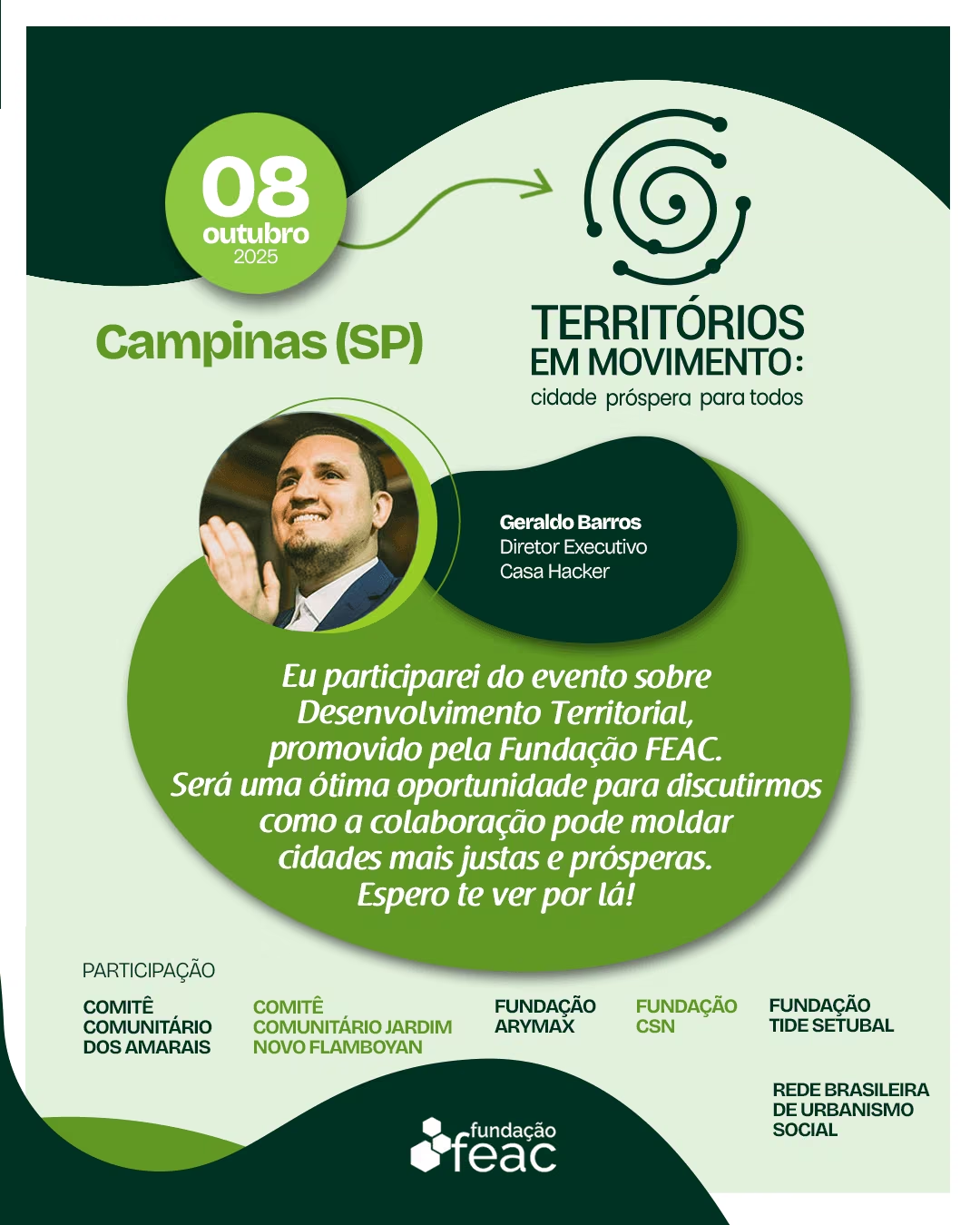
Promotional card for the event “Territórios em Movimento”, held on 8 October 2025 in Campinas (SP) by Fundação FEAC. At the top left is the date of the event highlighted in a green circle. In the centre, the blurred photo of Geraldo Barros, Executive Director of Casa Hacker, with his name and job title. Below, a text invites people to take part and to discuss how collaboration can make cities fairer and more prosperous. At the foot, the names of the participating organisations and the Fundação FEAC logo appear. The predominant colours are light green, dark green and white.*
The Executive Director of Casa Hacker, Geraldo Barros, took part in the event “Territórios em Movimento: Cidade Próspera para Todos”, organised by Fundação FEAC, which brought together specialists and community leaders to debate the paths towards a fairer and more inclusive city. The event took place yesterday, 8 October, in Campinas (SP), and also marked the launch of the first-of-its-kind study by Fundação FEAC and Quaest on quality of life and inequality in the city.
Barros joined the panel “Private social investment and the non-profit sector as drivers of territorial development: models of joint action between companies and organisations for territorial impact at scale”, alongside Mariana Almeida (Fundação Tide Setúbal) and Rafael Moya (Fundação FEAC), facilitated by Suellen Carvalho (Instituto Foz).
Founder of Casa Hacker, a reference in STEAM education in peripheral territories of Campinas, Geraldo has an international track record, with notable spells at the Mozilla Foundation, where he worked as a researcher on the Internet Health Report and created the Privacy Board Game — and in 2016 he was recognised by Mozilla Network 50 for his digital social impact.
Casa Hacker’s analysis and contributions on models of joint action between companies and organisations for territorial impact at scale
During the debate, Geraldo Barros contributed an in-depth analysis of the challenges of territorial development on the outskirts, in line with the data revealed by the study launched at the event. The study finds that, although 90% of Campinas residents consider Campinas a good city to live in, 65% recognise deep social inequalities, with health, housing, transport and safety as the greatest challenges. Barros stressed that public policies and investment still do not reach the outskirts evenly, which reinforces historical disparities already keenly felt by the population there.
Geraldo started from the study’s findings to stress that the outskirts should be seen for their potential, and not only for what they lack. He explained clearly how, in these territories, there is a dynamic ecosystem of innovation, led by young people, women and local leaders who create support networks, drive the solidarity economy and develop educational, cultural and social technology initiatives. Citing his experience of having been raised on the outskirts of Campo Grande (Campinas), Barros gave examples of how Casa Hacker projects — such as technology clubs in state schools, incubation of businesses on the outskirts and training in digital skills — can generate economic emancipation, self-esteem and a new form of community agency.
According to Barros, tackling inequality takes more than offering services; it requires investing in platforms that strengthen belonging, trust between neighbours (an index that is above the national average in Campinas, according to the study), and the generation of opportunities within the territories themselves. He also stressed that strategic action in science and technology can align the potential of the outskirts with the economy of the future, contributing to a model of local development with real and lasting impact.
Geraldo argued for the importance of rethinking private social investment, which historically has acted in a piecemeal way, with isolated initiatives sometimes disconnected from the social fabric, and turning it towards alliances with the non-profit sector and with organisations legitimated within the territories, investing in continuous social infrastructure, leadership training and support for impact businesses. He stressed that only with proximity, active listening and plural partnerships will it be possible to move from diagnosis to transformation.
Barros concluded with a reflection: “When we encourage community participation, STEAM education and digital inclusion, we are not merely responding to a deficiency, but revealing and amplifying talents that already exist on the outskirts. Territorial development is more than building infrastructure; it is activating living ecosystems of innovation, belonging and justice.”
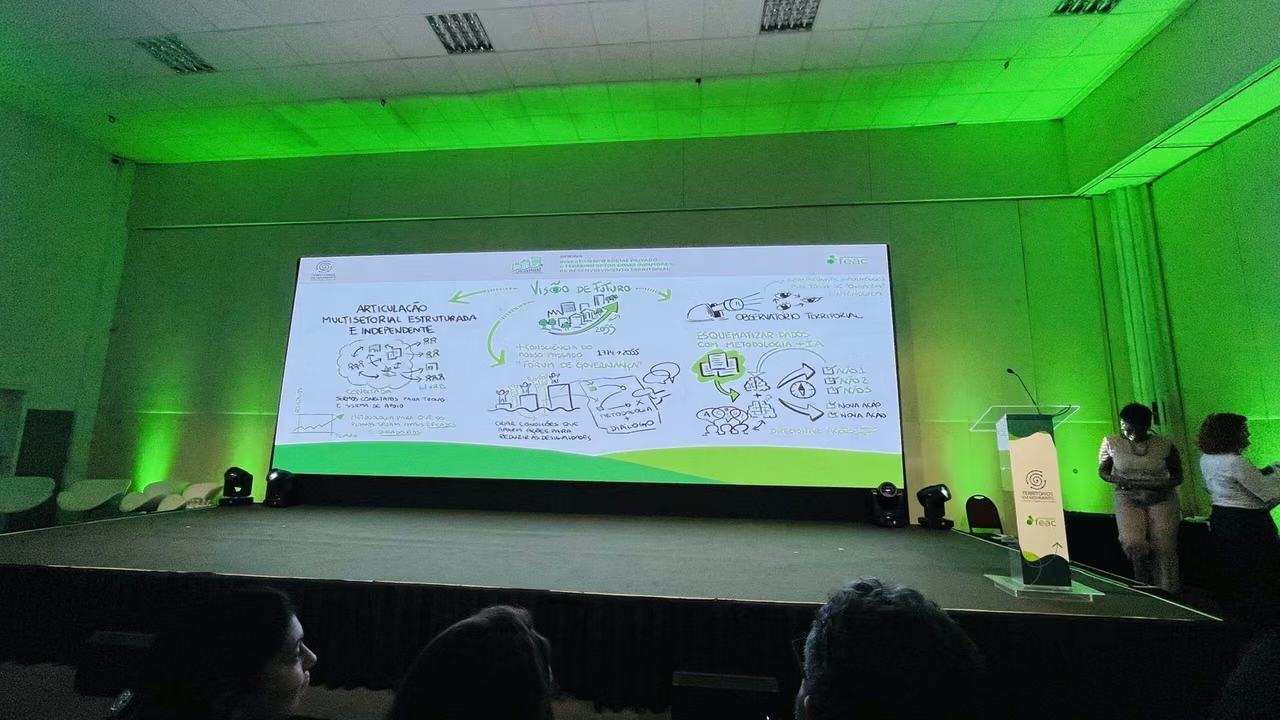
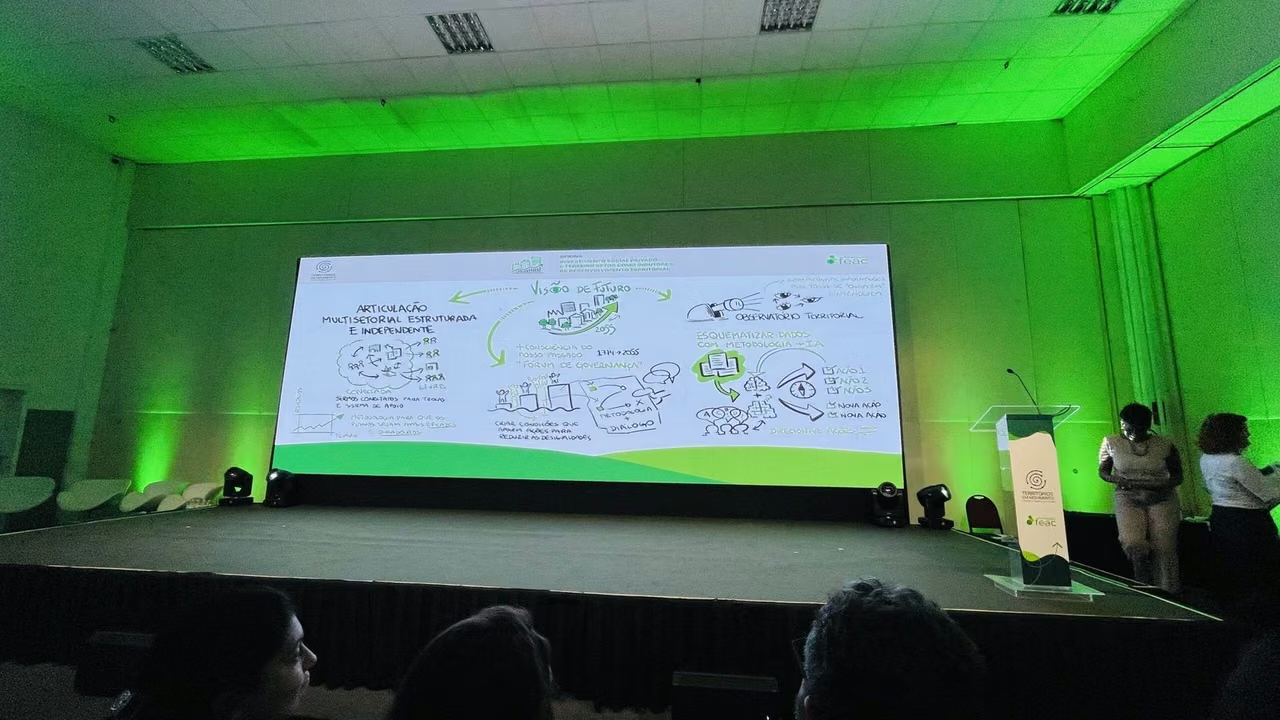
Photo of the main stage of the Territórios em Movimento event, under intense green lighting. On the large screen in the centre there is a hand-drawn visual chart with titles and flows, including terms such as: “Articulação Multissetorial Estruturada e Independente”, “Visão de Futuro 2055”, “Observatório Territorial” and “Esquematizar dados com metodologia + IA”. On the right there is a transparent lectern with the event logo and two people in profile near it. White chairs are lined up to the left of the stage. The room is spacious, with a white ceiling and fluorescent lights.
The Territórios em Movimento movement
More than an event, Territórios em Movimento is a national coalition that connects government, companies, the non-profit sector, universities and civil society, seeking concrete answers to the great urban challenges of the 21st century: decent income, effective public policies, differences between neighbourhoods, access to health, affordable transport and dignified housing.
The socio-territorial approach adopted holds that well-being depends on the convergence of physical, social, economic and symbolic capital, fostering belonging, network building, autonomy and the strengthening of each community’s potential.
**Main thematic debates
-
The city for everyone**
-
Generating income in the territories
-
Healthy, safe communities with social bonds
-
Private social investment and the non-profit sector as drivers of territorial development
First-of-its-kind study: quality of life and inequality in Campinas
The study launched yesterday, during the event, reveals that 65% of residents recognise marked inequalities in Campinas, especially in access to health, housing and job opportunities, with perceptions of prosperity shaped by race and gender. The study also shows high levels of trust and local belonging, but warns of disparities in the inclusion of people with disabilities and low-income residents. These data reinforced the urgency of the agendas discussed by Geraldo Barros and the other panellists.
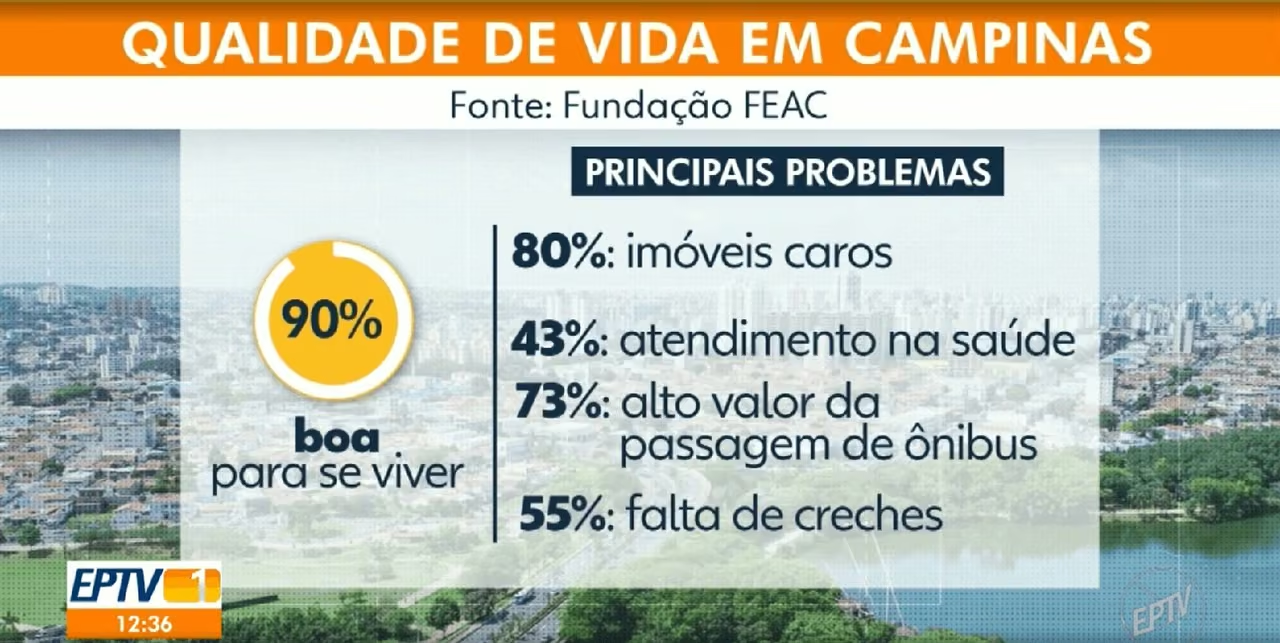
The image presents statistics on quality of life in Campinas, according to research by Fundação FEAC. At the top, the highlighted title is “QUALIDADE DE VIDA EM CAMPINAS”. Just below it reads “Fonte: Fundação FEAC”. In the centre left there is a yellow circle with the text “90% boa para se viver”. On the right, a list sets out the main problems reported by the population: 80% expensive property, 43% healthcare provision, 73% high bus fares and 55% lack of nurseries. The foot includes the EPTV 1 logo and the time 12:36, over an aerial background image of the city of Campinas.
Casa Hacker’s presence reinforced, throughout the event, the commitment to transforming this picture not only with technological innovation, but above all with actions built collectively with — and starting from — those who live the outskirts every day.
The full programme remains available on the Fundação FEAC website.
About Casa Hacker: Casa Hacker is a non-profit organisation, founded and led by people from the outskirts, working in São Paulo, Campinas and Rio de Janeiro, dedicated to making technology and social innovation accessible to everyone, through STEAM education and the training of leaders with social and environmental impact. Casa Hacker believes in education as a tool of transformation and in young people as a central force in building a fairer, more sustainable future.
Press contact:
Vira Comunicação Luiz Felipe Leite Tel.: +55 19 98159-1344 E-mail: luizfelipe.leite@viracomunicacao.com.br
References
-
FUNDAÇÃO FEAC; QUAEST. Pesquisa sobre qualidade de vida e desigualdade em Campinas. Campinas: Fundação FEAC, 2025.
-
FUNDAÇÃO FEAC. Territórios em Movimento: Cidade Próspera para Todos. Campinas, 8 Oct. 2025. Available at: https://feac.org.br/territorios-em-movimento-cidade-prospera-para-todos/Programacao.html.
-
G1 CAMPINAS E REGIÃO. Campineiros aprovam qualidade de vida, mas 65% veem desigualdade na cidade, diz estudo. 8 Oct. 2025. Available at: https://g1.globo.com/sp/campinas-regiao/noticia/2025/10/08/campineiros-aprovam-qualidade-de-vida-mas-65percent-veem-desigualdade-na-cidade-diz-estudo.ghtml.