
Communicating is much more than transmitting information; it is about building bridges to bring people closer, giving visibility to stories, and strengthening voices that often find no space to be heard. When communication happens within a territory, it gains even more meaning and becomes a tool for connection, participation, and social transformation.
At Hub Quebrada em Movimento, located at Casa Maria de Nazaré, in the Campo Grande territory in Campinas/SP, communication exists to show why we are present. Recording activities, producing content, telling stories, and sharing results are actions that help bring the Hub closer to the community and make visible the initiatives, people, and dreams that drive the territory.
Every community is formed by stories; there are people who for years have developed actions, mobilized neighbors, created projects, promoted culture, encouraged sports, strengthened education, or simply found ways to contribute to improving the place where they live. Many of these initiatives happen far from the spotlight, which is why communicating increases the reach of these initiatives, reaching more people to contribute and participate.
When a community leader shares a testimony of their experience, a participant recounts what they learned in a training session, or when a project presents its impact on the territory, that story begins to reach other people. What might have previously been restricted to a group or a specific activity gains new paths of circulation.
It is in this process that communication becomes a tool for appreciation. Photographing, recording, interviewing, writing, and publishing are not just stages of content production. They are ways of preserving memories, giving visibility to initiatives, and showing that power is being built daily in the territory.

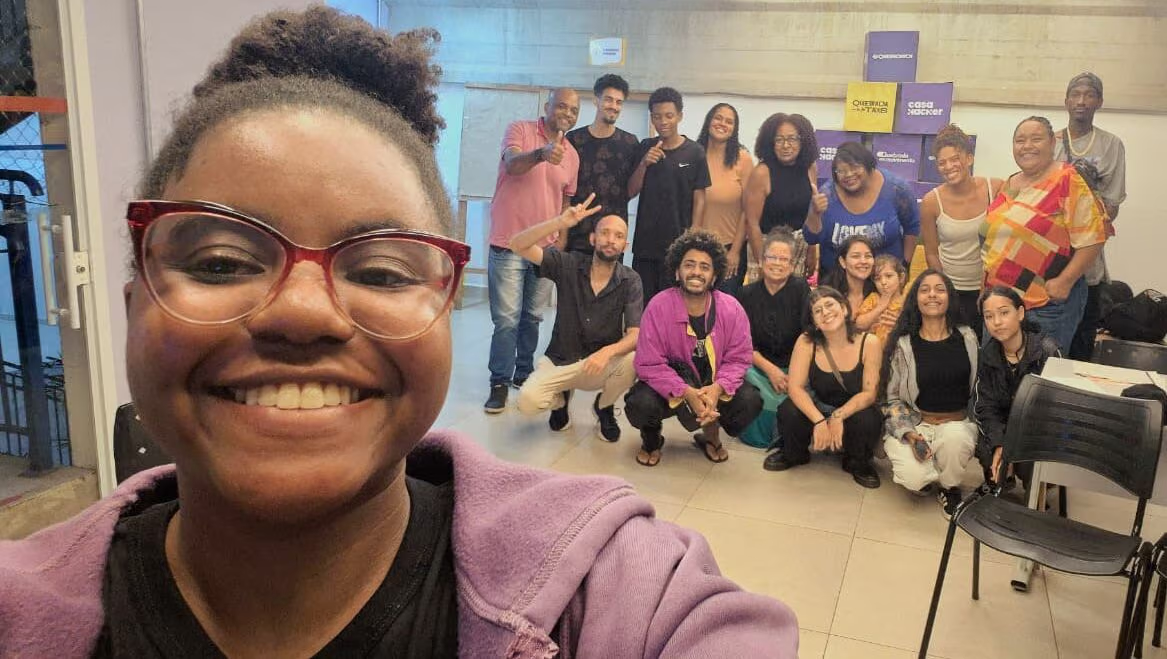
Technical team of Hub Quebrada em Movimento, students, and guests at the Training Journey.
Communication made with the territory and not just about it
Communication truly connected to the local reality needs to look at the territory with attention and respect; it is not just about talking about Campo Grande, but about listening to those who live there. Understanding their needs, recognizing their strengths, and building narratives that make sense to the community. Campo Grande is a powerful place because there are people making things happen; you find collectives, leaders, entrepreneurs, artists, educators, and residents creating solutions and possibilities for the community.
In the daily life of the Hub, this appears in event records, workshop testimonials, mobilization campaigns, and institutional content about the project. Each format has a function, but all can contribute to the same objective, which is connection and strengthening of the territory through social innovation.
When the Training Journey is publicized, someone might discover a new methodology that can add value to their projects. An open call opens possibilities for an initiative to get off the ground, and a community workshop can be the gateway to new learning and talents. This shows that communication also generates impact, because without publicity this result would not be possible.
Content published on social media may seem small in the face of a major social transformation, but it can be the first point of contact between a person and an opportunity. It can spark interest, encourage participation, or make someone realize that there is a space where their idea can be welcomed.
In the Hub’s communication work, being present at events and activities allows us to closely follow what is being built. The camera records moments, but the communicator’s gaze must go beyond the image, as every event, its participants, the support, and the technical team are part of this narrative.
The communicator helps organize and present these stories, but they belong to the territory, and it is the people who give meaning and importance to the Hub connecting everything and everyone. Therefore, impactful communication must be participatory and present.
It is important to create spaces for different voices to be present, avoiding a situation where only one perspective represents an entire community. The more people can tell their own experiences, the more diverse, true, and powerful the constructed narrative will be. This perspective also helps strengthen the feeling of belonging, because when people recognize themselves in the content, they realize that that space is also open for them to come and add their life experiences.
Therefore, communication at Hub Quebrada em Movimento helps show that social transformation does not happen only at major events; it happens in daily life, in relationships, and in the opportunities that are created for people to develop their ideas and participate in the changes they want to see. Recording these moments is important because they tell the stories of a territory in constant motion, transforming experiences into narratives and narratives into possibilities for impact.
Hub Quebrada em Movimento is a project supported by Casa Hacker, featuring a physical community space intended for all residents, leaders, initiatives, and organizations operating within the Campo Grande territory who want to collectively build social innovation for the community.
Testimonial by Aline Figueiredo in the Strategic Connections mentorship held by Hub Quebrada em Movimento.