
The case of Coletivo Vulcana with the Fundo da Quebrada
Between July and September 2024, Coletivo Vulcana ran a training cycle in the performing arts in the territory of Campinas, with 11 sessions and around 19 hours of activities, organised into strands of costume, set design and handicrafts, lighting and sound, dramaturgy and staging. The initiative was structured as an integrated pathway of cultural training, artistic creation and stage experimentation, with the planned action plan fully carried out.
The Fundo da Quebrada as the basis for the initiative’s viability
The relevance of the Fundo da Quebrada to this experience appears, above all, in its capacity to make possible a cultural action with continuity, method and presence in the territory. The project faced concrete challenges from the outset, such as the low familiarity of some participants with theatre and the difficulties of staying the course throughout the training process. In a context where many women carry caring responsibilities and face barriers to attending cultural activities regularly, the fund’s support was decisive in sustaining a proposal that demanded time, connection and constancy. More than funding isolated workshops, the Fundo da Quebrada made it possible to structure a training experience with pedagogical intention and a commitment to local reality. This shows both in the full delivery of the planned actions and in the collective’s ability to reorganise itself in the face of the unexpected, while preserving the public delivery of the results and the coherence of the project
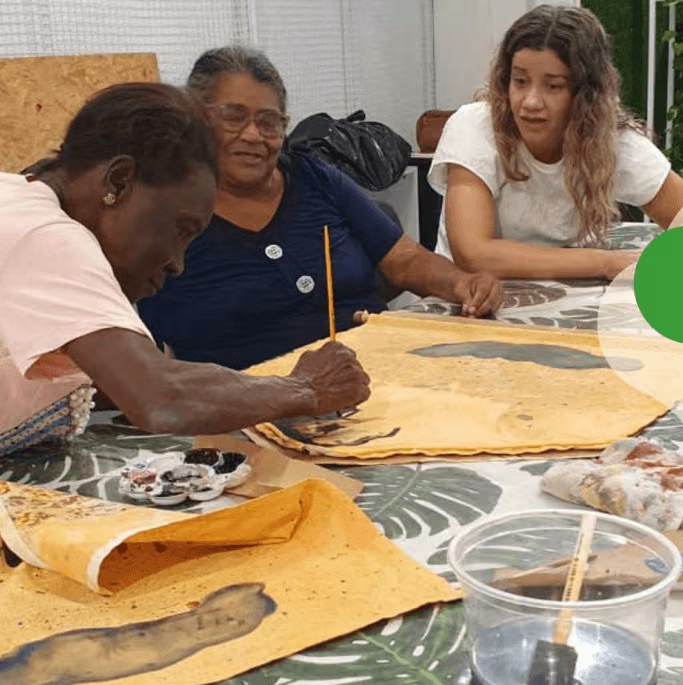
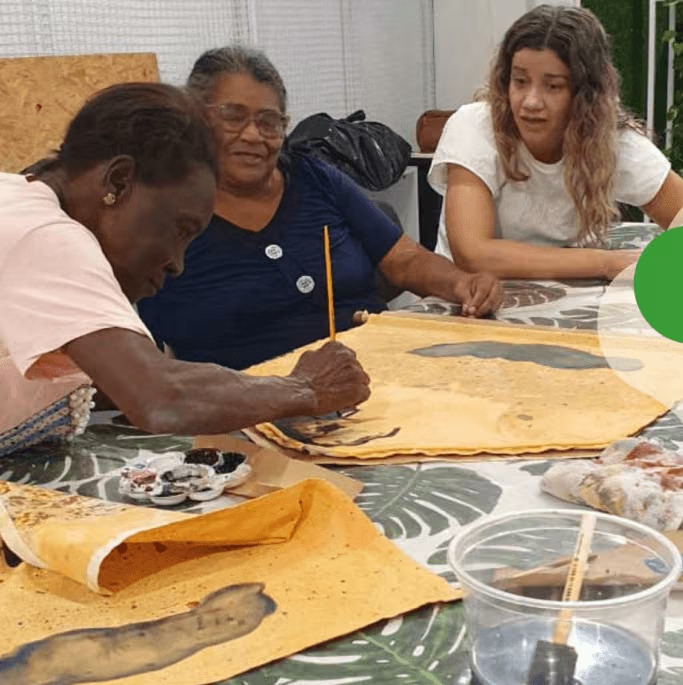
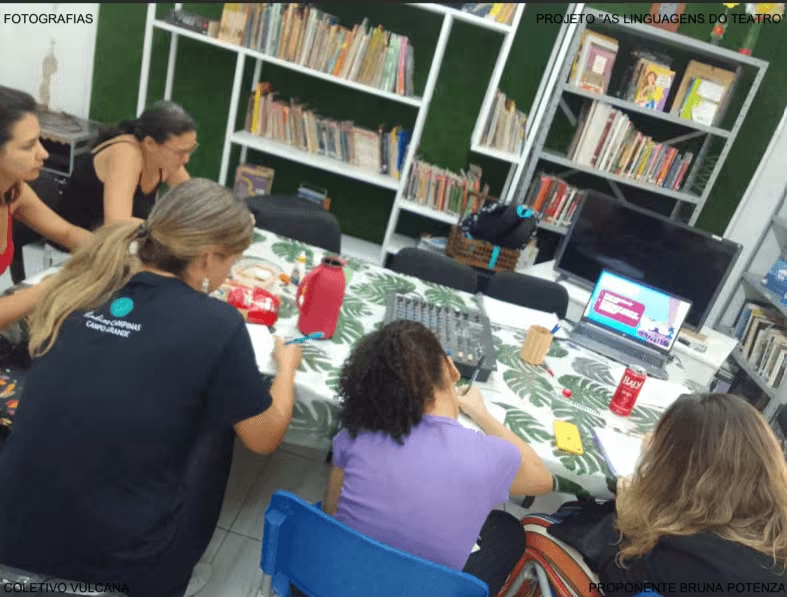
Women taking part in the project painting with brush and brush
Integrated workshops and the development of stage skills
The training pathway was designed to bring together different dimensions of theatrical language. The workshops covered costume creation, set design and handicrafts, lighting and sound techniques, dramaturgy and staging, which contributed to a broader training experience. Instead of operating in disconnected modules, the project sought to build a logic of integration between technique, creation and expression, strengthening an understanding of theatre both as an artistic language and as a tool for collective elaboration.
The results achieved show the consistency of this methodological design. The compositions and techniques developed in the handicraft workshops were incorporated into the dramaturgy and staging processes, resulting in the creation of a stage banner and in the circulation of this learning at the closing event. The public presentation of the results also revealed the incorporation of stagecraft knowledge and the elaboration of themes linked to the forms of oppression experienced by the participants.
Adaptation, local articulation and circulation of the results
One of the most notable elements of the case was the collective’s capacity to adapt during delivery. The initial plan was for the workshops’ results to be presented at a cultural event in the territory. As this did not happen within the project’s timeframe, the group reorganised its strategy and put on its own event, the Sarau Aberto. That decision shows managerial maturity and reinforces the importance of the Fundo da Quebrada as a mechanism that strengthens groups’ autonomy to respond to context without compromising their objectives.
The process also generated links with other collectives, such as the Coletivo Literário Dandara Somos Poesia and Cia Nayambing. These partnerships helped widen publicity, strengthen the presence of artists at the closing event and promote exchanges of knowledge between initiatives in the territory. In that sense, the fund’s support helped not only to make a programme of activities possible, but also to widen connections and consolidate relationships between local cultural agents.
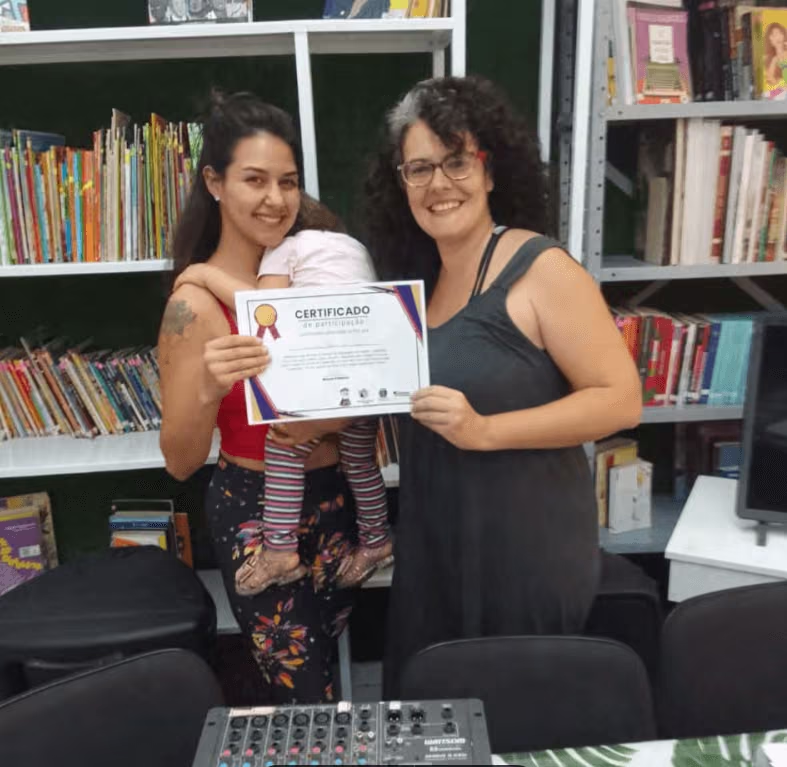
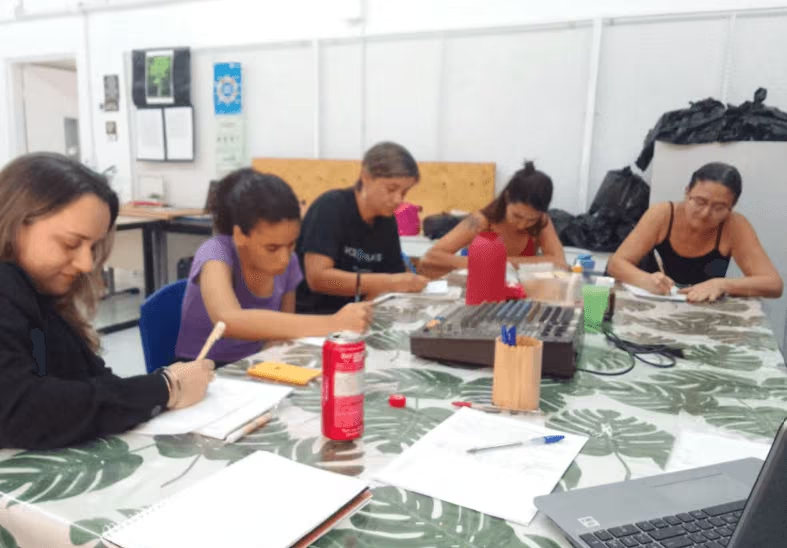
Video record of the activity
Coletivo Vulcana’s video offers a synthesis of the work developed by the collective in the community, showing the actions carried out in the territory, in the District of Campo Grande, and their importance for local cultural strengthening. More than documenting activities, the material shows the work the collective has been doing in the community and highlights the direct impact of the initiative on the lives of around 200 women reached along this path.
Sharing on social media
Circulating the case through digital channels is also strategic for widening the reach of the experience and showing how investment in territorially rooted cultural groups produces concrete results. By communicating Coletivo Vulcana’s journey, social media can show that the Fundo da Quebrada helped sustain a training process with public delivery, local articulation and mobilising capacity. This kind of sharing strengthens recognition of the initiative and helps position the fund as a relevant instrument for cultural development in the District of Campo Campo.
See this photo on InstagramA post shared by Vulcana Vulca (@coletivovulcana)
Prospects for the next activities
The possibilities for continuity suggest that this experience could unfold into a permanent process of cultural training in the performing arts in the territory. Running workshops more closely targeted to different audience profiles, building links with schools and spaces connected to craftwork, and strengthening relations with the local arts scene all show that the initiative does not end with the actions already carried out. Along this path, the Fundo da Quebrada was important not only in making the project’s delivery possible, but in strengthening a base capable of sustaining new developments in the District of Campo Grande.