The II InterCOCEN Science Fair, held by the State University of Campinas this September, was an opportunity to connect what is being taught to students of the Hackerclubes project with the possibilities of impact in life beyond the classroom.
STEAM education completes itself in this place: when we cross the classroom walls and connect with the reality of the students (and their infinite future possibilities).
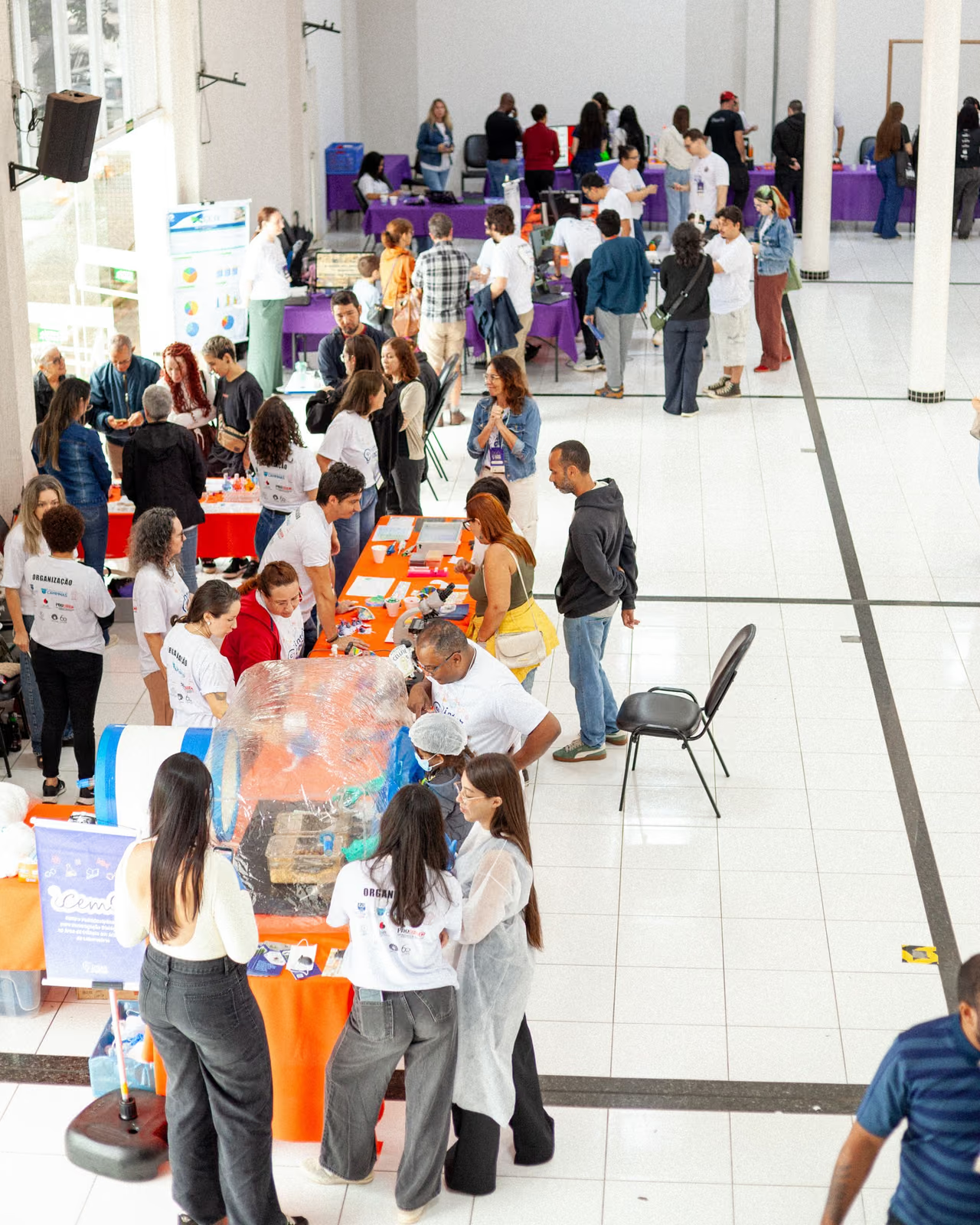 Figure 1. II InterCOCEN Science Fair
From Small to Large Applications
In Hackerclubes activities, students learn the fundamentals of electronics, programming, 3D modeling and printing, digital security, and citizenship. The challenge, often, is to make them see where this learning can be applied on a larger scale.
At the II InterCOCEN Science Fair, this bridge was built in a more concrete way. The students were able to see the same concepts worked on throughout classes serving as the basis for cutting-edge research at the university. In addition to the most expected applications, they also had contact with research in the areas of health, music, and memory, understanding how technology ends up encompassing diverse fields.
Microcontrollers were seen in computational sound art applications from the Center for Sound Communication (NICS) and with monitoring sensors at the Meteorological Research Center (CEPAGRI).
The 3D printer, used in the classroom for printing simpler models in PLA, was presented for tissue biofabrication and biomedical engineering at the Biofabrication and Tissue Engineering Laboratory (BioEnT Lab).
In addition, there were reflections on security and the conscious use of technology by various university groups. This experience showed the students that what we see together in Hackerclubes is the basis of scientific innovation, and they were able to perceive possibilities that the study of technology offers.
Breaking Down Walls: University as a Real Possibility
There is a relatively short physical distance between Sumaré and the campuses of the State University of Campinas, but this distance, when experienced by youth from the periphery, tends to widen. For many public school students, the university is still seen as an unreachable space, for various reasons.
Taking the Hackerclubes group to have contact, even if indirect, with the university ends up helping in the process of breaking down this barrier. The possibility of interacting with research, researchers, and professors makes the university space a more tangible possibility.
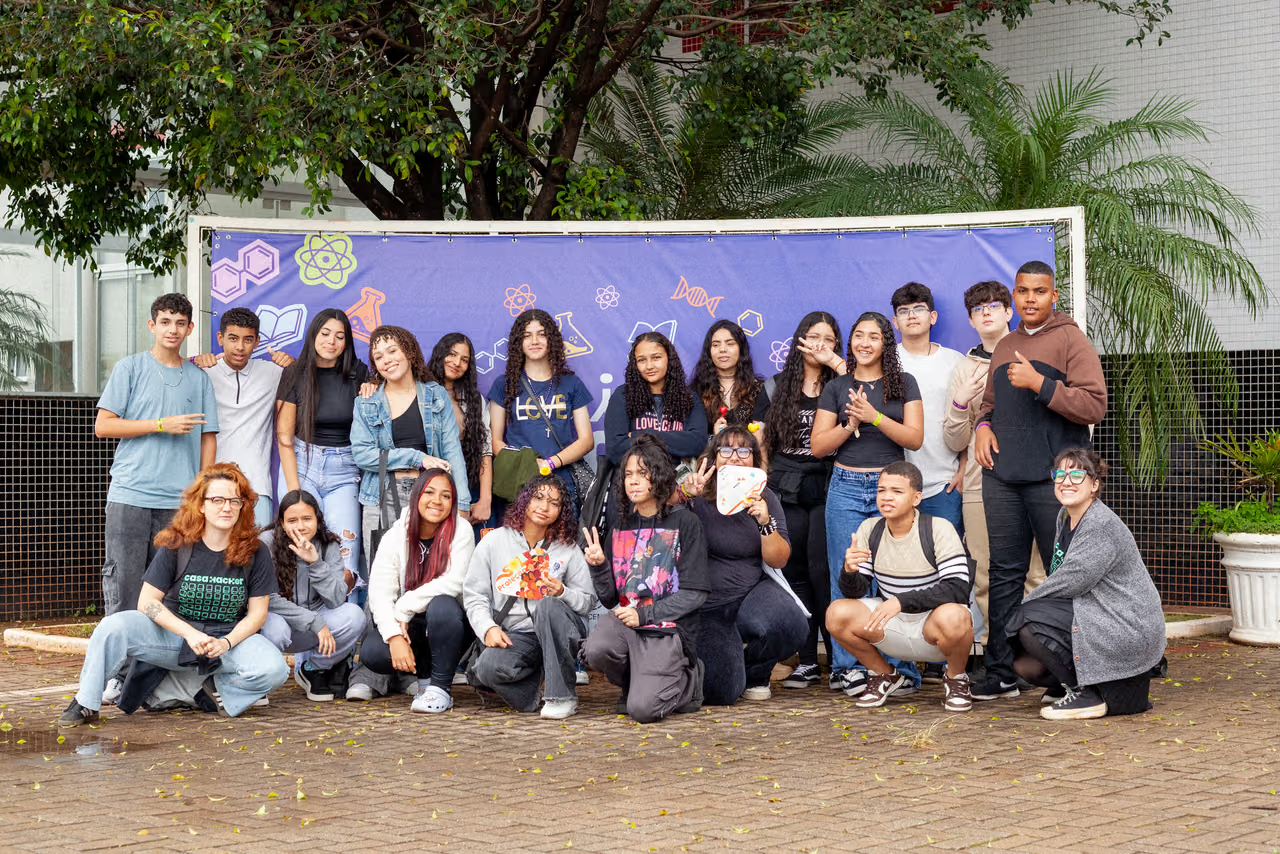 Figure 2. Students from Escola Estadual Professora Maria de Lourdes Martins participating in Hackerclubes at the II InterCOCEN Science Fair
The presence at the event raised debates about the students’ future dreams and made it possible to talk about the means to achieve higher education. The students were able to clear up doubts during the event, talk about it in the classroom, and also share more closely what they want for the future with us, female teachers who went through graduation at Unicamp and today pursue master’s degrees at public universities.
Designing Future Options
Providing young people with an immersion in the world of scientific research, even if for a few hours, is ensuring that STEAM education fulfills its role by fueling curiosity, building a repertoire, and showing youth that they do not just have to be consumers of technology, but can also be scientists and creators.