
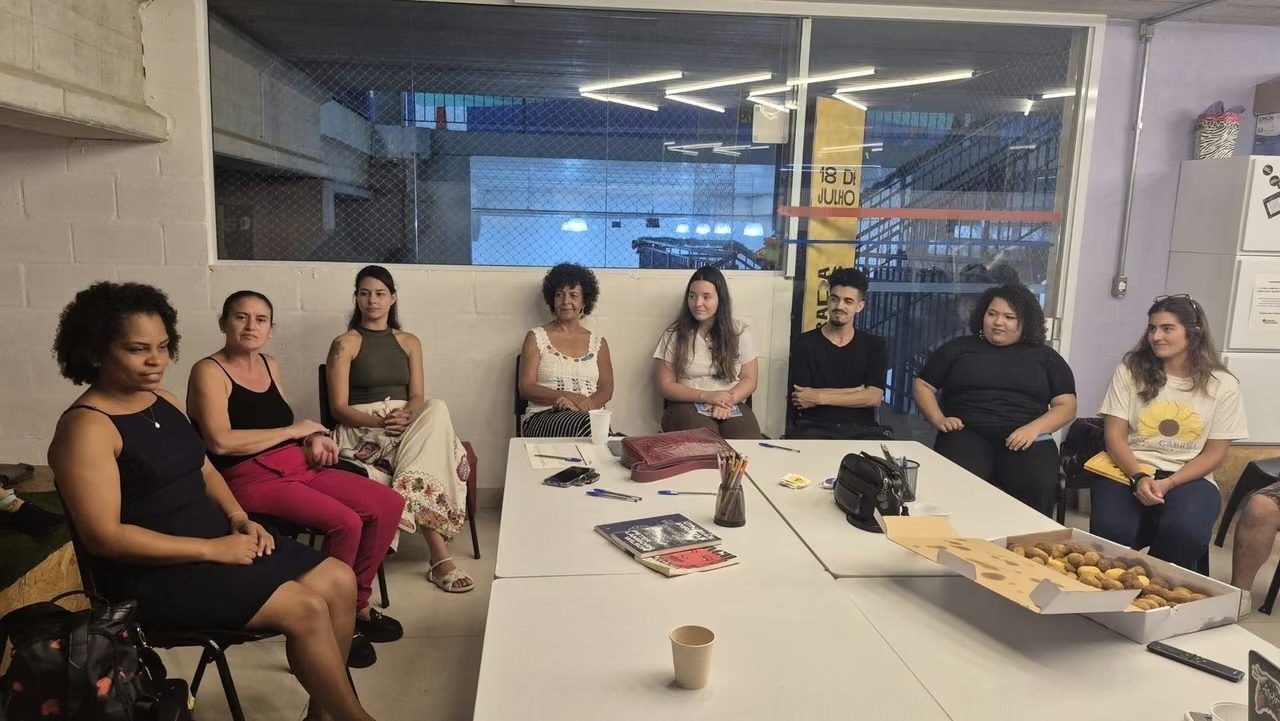
In the photo there are people around a table with books, pens and food on it.
If you have ever been to one of the Active Citizenship Hubs in Campinas, you know: there are no “projects left in a drawer” there. There are people, territory, a good idea turning into action — and action turning into collective learning.
And that is exactly what marks this new phase: the Hub Integração is born — the union of the three Active Citizenship Hubs of Campinas into a single project. The proposal is simple (and bold): to keep co-creating solutions for the territories and, at the same time, to consolidate the tools and methodologies the teams have been developing and applying day to day.
In other words: besides doing, we are going to make the path more shareable, clearer and more replicable. Yes, practice will become a guide. And a guide will become a manual. (Without losing the flavour of the territory, I promise.)
A reminder: what are the Active Citizenship Hubs?
The Active Citizenship Hubs are community spaces for training, organising and strengthening people, collectives, initiatives and organisations working for rights, good living and sustainability in the territories of Campinas.
In practice, they are spaces that become a meeting point, a classroom, an ideas laboratory and a support base — all at once — to strengthen those who are already making things happen in the city.
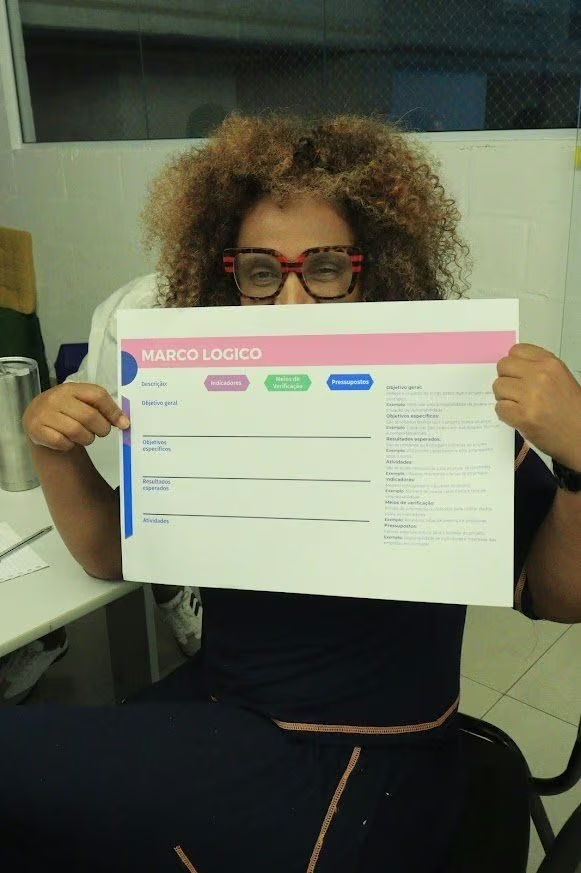
In the photo a Black woman with curly hair and glasses holds a sheet reading Marco Logico with fields to be filled in
Why create methodological guides now?
Because the time has come to turn “the way we do it” into a practical reference.
Along the way, the Hubs have been creating routines, agreements, tools, workflows, monitoring templates, forms of mentoring, criteria for financial support… all of it tested in real life, with the successes and the adjustments that only lived experience in the territory can teach.
Now, with the Hub Integração, we are taking an important step: organising this knowledge into a set of guides, a kind of “toolbox” — to make it easier to ensure:
- the continuity of the work,
- the arrival of new people and initiatives,
- the transparency of the process,
- replicability in other territories
- and the strengthening of the network as a whole.
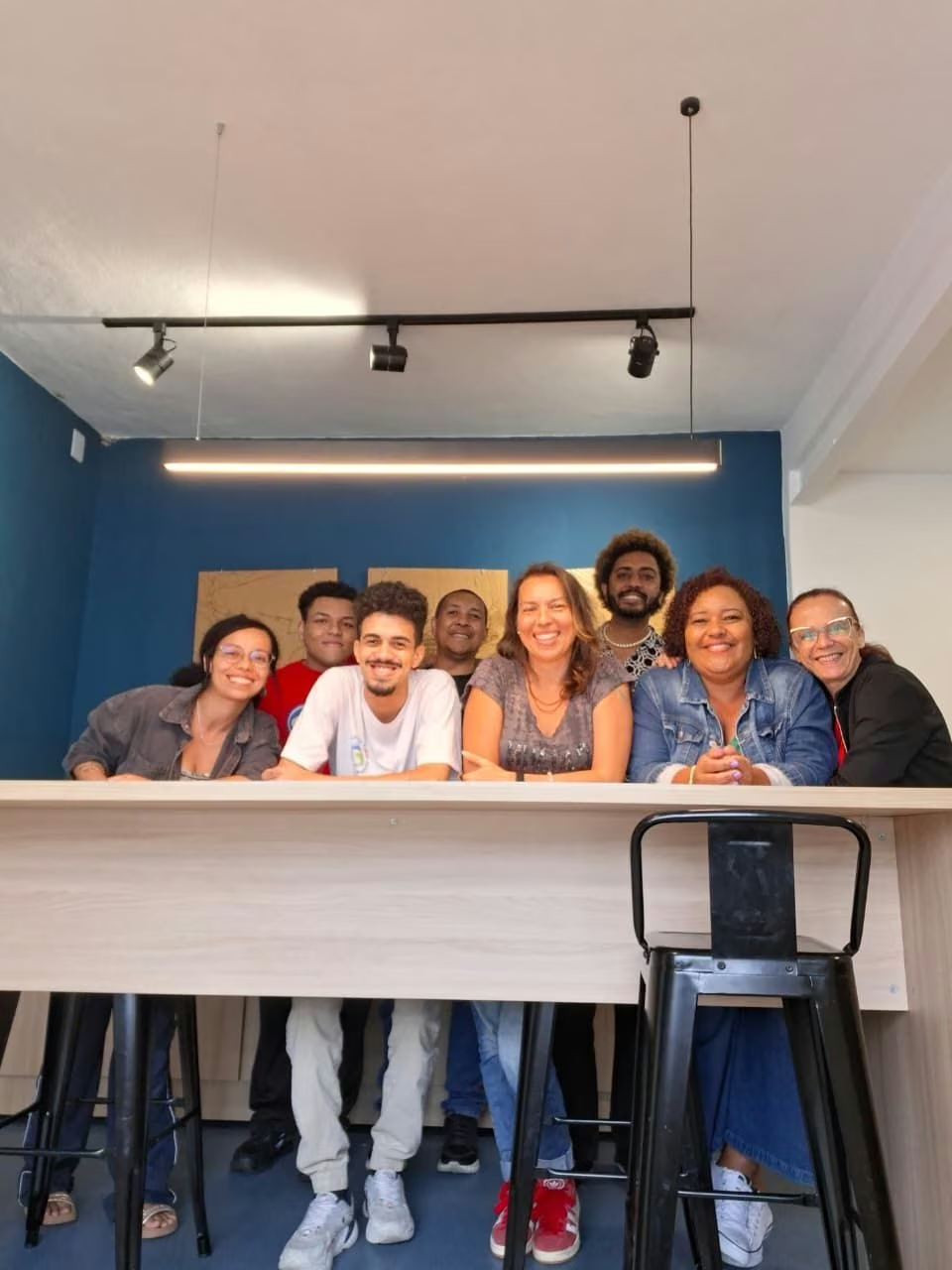
In the photo the Hub Integração team poses for the camera, smiling, leaning on a wooden counter
The Manual (v1.0): guides, a common ground
This material is being built by Conexão Quilombo Amarais, Ozipa Criativa and Quebrada em Movimento, and will bring together six methodological guides in manual form:
- Guide to Shared Governance: how the network decides together, organises responsibilities and keeps transparency in daily practice.
- Guide to the Training Journey for Impact Leaders: the step by step of the training, with learning tracks, methods and follow-up.
- Guide to Direct Funding and Financial Support in a Network: routes to access funding, use of the resources and fair accountability.
- Guide to Mentoring for Collectives and Social and Socio-environmental Impact Entrepreneurs: how mentoring works in practice, from diagnosis to action plan.
- Guide to Evaluation and Monitoring: how the Hubs measure, learn and adjust course using data and listening to the territory.
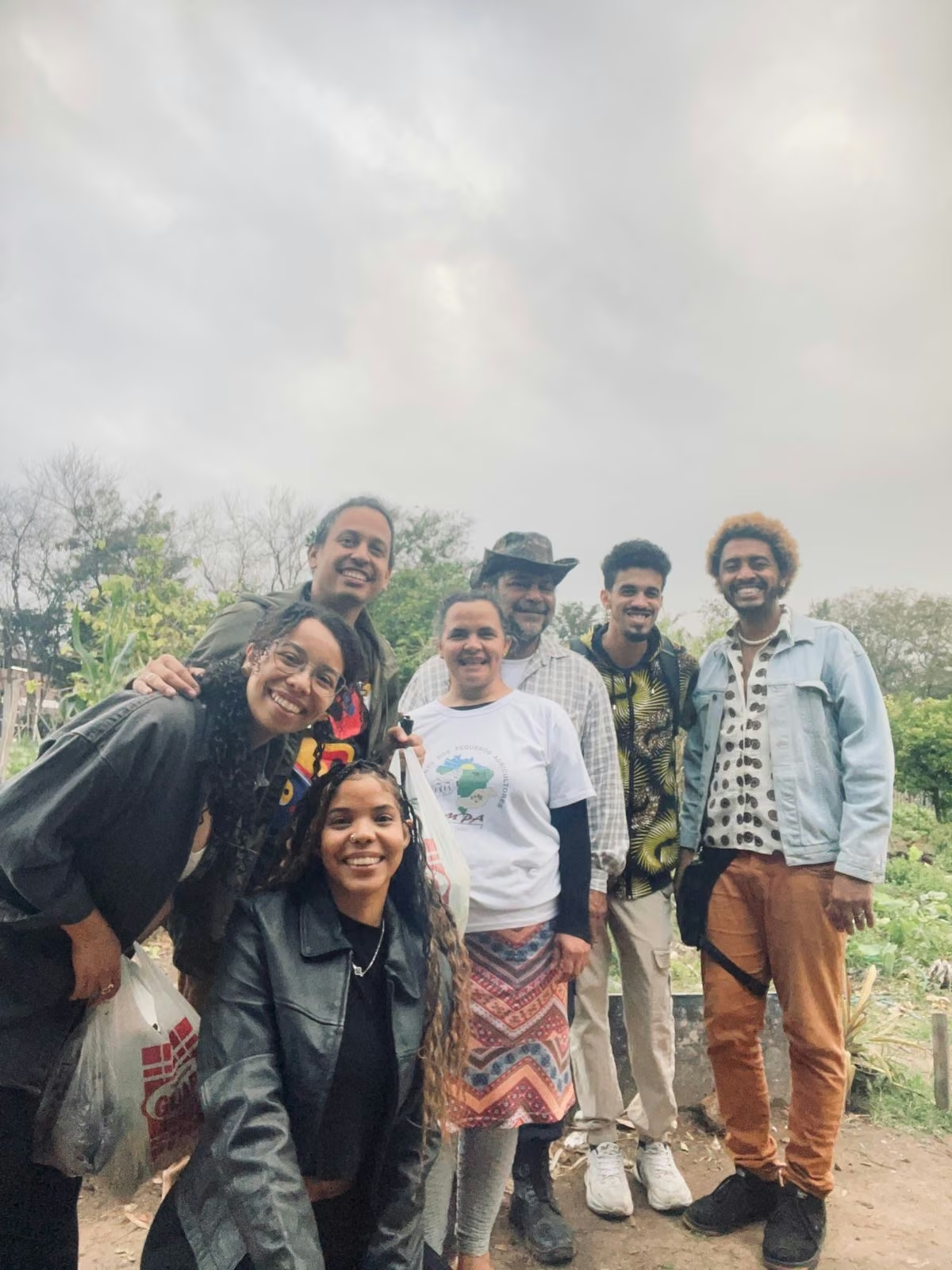
In the photo the Hub Integração team poses for the photo, smiling, together with the collective of garden farmers, with the vegetable garden in the background.
Behind the scenes (without romanticising, but with care)
These guides were not born of one person alone “inventing a methodology”. They are being born the right way: by many hands, with plenty of good debate, review, alignment, testing of language, fine tuning and the classic question that saves any document:
“Right, but can somebody actually use this in practice?”
Of course they can. Because it was written by those who live the daily life of the Hub, together with the people and initiatives of the territory.
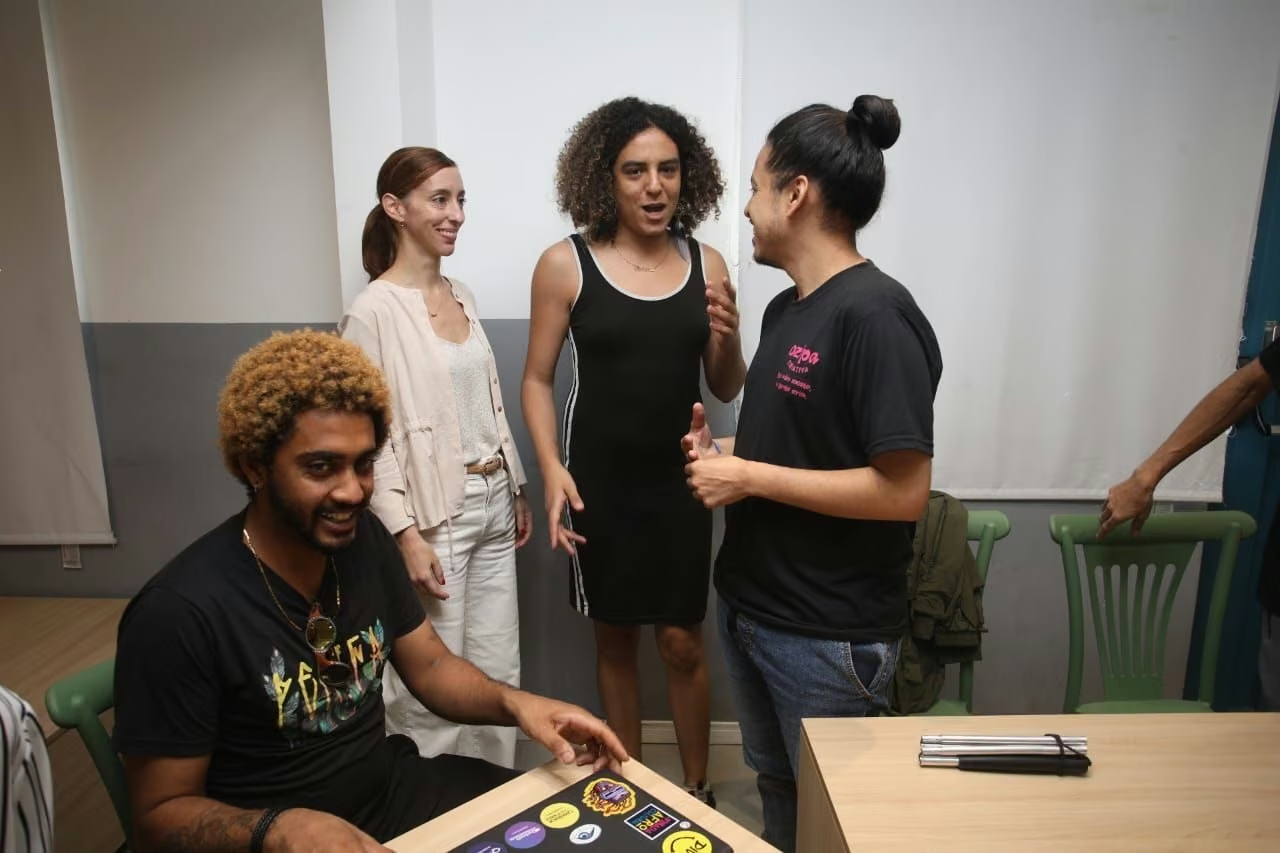
In the photo one person is sitting down closing a laptop and three people in the background are talking about something very funny.
The visit that ran through the process
In the middle of drafting the guides, we also received a visit from Juliana Cortés Guerra, a Colombian lawyer and human rights specialist who is a central figure at the District Secretariat for Women in Bogotá, where she holds the post of Deputy Secretary for the Strengthening of Capacities and Opportunities. She shared learnings from the work she carries out with women in Colombia — especially on strengthening networks, autonomy and collective construction. It was the kind of exchange that does not enter only as a “reference”: it enters as a good provocation and leaves the material more alive.
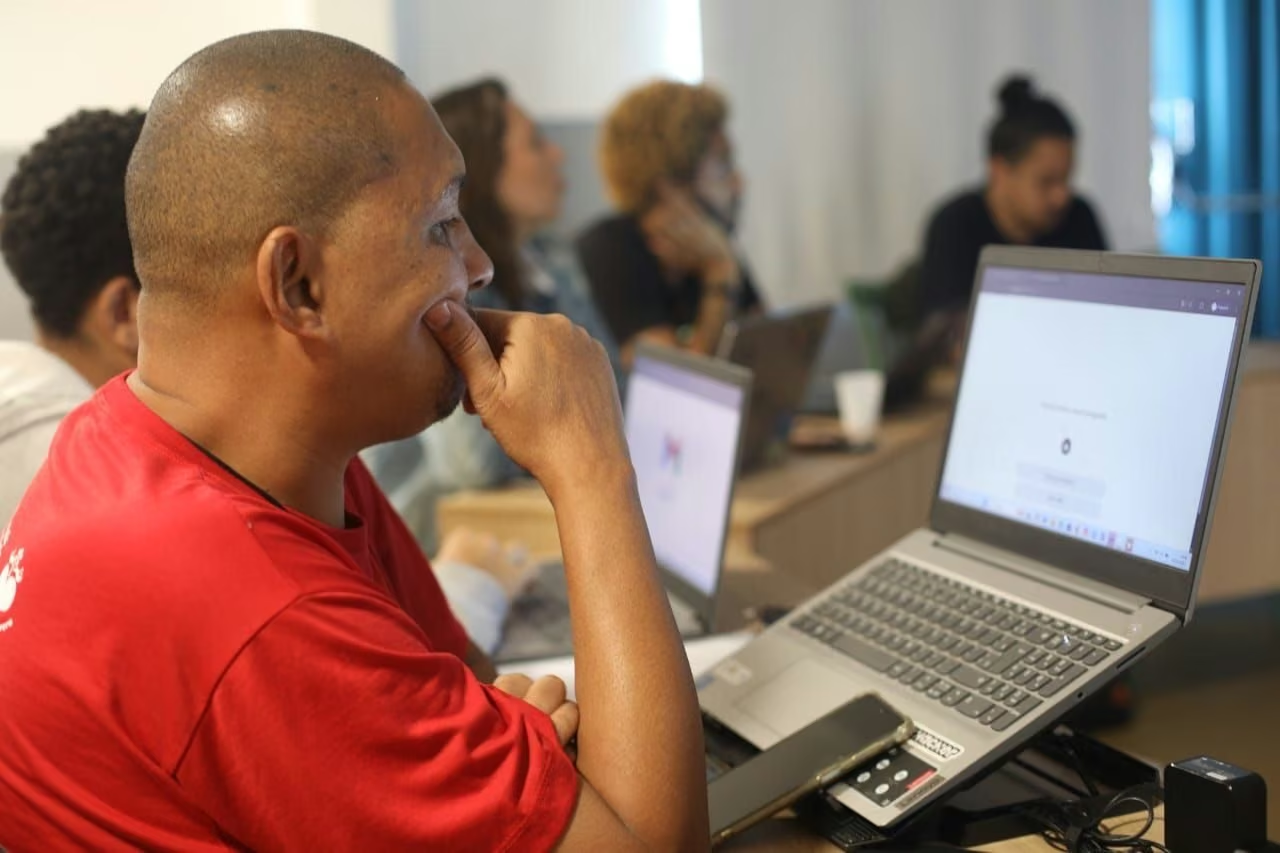
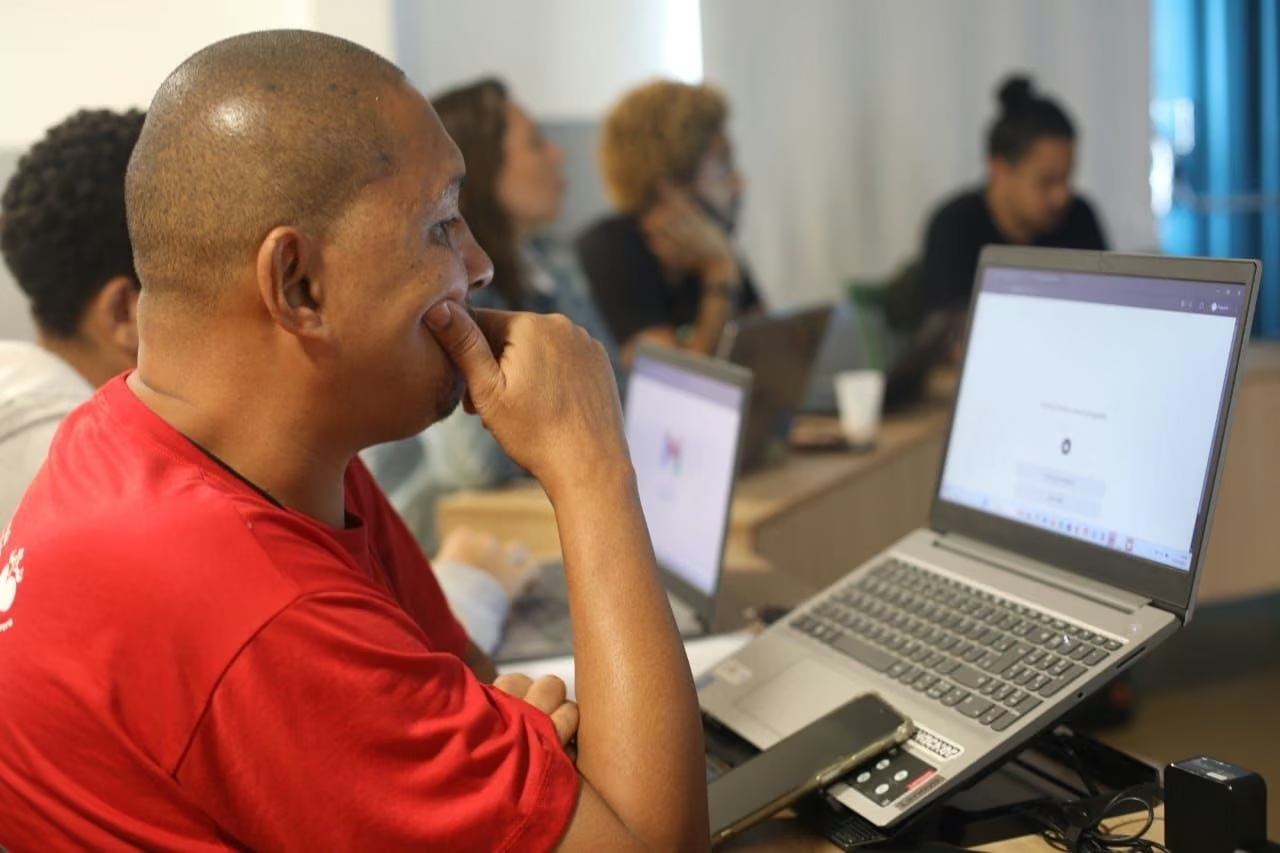
In the photo one person is very focused looking at the laptop; in the background other people are concentrated, looking ahead, out of focus.
Coming soon 👀
Version 1.0 of this manual marks a turning point: a common ground of governance, training, funding, mentoring and monitoring built as a network — and constantly evolving.
So you know what to do: keep an eye on the Casa Hacker blog.
Because the Hub Integração is arriving in that way: three Hubs, one shared methodology, and a whole lot of good things to put out on the street.