
By Aliene Vilaça and Vivian Thais Leite
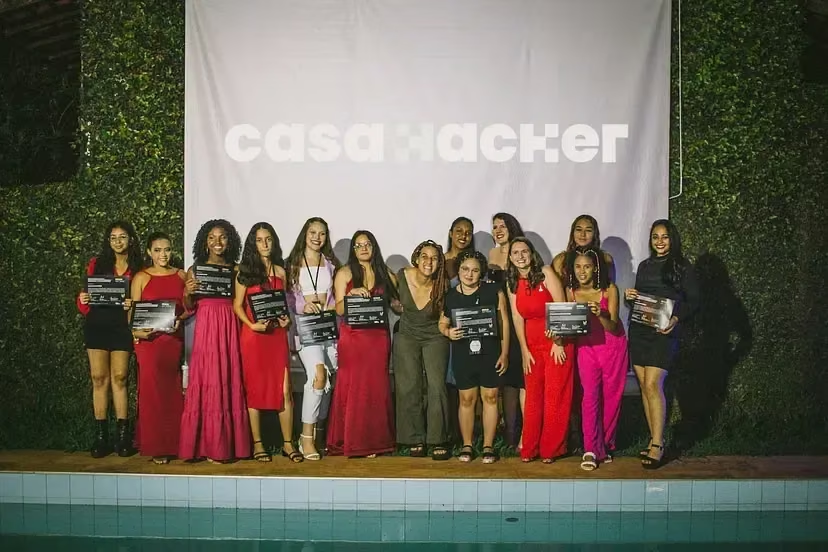
Last year, in Matão, we ran the first edition of “Minas em Tech”, Casa Hacker’s programme exclusively for girls to get to know a little of the world of technology. In fascinating classes taught by the two teachers writing to you, the minas worked on subjects such as electronics, programming, 3D modelling and printing, and many others.
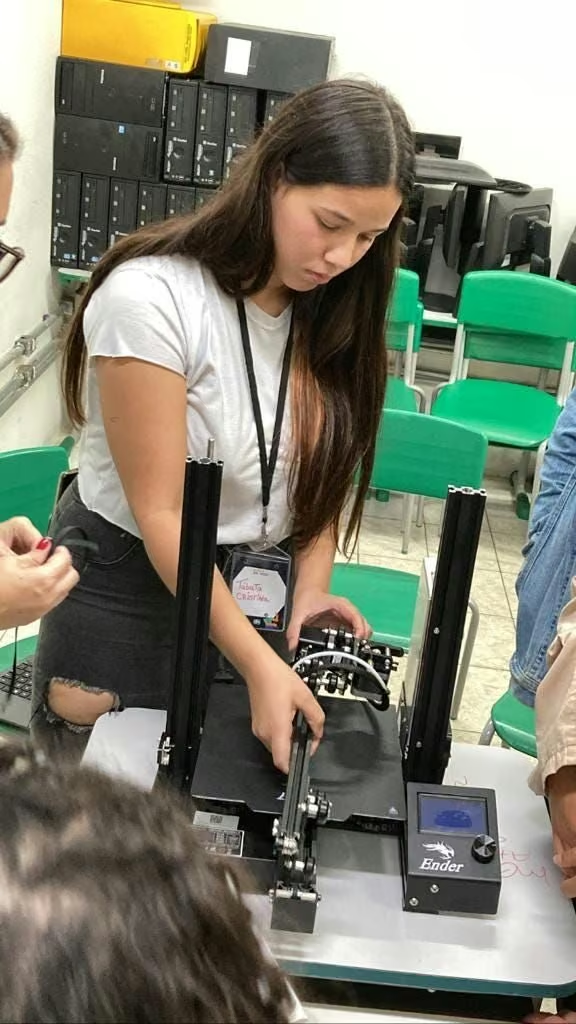
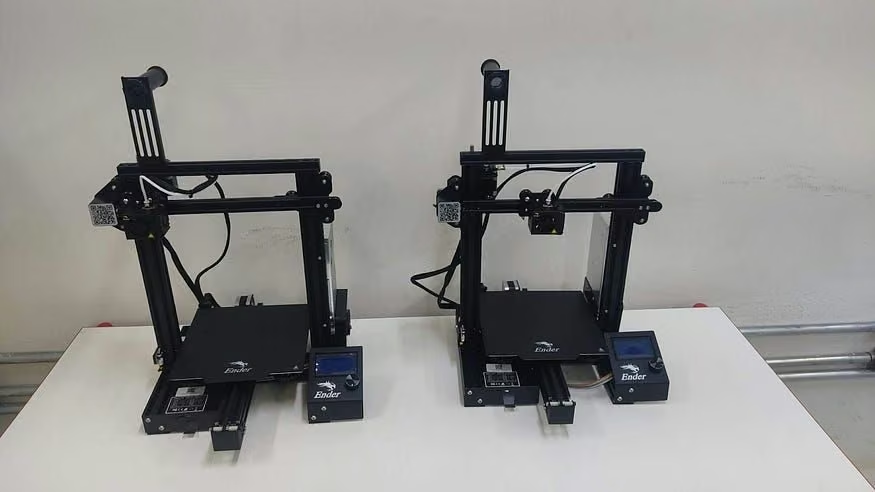
The minas arrived motivated and full of energy to take on the activities. They assembled all sorts of circuits, lit up “little lights”, programmed games, modelled and printed parts, and even got to build their own 3D printer.
Source: personal archive
Source: personal archive
At the end of the programme came their biggest challenge: developing a Minimum Viable Product (MVP) from scratch. But what is an MVP? It is when we create a product at the lowest possible cost, in order to test it and find out how it works, what improvements need to be made and, above all, what the chances are of launching it on the market. Working in groups, they were autonomous and responsible for every stage of the project, from the financial side — purchases and material orders — through to execution, assembly and presentation. A panel made up of Casa Hacker and PPG watched the presentations and gave the girls plenty of great feedback.
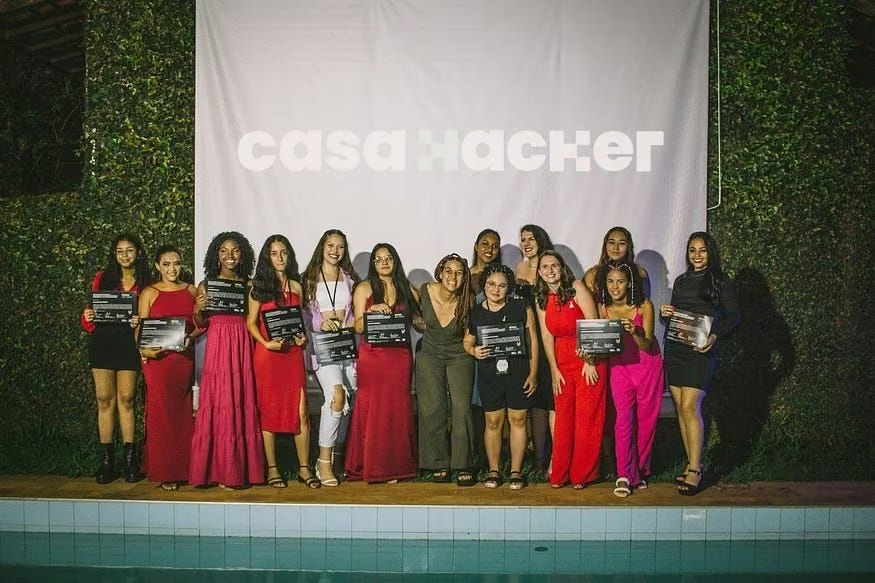
Photo: Gabriella Zanardi
The first group developed a smart irrigation system (to see whether we can stop “killing” our little plants at home). The project set out to use rainwater for watering. This water was stored in a tank, which pumped it to the plant whenever a sensor indicated that the soil was dry. They even printed a model roof to show how the project worked!
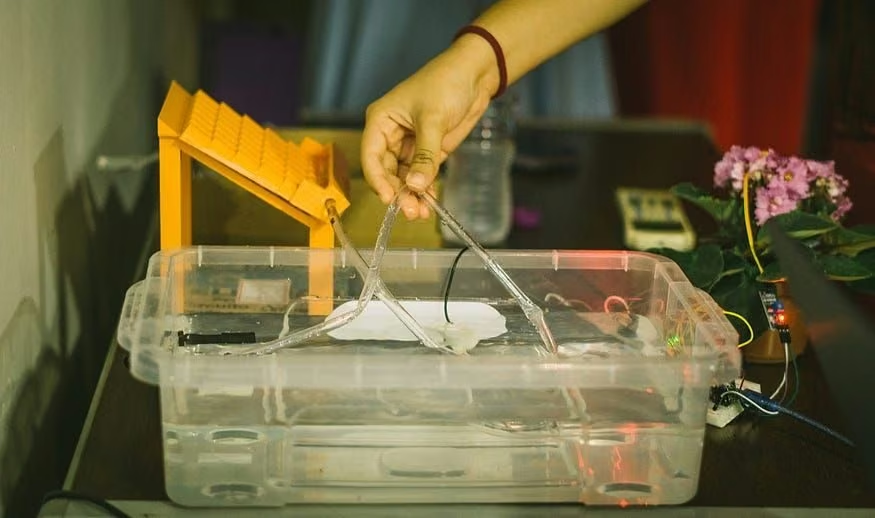
Photo: Gabriella Zanardi
In another group, the girls set out to speed up the service at health centres. They created a portable device to measure a patient’s heart rate and temperature. The components and the electrical circuit sat inside a small box, and the “patient” only had to rest their fingers on the sensors for their readings to appear on the display!
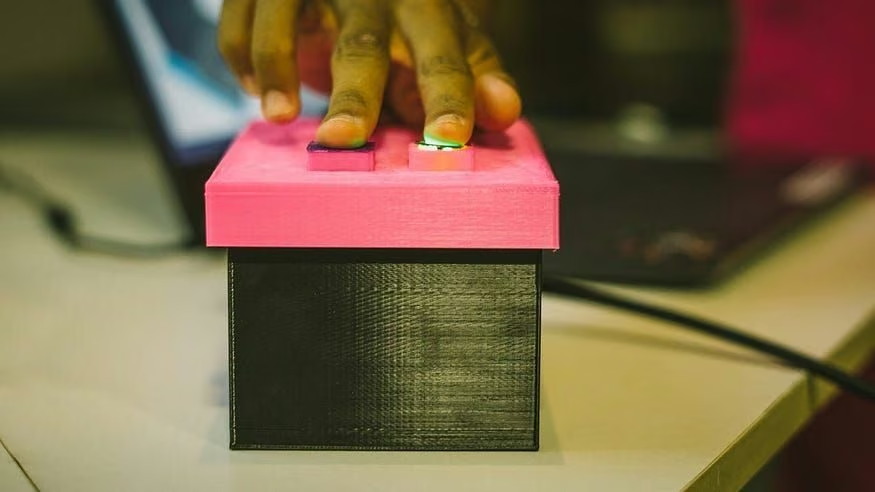
Photo: Gabriella Zanardi
A super cute little house was designed to be a smart air humidifier (the steam even came out of the chimney). In this project, temperature and humidity sensors checked the conditions of the room and triggered the release of steam whenever it became too hot and/or too dry. When the readings improved, the system switched the steam off by itself.
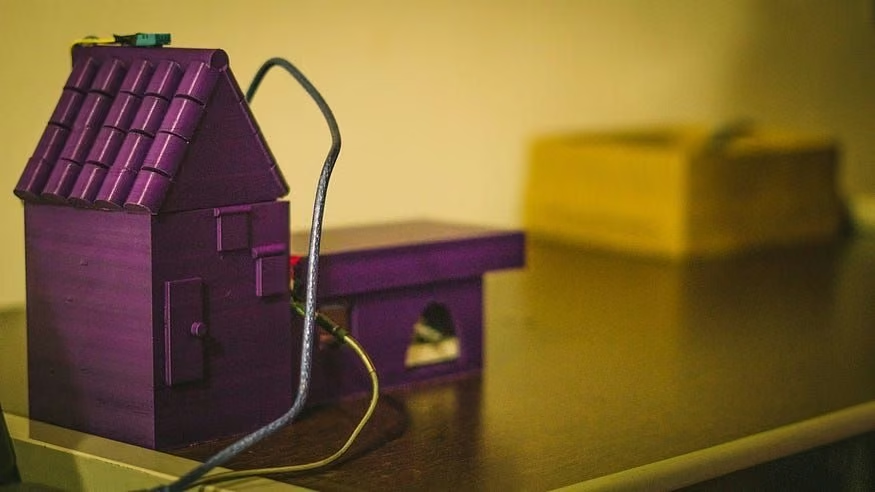
Photo: Gabriella Zanardi
The last group of 2022 wanted to help people with motor disabilities and built a 3D-printed hand prosthesis that moved according to the electrical signal from the patient’s muscles. The sensor was attached to the arm with electrodes (the same kind we use for heart exams) and, as the muscles contracted, the prosthesis could be opened and closed.
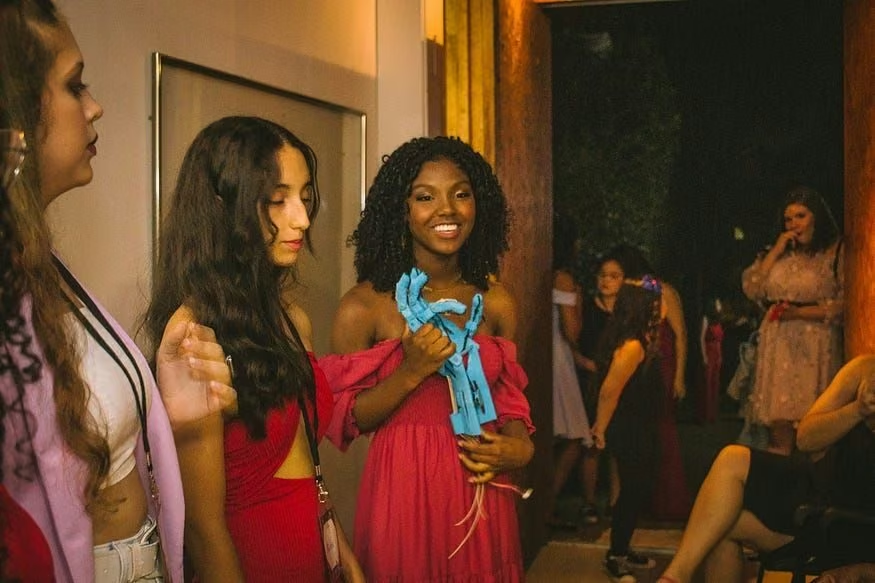
Photo: Gabriella Zanardi
Brilliant, right? But this “course” was not made of sensational projects alone. Beyond the content covered, the girls took part in events such as “American Girls Can Code”, at UNICAMP, visited the headquarters of PPG Brasil, attended talks by impressive women, were able to work on their self-knowledge in workshops throughout the year and had several workshops to discuss how to stay safe on the internet, avoid fake news and build a better relationship with the network. There was plenty of fun too. There was even a day when the whole crew jumped into the swimming pool!
Did you like it? Are you interested? Come along and sign up for the 2023 edition tomorrow! There is a lot of news on the way, and we are certain that the second edition of the project will be every bit as sensational as the first. See you there!