
Building the accessibility ramp at Ong Gabriel, with crucial support from the Quebrada em Movimento Hub, brought more inclusion and dignity to users with reduced mobility who visit its community space in the periphery of Campo Grande.
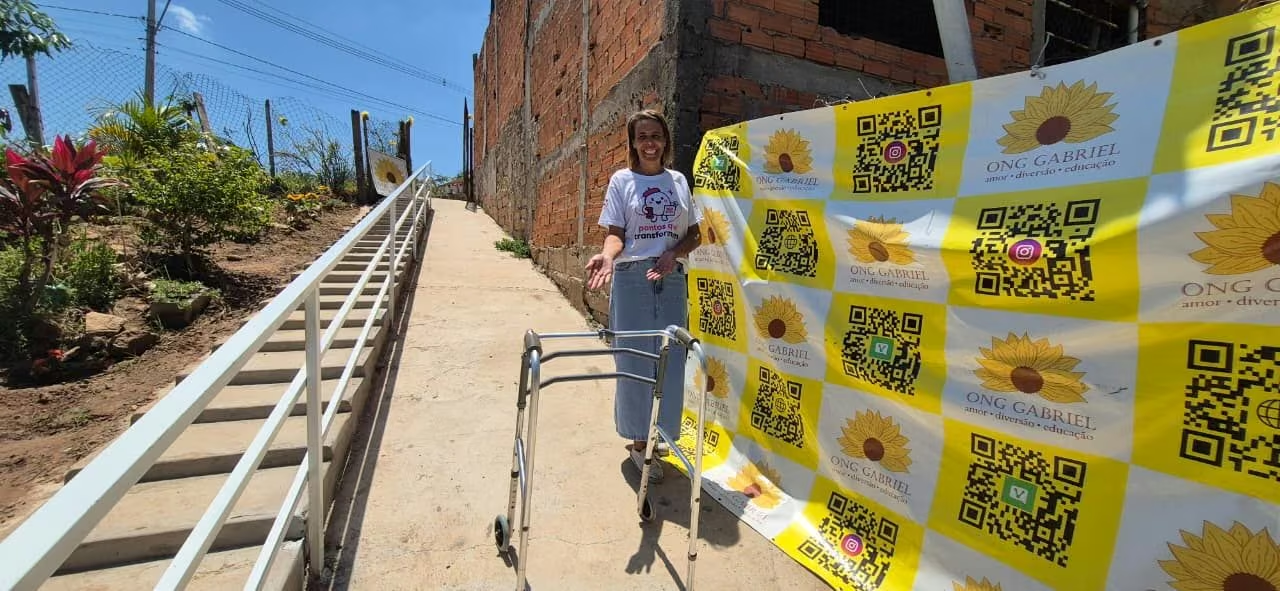
At the ONG Gabriel headquarters, founder Nádia poses smiling beside the new accessible ramp and a walking frame, marking the end of the physical barriers to serving students in the territory.
The completion of the accessibility ramp of the Projeto Gabriel Sustentável goes far beyond conventional building works: it stands for the right of everyone who wants to reach the site to come and go with dignity and respect. It was conceived by the founder, Nádia, moved by the difficulty her workshop students — people with physical disabilities and older adults — had in going down the NGO’s steps.
The steep ground was becoming an obstacle, preventing the organisation from properly welcoming all its collaborators. The pain caused by the lack of accessibility was heard by the Quebrada em Movimento Hub and taken up through the Fundo da Quebrada call for proposals, which gave financial backing to this social impact transformation. Building the ramp reversed the problem and secured free access for students and their visitors. The work not only allowed other older adults and wheelchair users to occupy the space as of right, but also established a sense of welcome and social equity for the Campo Grande territory.
The social impact brought about by the ramp spread in circles through the community, generating work by hiring local labour and visibility through social media. The Quebrada em Movimento Hub acted as the key strategic partner in this path of institutional and community development for ONG Gabriel, with a combination of mentoring, financial support and confidence in the social impact results.
Building the accessibility ramp became extremely important so that it would stop being an obstacle for the project’s ecosystem. Beyond ONG Gabriel’s staff, students and partners, living with physical disability is something shared by several families in the Campo Grande territory, and overcoming one of these mobility obstacles brings home the message that together we are stronger in solving the community’s problems.
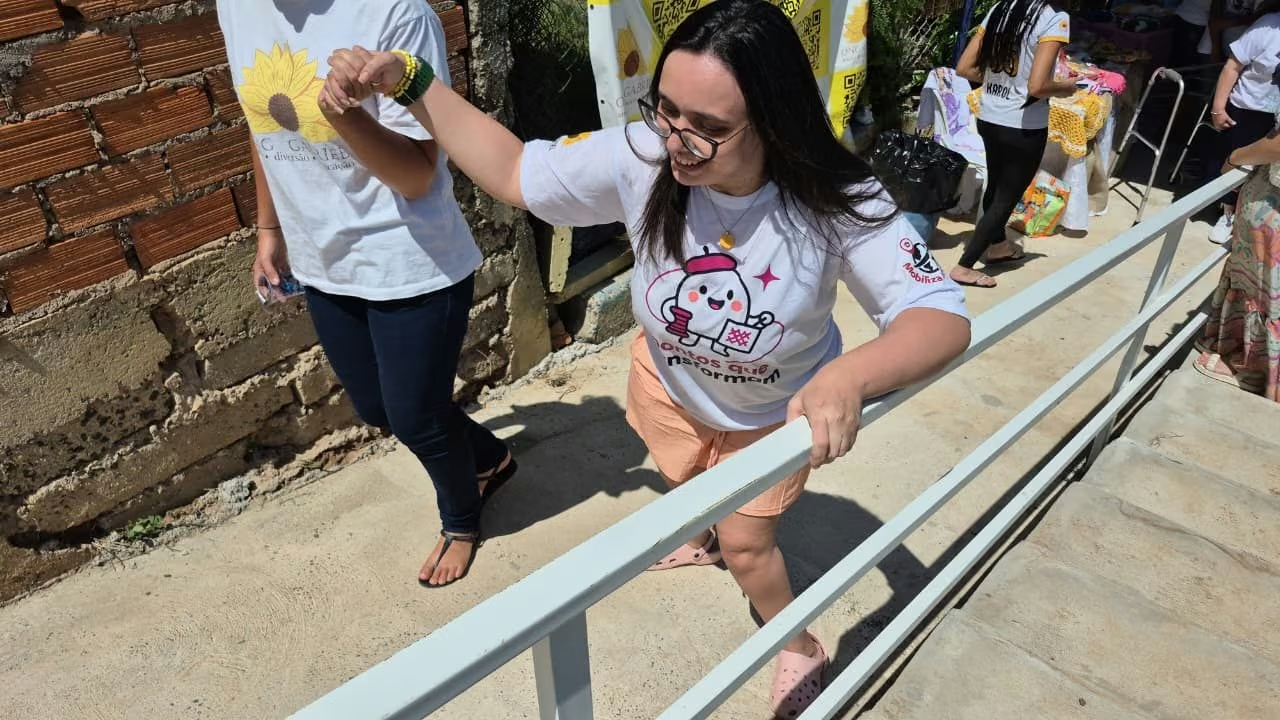
Keilla, a student at ONG Gabriel’s workshops, inaugurates the headquarters’ new accessibility ramp. Holding the handrail and supported by another member of the organisation, she climbs the ramp smiling, symbolising the achievement of autonomy in the space.
In carrying out the works supported by the Fundo da Quebrada call, a network of solidarity economy and sustainable territorial development was created. Rather than outsourcing the service to large companies or external suppliers from outside the periphery, ONG Gabriel’s management chose to invest in the community, prioritising the hiring of professionals living in the Campo Grande territory itself. The release of the funds allowed the direct hiring of local bricklayers and metalworkers, generating jobs and immediate income for families in the area.
By engaging these workers in building a space for accessibility, the project created a deep sense of community pride. The bricklayer who laid the blocks and the metalworker who built the protective handrails did not merely deliver a priced technical service: they took an active part in building a legacy of dignity for their own neighbours and relatives. This model of decentralised, territorial hiring serves as a success story showing that grassroots social investment has a multiplier effect: it solves an infrastructure problem while at the same time pushing back against scarcity.
The Quebrada em Movimento Hub followed every step with audiovisual records of this transformation on its social media account @quebradamov; beyond being a historical record, these images also become a tool for strengthening the periphery’s territory, mobilising more partners willing to invest in social impact within communities.
Finally, the successful conclusion of the Projeto Gabriel Sustentável reaffirms the effectiveness of supporting social initiatives that drive social transformation within communities, and shows that the investment made by the Quebrada em Movimento Hub secured more inclusion for the Campo Grande territory.
