
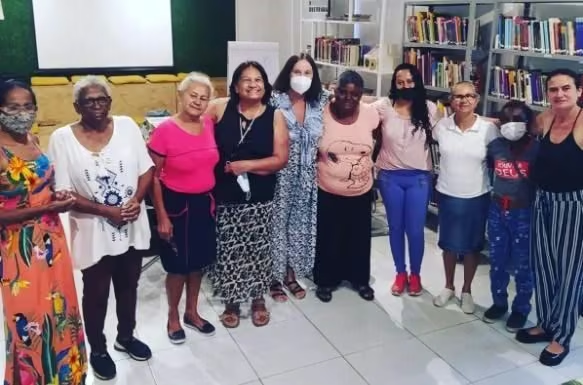
Stemming from women’s free-writing and poetry circles, a powerful force was created for the Campo Grande territory, uniting literature, art, and female leadership, named Coletivo Literário Dandara Somos.
Living in peripheral neighborhoods makes access to technology and cultural innovations difficult. Even with these obstacles, in 2022 Coletivo Dandara reframed their individual trajectories and turned them into poems under the mentorship of writer Katia Marchese at Casa de Cultura do Parque Itajaí. The idea of publishing a book with these stories seemed far from becoming a reality due to a lack of financial support and credibility in the project.
The Turnaround with the Hub
The turnaround happened through the connection with the Hub Quebrada em Movimento, which drove the book Dandara: Somos Poesia to become a materialized reality. The launch took place at Casa de Maria de Nazaré (Casa dos Anjos), located in the Jardim Liliza neighborhood, in the Campo Grande territory — also the headquarters of Hub Quebrada em Movimento.
This event deeply marked all the poets and collaborators, proving that investing in peripheral cultural movements generates an immediate and lasting social impact for the entire community.
Everyday Life and Identity: Poetry Based on Life
The stories in the collective book are experiences from the perspective of their authors and their daily lives living in the city of Campinas. In the poem “213”, authored by member Vera Franco, the title used is the bus line that travels from the Campo Grande territory to downtown Campinas — the narrative details the hardships experienced in public transportation.
The collective promotes the freedom to express oneself through writing and turns art into the spokesperson for the pains and hopes of ordinary women who are simply demanding their right to belong with dignity.
At the Quebrada Talks 2025 event, organized by Hub Quebrada em Movimento, collective member Vera Franco participated by sharing her journey.
The materialization of this book allowed women who previously felt trapped inside a bubble to recognize their own strength and capability — proving that dreams considered impossible can be achieved through collective organization and proper technical support.
In conclusion, Hub Quebrada em Movimento supported not just a cultural initiative, but the creative capacity of the periphery: the project reconfigured the perspectives of a territory, reaffirming that social innovation is born from the protagonism and voice of the community.