
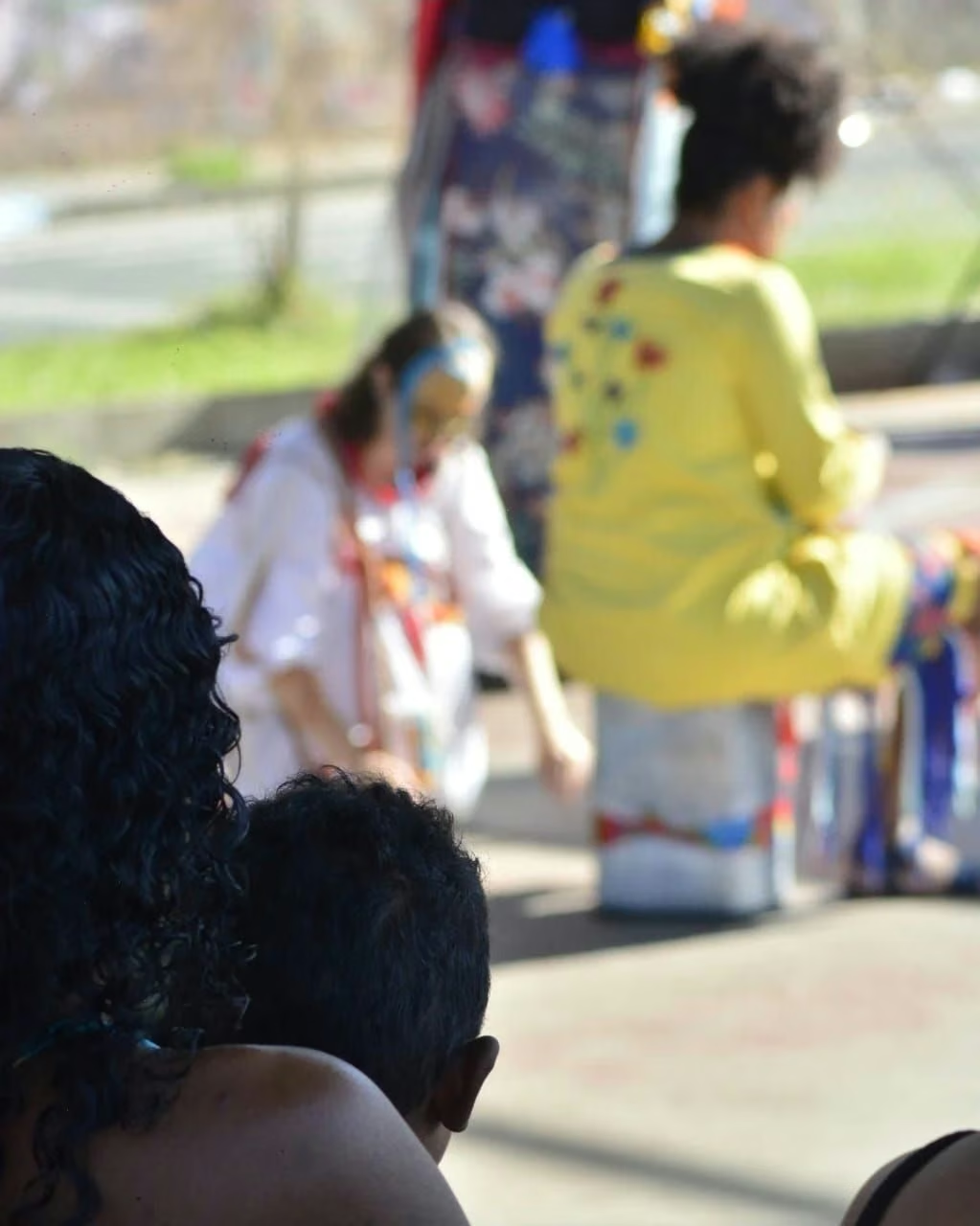
O Coletivo Vulcana, criado pela integrante Bruna Potenza, é um coletivo formado por mães moradoras da periferia de Campinas que orquestraram junto com seus filhos a peça Dijanira: Mulher Mãe do Campo Grande.
The play took shape through gatherings called Café com Maternidade, which bring together mothers who share their experiences and difficulties.
Empathizing with this pain, Bruna created a performance where mothers could bring their children and act alongside them, without depending on others for childcare. In the performance, room was made for all the children to have the freedom to move about and express themselves freely, turning the space into a welcoming one so that mothers would not have to choose between art and caregiving. The children act together in the play and become part of the art, reflecting the intolerance found in environments where motherhood is seen as problematic.
The message of the performance
The artistic play that brings mothers and children together on stage makes an impact not only because it is unusual, but because of its message: that when a woman becomes a mother she may have to take on many roles, whether desired or not, due to the lack of a support network, leading her to give up dreams or personal goals. In the peripheries, the problem is amplified by the lack of resources for residents to manage time, money, care, and education.
For some spectators, the impact at first glance may be one of strangeness, because it includes children and adults without a children’s theme. It turns art into freedom and critique over the lack of measures in society to ensure that the access and voices of these mothers are heard and treated equally. Talking about single motherhood and the difficulties of raising a child should not be a taboo, but rather a reason for change.
Testimony by Bruna Potenza at the Quebrada Talks 2025 event.
This event was held by the Quebrada em Movimento Hub to give visibility to socio-environmental impact initiatives that are changing realities in the peripheries of the Campo Grande territory.
Interviewing Jeniffer Éffe’s
member of Coletivo Vulcana
Jeniffer’s journey
Jeniffer, currently 35 years old, lives in the periphery of Campinas and is an actress, poet, and mother of 9-year-old Lucas. She has worked in the arts since the age of 16 and has taken part in several artistic collectives and movements. She fell in love with the performing arts in childhood through dance, and over time she took several courses and trained as a joker (curinga) in Theatre of the Oppressed.
Starting in 2017, she began her journey of creating workshops and taking part in women’s artistic groups, and that is how she came to know Coletivo Vulcana, joining it alongside her son in the play Dijanira.
The strength of the volcano
The origin of the collective’s name references an active volcano, comparing its strength and nature to that of a single mother who must be strong and resilient to raise her children, juggling multiple tasks to keep up with everything. This reference was also brought into the play, with one of the actresses carrying many things on her back.
Beyond Vulcana, she brings art into all of her work and aims to keep taking part in women’s collectives and to expand her artistic expression into new forms.
Jeniffer ends the interview with a message for all mothers: “Don’t let the flame go out, no matter your difficulties; don’t give up on your dreams.”
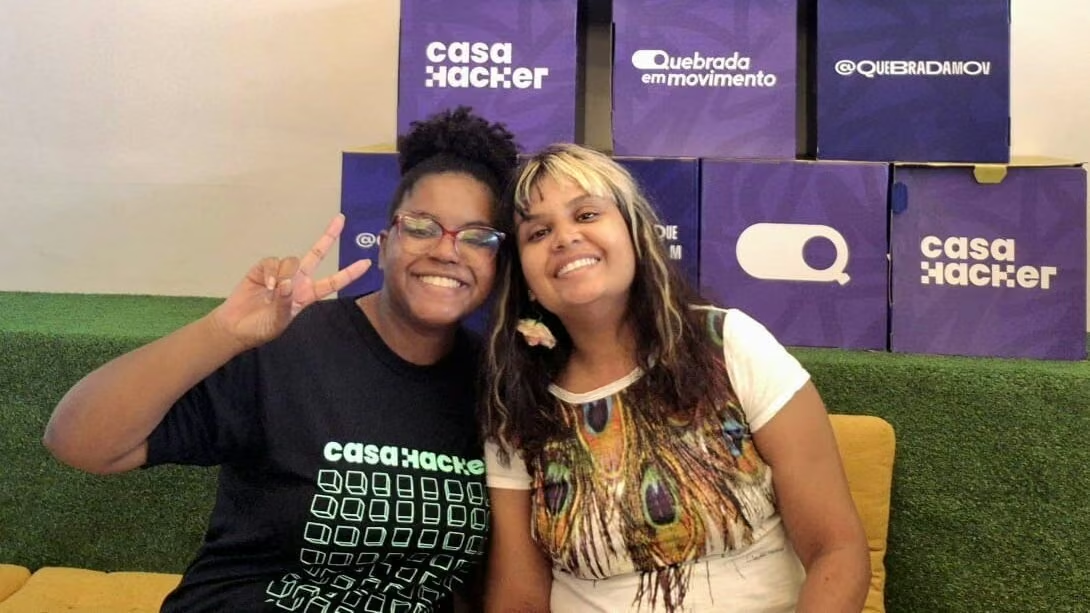
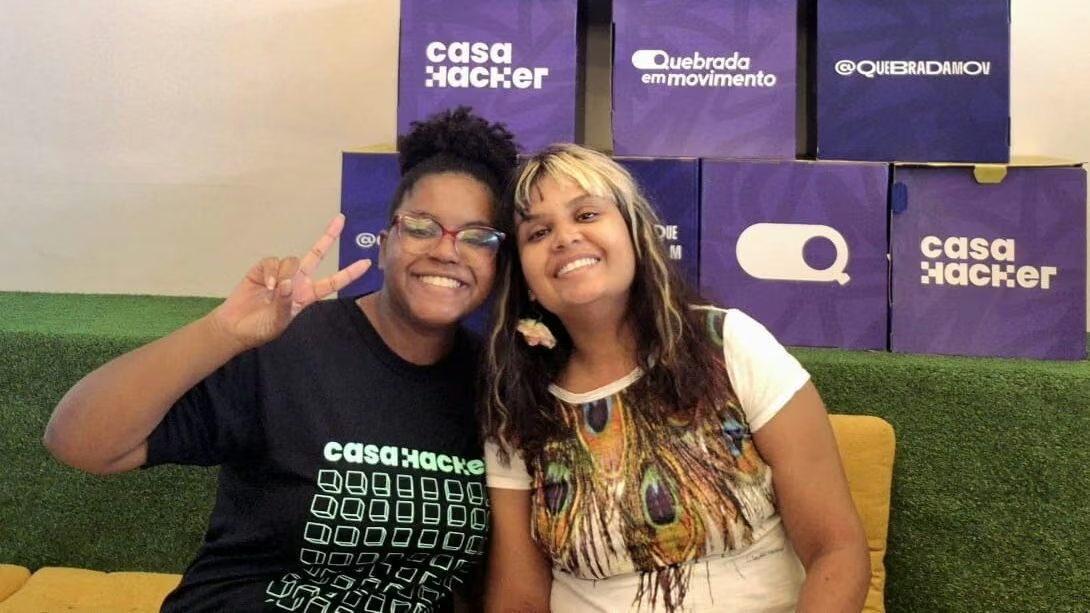
Photo taken in the mezzanine of the Quebrada em Movimento Hub, with Helen (left), communications assistant at the Quebrada em Movimento Hub, and Jeniffer (right), member of Coletivo Vulcana.