
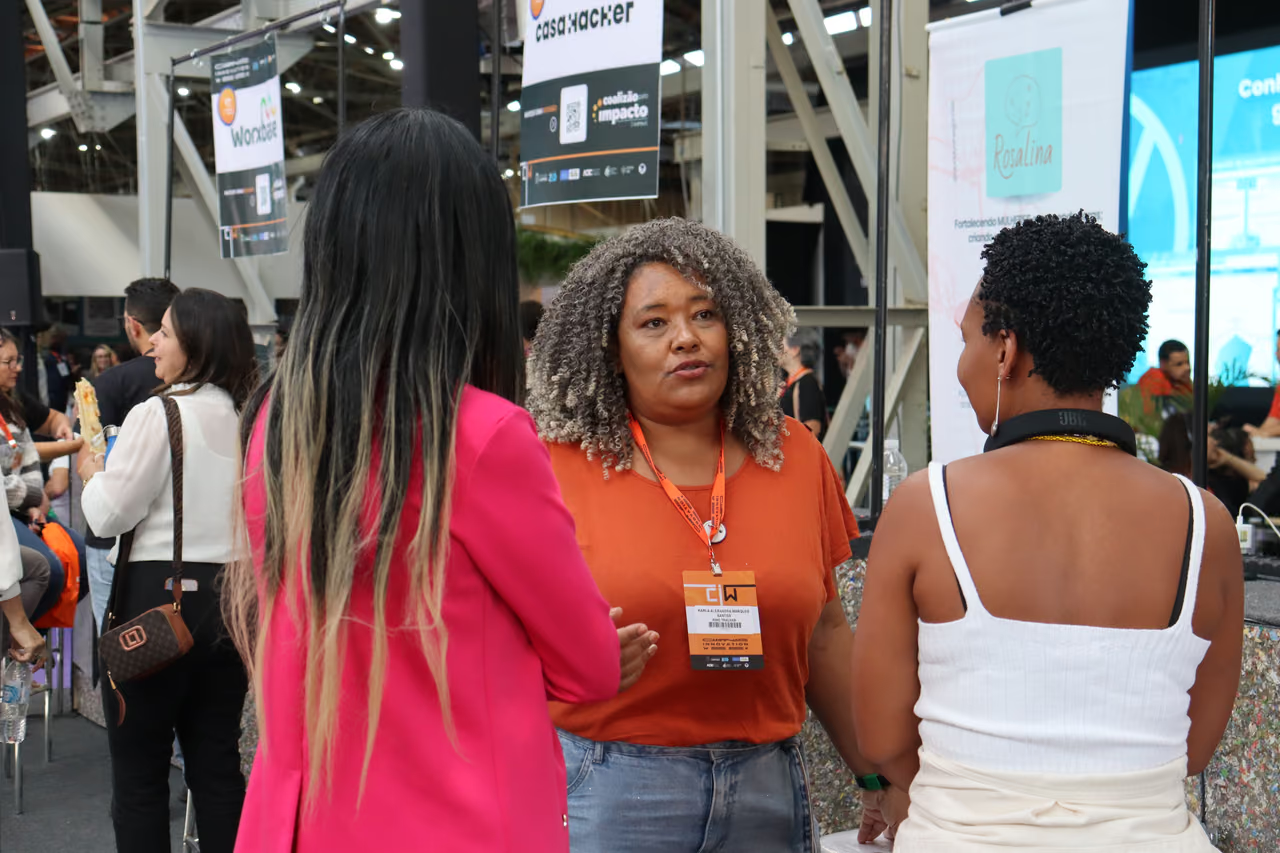
Innovation from the territory
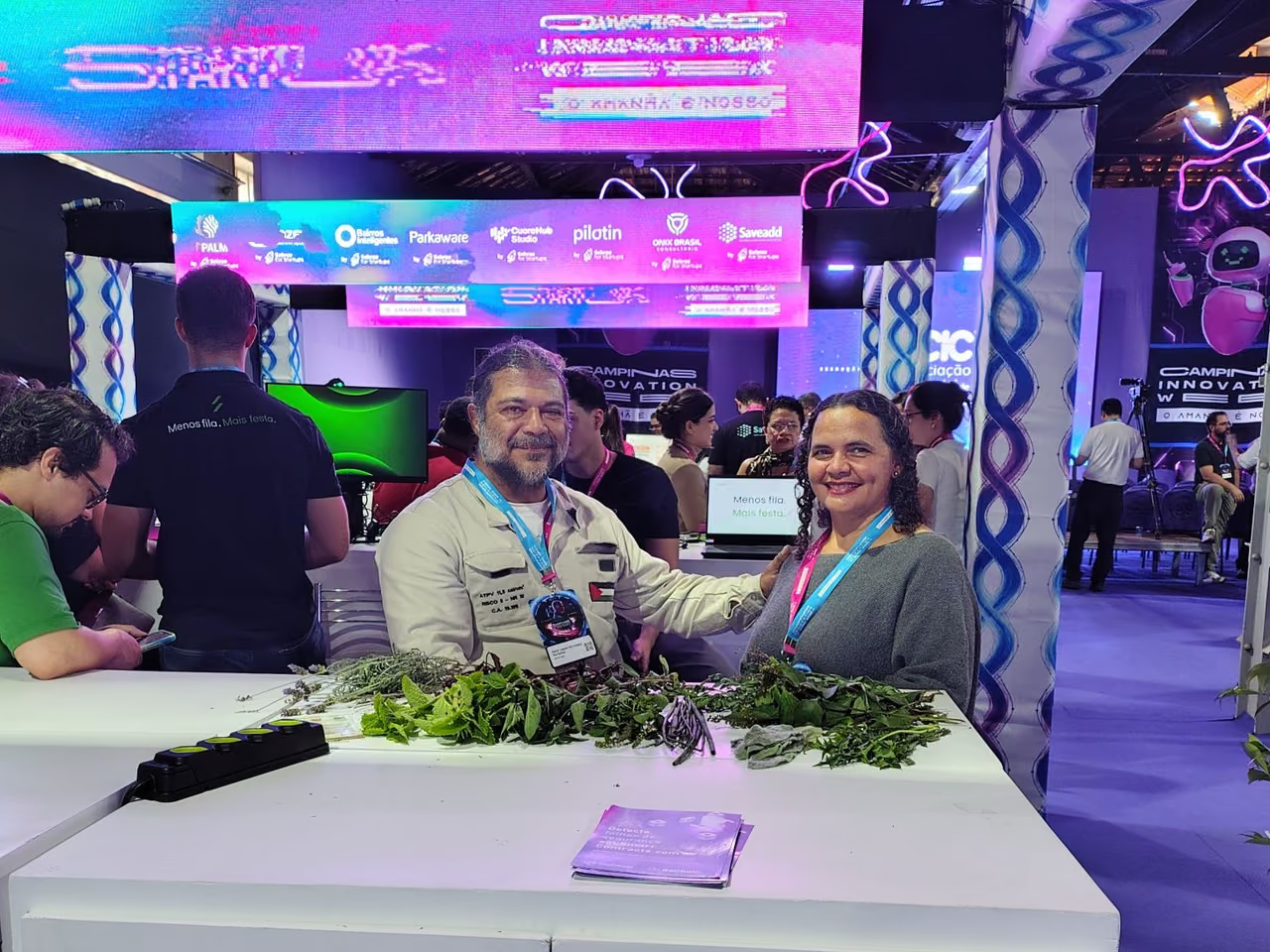 Fátima and Daniel, from Horta do Itajaí, during their participation in Campinas Innovation Week 2026.
When people talk about innovation, it is common to think of new things. A technology that has just arrived, a company that has created a different solution, a tool that promises to change something. But those who live in and follow the territories know that this is not always how novelty happens.
Sometimes, it starts in a much simpler way: someone notices a problem, talks to someone else, puts a few ideas together, and tries to do things differently.
That was a bit of what Casa Hacker and Quebrada em Movimento brought to Campinas Innovation Week 2026.
Presence at Campinas Innovation Week
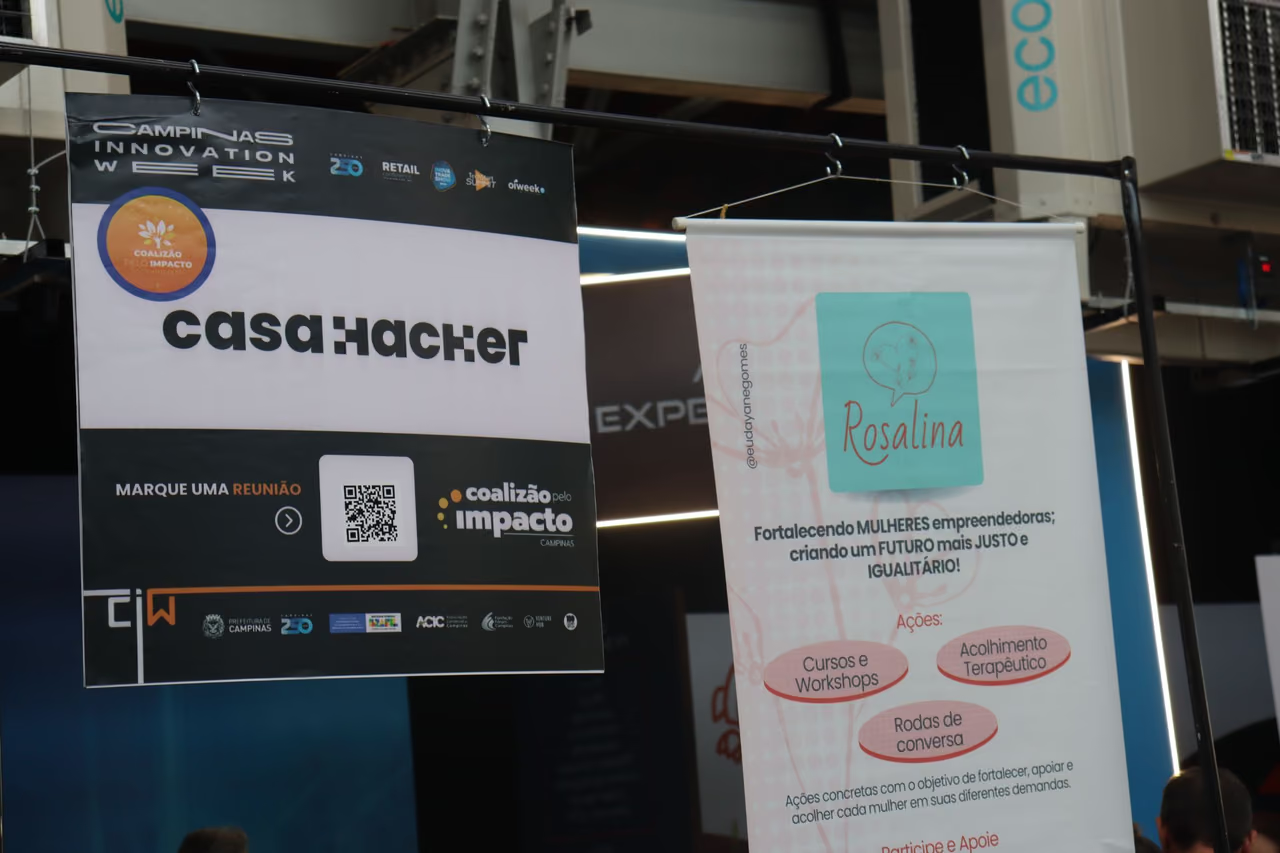 Booths of Casa Hacker and Movimento Rosalina during Campinas Innovation Week 2024, featuring presentation and outreach materials for the initiatives.
Our presence at CIW did not start yesterday. Over the editions, leaders from the territory have occupied that space, initiatives like Movimento Rosalina have had the opportunity to present their work, and women’s entrepreneurship has also become part of this conversation. Every year, participation has taken on new formats.
In this edition, Casa Hacker was present on September 15th, bringing the territory to the Startup Arena as part of the board of Coalizão pelo Impacto Campinas. This presence was not just represented by a speech or an institutional presentation: people and initiatives were there showing what they do every single day.
Fátima and Daniel, from Horta do Itajaí, were present sharing and showing a bit of the work that takes place in the garden. The Na Viela collective also had its booth during the week, presenting its work and showing a bit of the strength that exists in the Campo Grande region in the city of Campinas.
What innovation also is
When these experiences reach an innovation event, a question almost naturally arises: is innovation only what we are used to calling innovation?
Because there is a lot of intelligence in the territory that does not usually get that name.
There is knowledge in those who know how to plant and make the earth produce. There is creativity in those who find a way to turn a skill into income. There is innovation when women get together to sell, promote their work, share costs, and create opportunities for one another. There is a solution when a community looks at a difficulty that is part of its routine and decides not to wait for someone from the outside to fix it.
Perhaps Horta do Itajaí helps remind us precisely of that. Talking about a garden may seem very far from a conversation about innovation. But you only need to look a little closer to realize how much knowledge exists there. There is know-how about the land, planting, cycles, food, and how to make the most of what is available. There is also organization, work, and people making it happen. You don’t need to put a screen or an app in the middle for knowledge to exist.
Women’s entrepreneurship and collaboration
The same goes for those who entrepreneur in the territory. Often, before there is a formal business registration, a structured store, or a grand business strategy, there is a woman doing something at home, learning by doing, selling to a neighbor, promoting through social media, receiving a referral, and trying to make ends meet. When these women meet, share experiences, and build paths together, something is also being created.
It was in this space that the conversation on the Elas Conectam stage made sense. The circle “Networking Entrepreneurship: Collaborative stores as a strategy for strengthening and empowering women’s entrepreneurship”, moderated by Karla Marques, brought to the center a discussion that already takes place in the real lives of many women entrepreneurs: how to grow without having to do everything alone?
Networks, collaboration, and economic autonomy may sound like pretty words when written in a program. But in the territory, they have a name, a face, work, and a history.
Bringing conversations closer
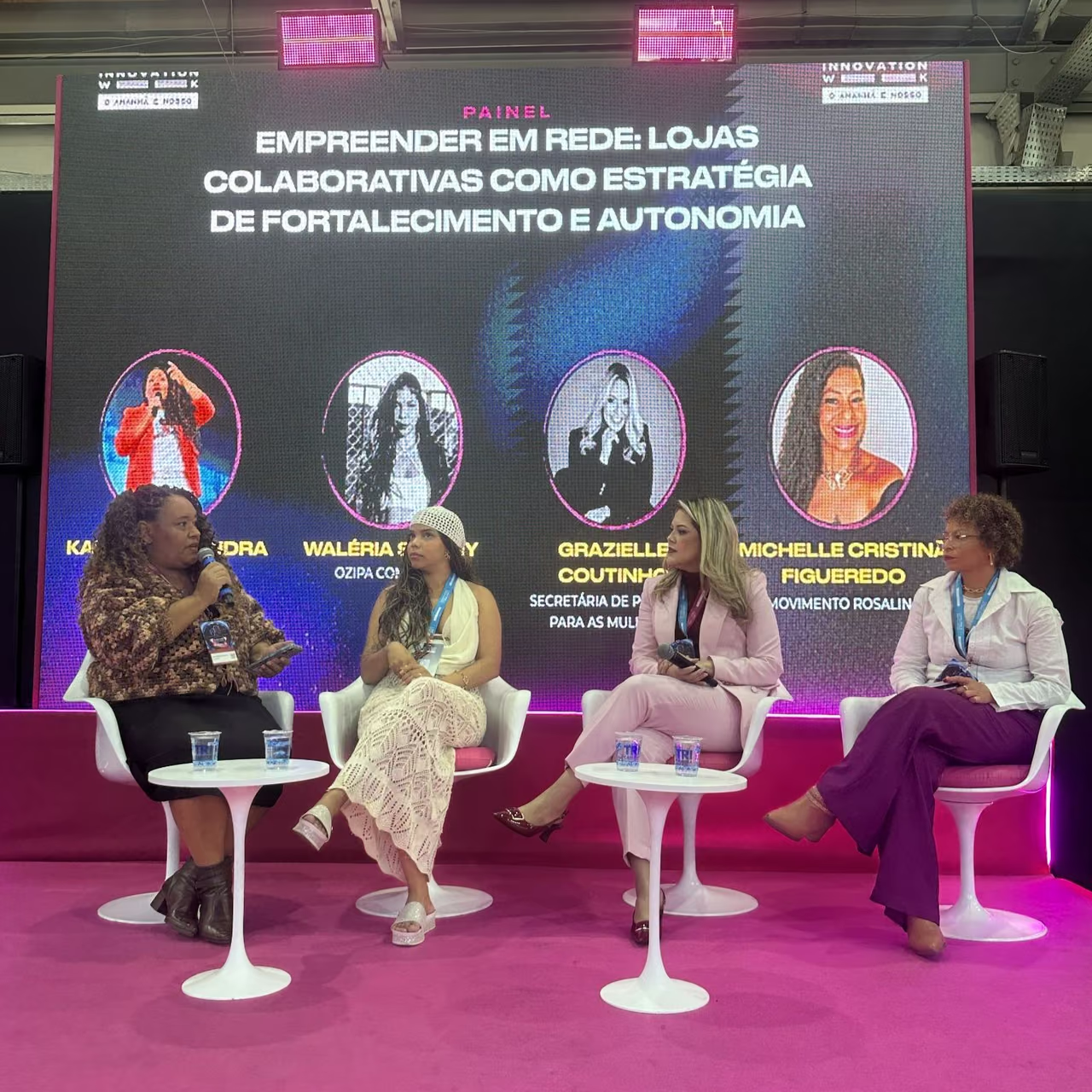 Conversation circle on women’s entrepreneurship, moderated by Karla Marques, during Campinas Innovation Week 2026.
And perhaps this is one of the greatest riches of attending an event like Campinas Innovation Week: being able to bring these two conversations closer together.
On one side, a city space that brings people together to think about the future. On the other side, people who are already building the future every day, often without calling it innovation.
Throughout the different editions of CIW, our presence itself has changed. First came the leaders from the territory. Then, initiatives started presenting what they were building. Movimento Rosalina was there. Karla participated as an exhibitor, later spoke about women’s entrepreneurship, and this year returned as the moderator of a conversation circle.
It is a change that seems small when told this way, but it says a lot.
From the territory to building the conversation
Because there is a difference between being invited to talk about the territory and participating in building the conversation.
When a leader speaks, when an entrepreneur presents her work, when an initiative shows what it has built, when someone from the territory leads a conversation, knowledge is not just being taken somewhere else.
It is finding space to be recognized.
And perhaps that is where social innovation appears most strongly.
Not necessarily as something grand or extraordinary, but as what happens when people realize they can create other possibilities for their own reality together.
A bridge between territory and innovation
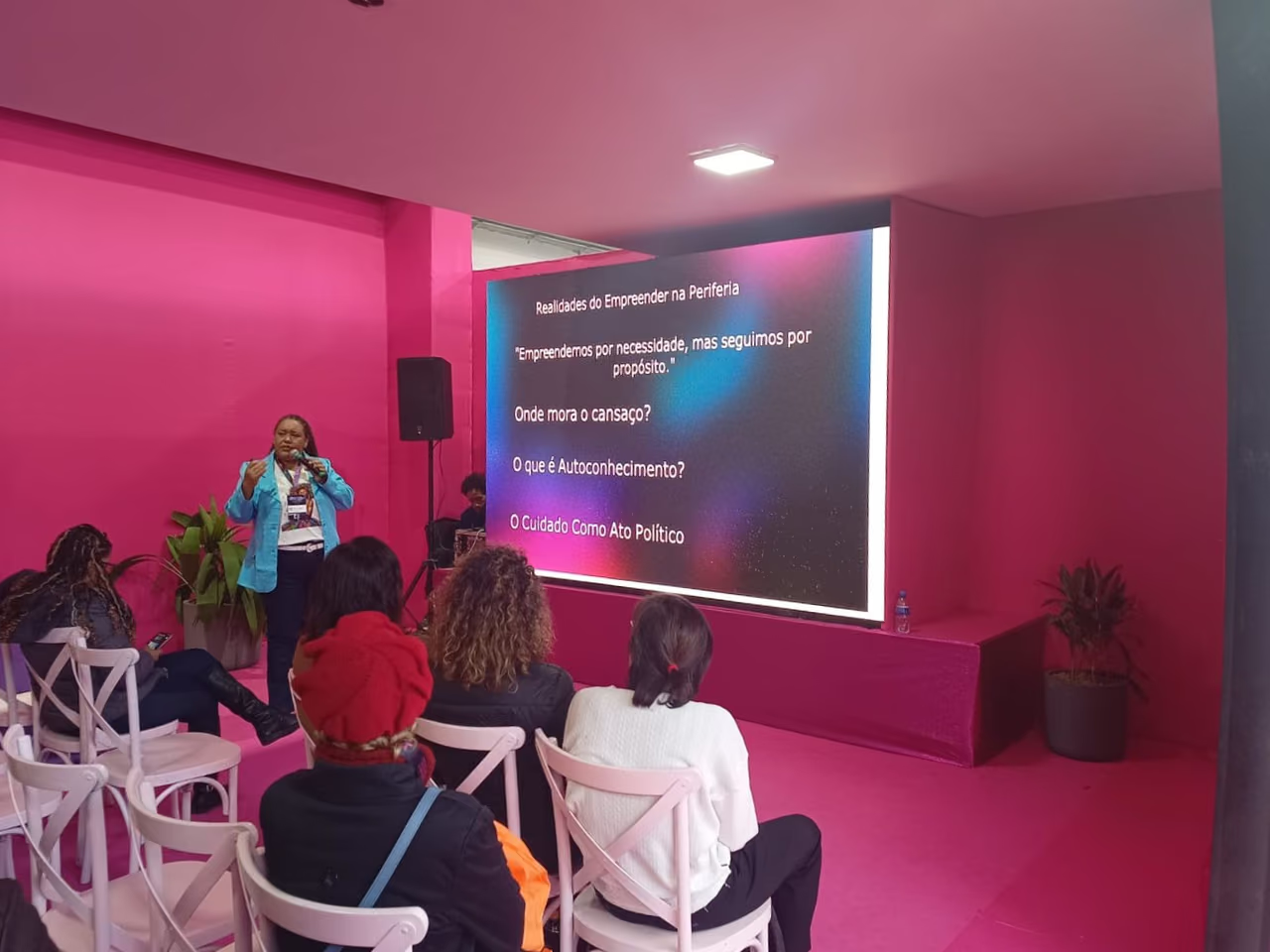 Karla Marques during a workshop at Campinas Innovation Week 2024.
Casa Hacker and Quebrada em Movimento have been building this bridge by bringing the experiences of the territory closer to spaces where these conversations happen. But the bridge works both ways. While the territory reaches these spaces, these spaces are also invited to look at the territory in a different way.
Because the periphery does not arrive at the conversation about innovation just to learn what it means to innovate.
It arrives carrying what it has already learned, created, and transformed along the way.
What the city starts to see
And perhaps the most interesting question after a week like this is not just what the territory brought to Campinas Innovation Week. It is also: what does our city start to see when it begins to recognize as innovation what the territory has been doing for so long?