
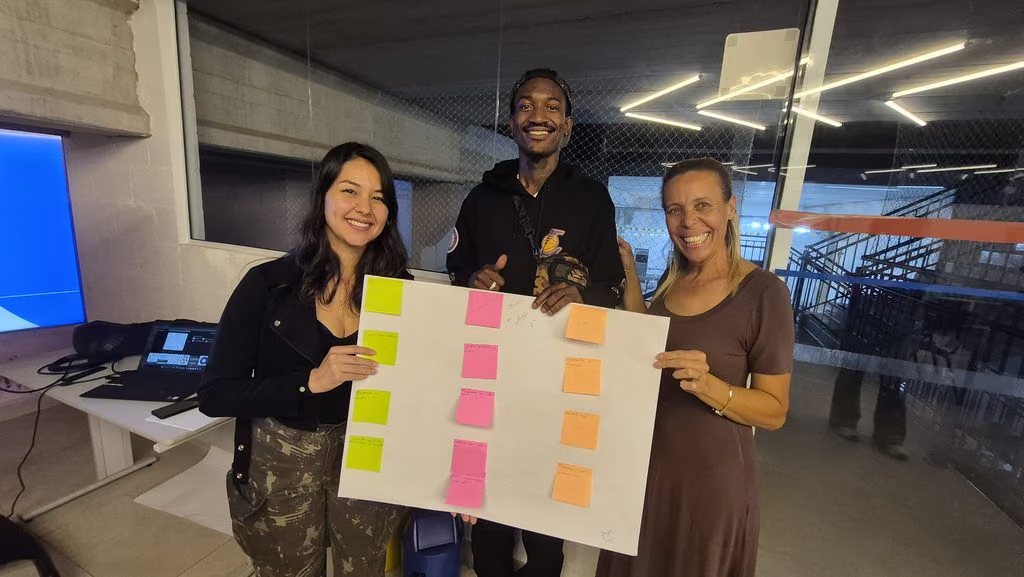
How training, mentoring, and resource access helped a local initiative come to life
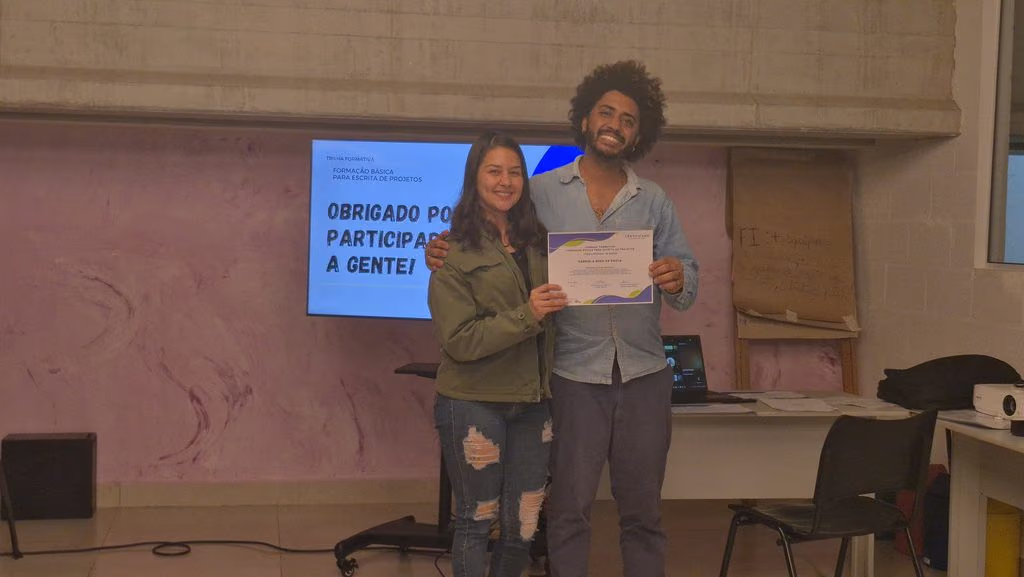 Gabriela Buck, creator of the Autoconhecimento Feminino project, and Celso Niger, social impact advisor at Hub Quebrada em Movimento.
When Gabriela Buck registered the Autoconhecimento Feminino project in Fundo da Quebrada, approval didn’t seem like an obvious outcome to her. It was the first time she was putting a proposal of her own into practice, handling funds and execution responsibility.
“I didn’t think the project would be approved right away. When it was approved, it was kind of unbelievable: ‘Wow, is this really happening?’”
— Gabi Buck
The proposal was born from issues close to her reality and that of other women in the periphery. The idea was to create a space for conversation about self-esteem, self-care, motherhood, professional life, intimate health, and autonomy, connecting these themes to handicraft activities that could also open up possibilities for income generation.
Before executing her initiative, Gabi participated in two writing and project structuring tracks and the mentoring program, held within Quebrada em Movimento. This journey helped transform an idea built from lived experience into objectives, activities, a budget, and feasible execution strategies.
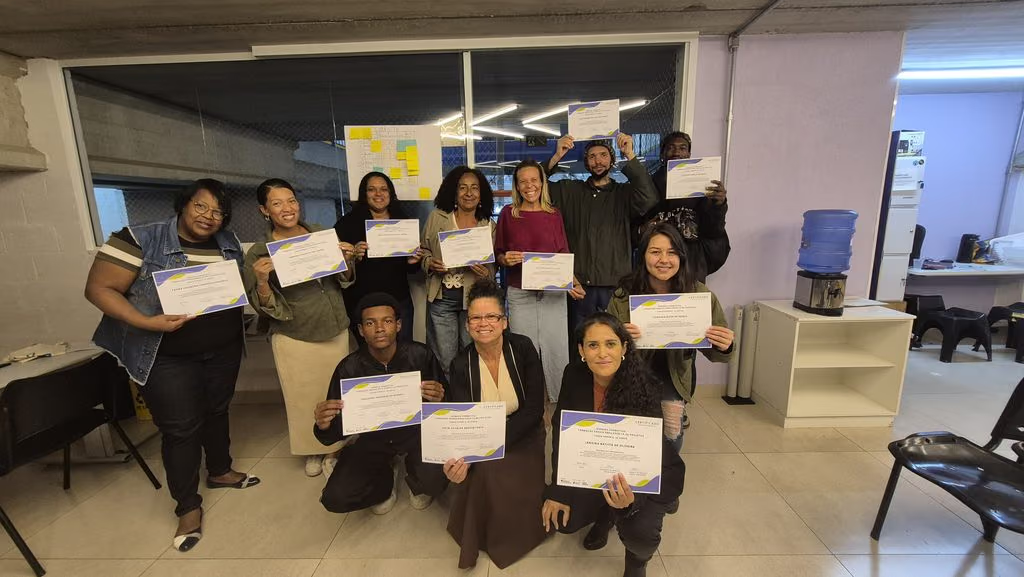
Gabi during the writing and project management tracks of Quebrada em Movimento.
Talking about women from real life
Autoconhecimento Feminino was designed especially for peripheral women and mothers, stemming from situations that run through their daily lives. The first lecture brought together therapist Karla Alessandra and physician Thais Dakini to talk about the relationship between being a mother and a professional, self-care, women’s health, and pelvic movements.
For Gabi, bringing these discussions close to home also had a personal meaning. By speaking about the reality of the women around her, she directly summarizes an experience that impacts many families in the territory:
“It’s what I always say: the traditional Brazilian family is a single mother.”
— Gabi Buck
The phrase emerges from a reflection on women who need to juggle motherhood, work, financial autonomy, and caregiving, often taking on these responsibilities practically all by themselves. Gabi considers it an honor to bring up this agenda at a time when women are gaining more space in entrepreneurship and strengthening their autonomy. For her, creating a space for exchange with the women around her was one of the most important parts of the experience.
The proposal also accounted for a concrete difficulty faced by many mothers: participating in an activity without having anyone to leave their children with. Therefore, women could bring their children, who found drawing materials and other ways to participate while the activities took place.
After the conversations, the project moved on to practice. Workshops were held on making beaded bracelets and necklaces and crocheted t-shirt yarn baskets. Handicraft appeared both as a therapeutic experience and as a possibility for generating income.
When the project grows beyond paper
Execution quickly showed that the project could reach dimensions that were not fully anticipated in the initial planning.
One lecture was scheduled, but two were held. In the second meeting, Karla Alessandra participated voluntarily in a conversation about anxiety and strategies to deal with it using the five senses. There were also conversation circles, meetings with children and adolescents, and discussions about education, culture, self-esteem, and life projects.
The audience was also surprising. There were only 13 advance registrations for the first activity. With the outreach carried out at CRAS Satélite Íris 1 and the participation of students from other courses taking place in the space, 48 people were present at the first meeting. The second lecture brought together another 38 people, and, considering the other workshops, the report recorded 95 people benefited throughout the project.
The shift in scale happened so quickly that it brought quite concrete challenges. Gabi had bought food considering the reduced number of registrations and was surprised by the arrival of a much larger audience. CRAS itself helped resolve the situation by providing snacks for those present. It is a simple episode, but one that translates an important characteristic of this first experience: learning to execute a project also meant learning to respond to the unexpected.
Learning by doing is also part of the impact
Not all learning happens inside lectures and workshops. For Gabi, carrying out her project also meant facing aspects of management that were still new.
Finding a space was one of the first difficulties. The intention was to hold the activities closer to the center of the community, but after several attempts and date changes, the project found a welcoming home at CRAS Satélite Íris 1.
Documentary organization, the use of technology, and accountability also appeared as challenges during execution. Gabi acknowledges that this process required learning and support, but she feels she left the experience with more knowledge and confidence to handle these responsibilities.
This journey shows why training, mentoring, and access to resources need to go hand in hand. Support doesn’t end when the money is transferred. Execution also becomes part of the training process, allowing a leader to experience planning, communication, public outreach, budgeting, and accountability in a real-world situation.
An initiative that also transformed its creator
Throughout the project, Gabi began to recognize new skills. In the crochet workshop, for example, all participants were beginners. The experience of leading the activity made her realize something that wasn’t in the initial plan: the joy of teaching.
But her trajectory within Quebrada em Movimento went beyond the project itself. Participation in other cultural and educational activities broadened repertoires and brought about personal changes.
“It wasn’t just learning for my financial life. It was learning for my personal life, above all.”
— Gabi Buck
She reports that experiences related to theater helped her work on her shyness and her ability to speak up. She also highlights contact with discussions on rights, gender, and anti-racism as part of an awareness-raising process that began to shape her way of seeing the territory and the relationships around her.
This discovery, however, coexists with very concrete challenges. As a single mother, Gabi needs to balance her desire to continue working with cultural projects with the need to generate immediate income and take care of her daughter. Although she describes the project experience as a fulfillment, she shares that she had to step away temporarily to prioritize activities capable of bringing faster financial returns.
This reality does not diminish the results of her trajectory. On the contrary: it reveals why training and funding initiatives need to consider the concrete conditions required for peripheral women to stay in the cultural and social fields.
Results that left paths open
The project mobilized 95 people, expanded the initially planned activities, and allowed Gabi to face, in practice, the various challenges of managing an initiative. The budget covered fees for the lectures, communication materials, food, workshop materials, and support equipment. Out of the R$ 2,500 budgeted, R$ 2,499 were executed.
More important than the isolated amount is observing the path created from it. A participant in educational processes managed to draft her own proposal, access resources, execute a first experience, and leave the process with a broader repertoire to carry out other initiatives.
Autoconhecimento Feminino also did not end when the schedule came to an end. Workshop materials continued to be used, new meetings began to be organized, and Gabi even made her own home available to bring activities closer to the public.
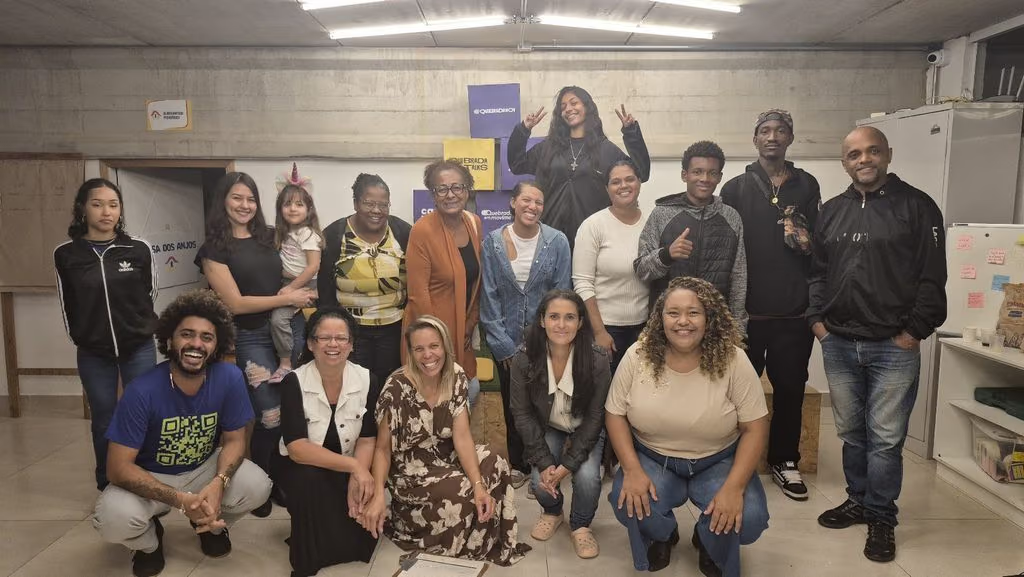
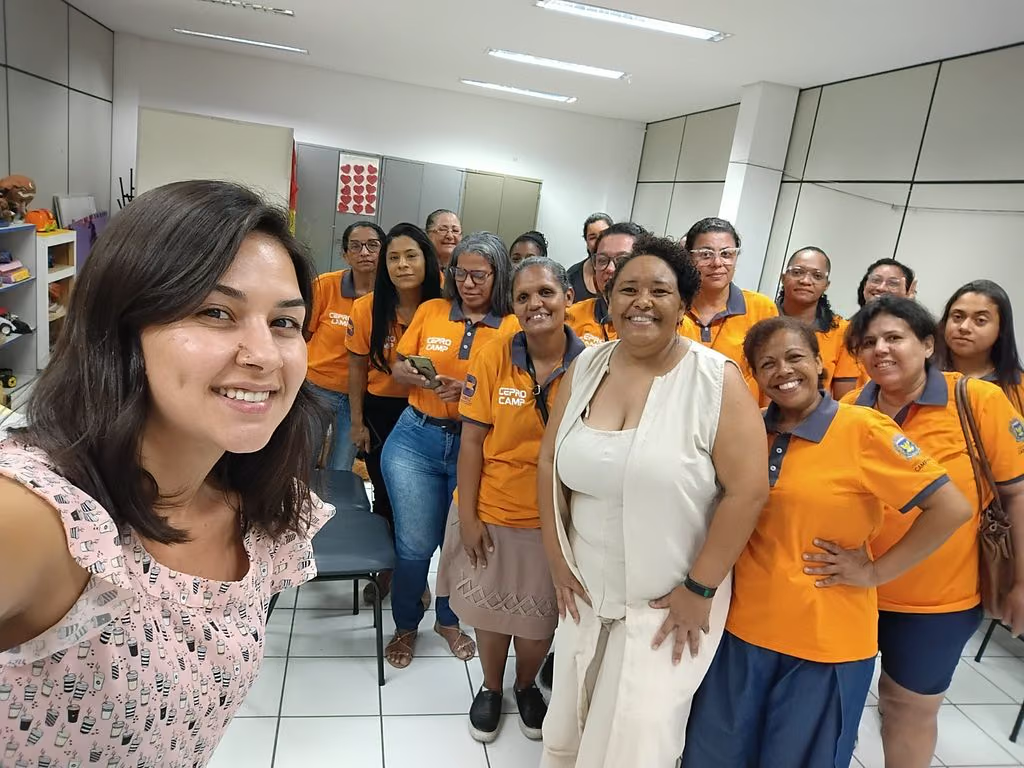 Records of activities carried out by the Autoconhecimento Feminino project.
From Fundo da Quebrada to Fundo de Cidadania Ativa
The experience that supported initiatives like Autoconhecimento Feminino continues to move forward. Fundo da Quebrada now gives way to Fundo de Cidadania Ativa, whose thirty selected projects in the 2026 edition are currently in the execution phase.
This continuity reinforces a strategy that goes beyond opening a call for proposals: bringing training, monitoring, and access to resources closer together so that people who already have ideas and local engagement can turn them into more structured initiatives.
Gabi’s story shows what this path can produce. The first approval came accompanied by fear, doubts, and difficulties, but it also left behind knowledge, new skills, relationships built in the territory, and greater confidence to turn ideas into projects.
If Autoconhecimento Feminino was born to empower other women, the journey also empowered its creator. By creating spaces for conversation, learning, and autonomy, Gabi recognized in herself the capacity to plan, teach, mobilize people, and lead her own initiative.
The first project has come to an end, but what set it in motion remains. In some way, the initiative’s name also summarizes Gabi’s journey: self-knowledge has transformed into a viable path to autonomy.