
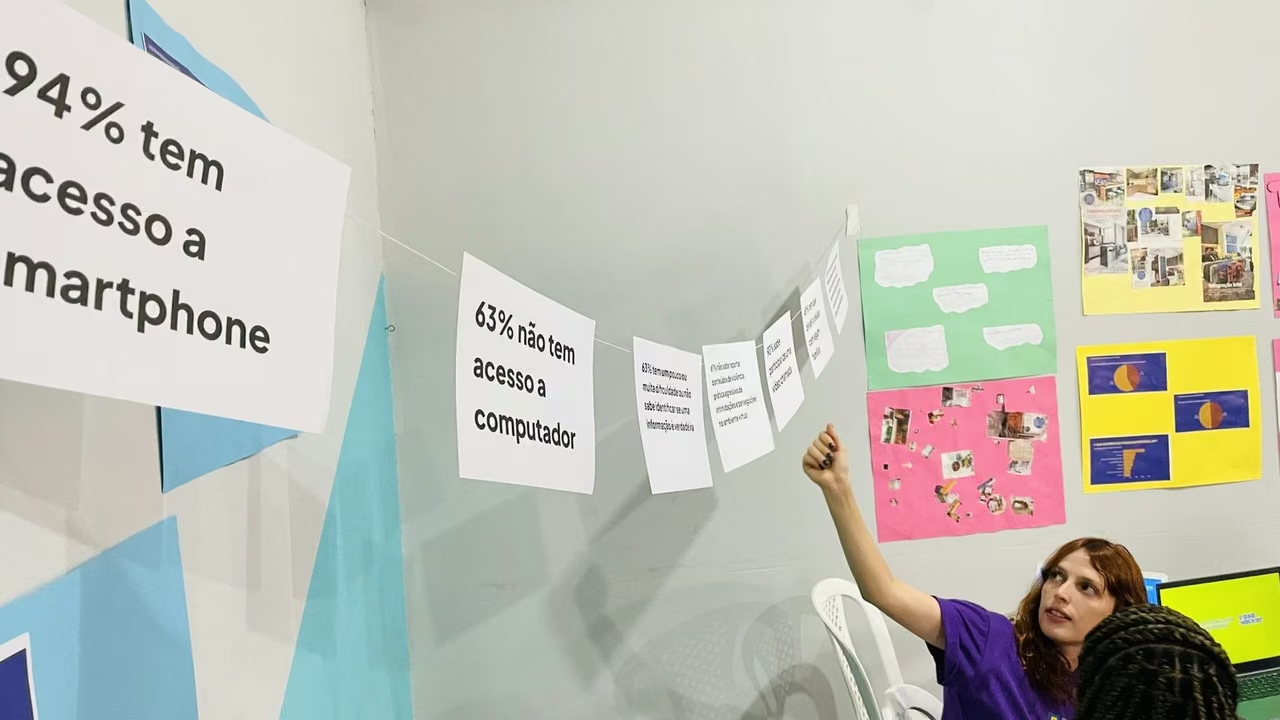
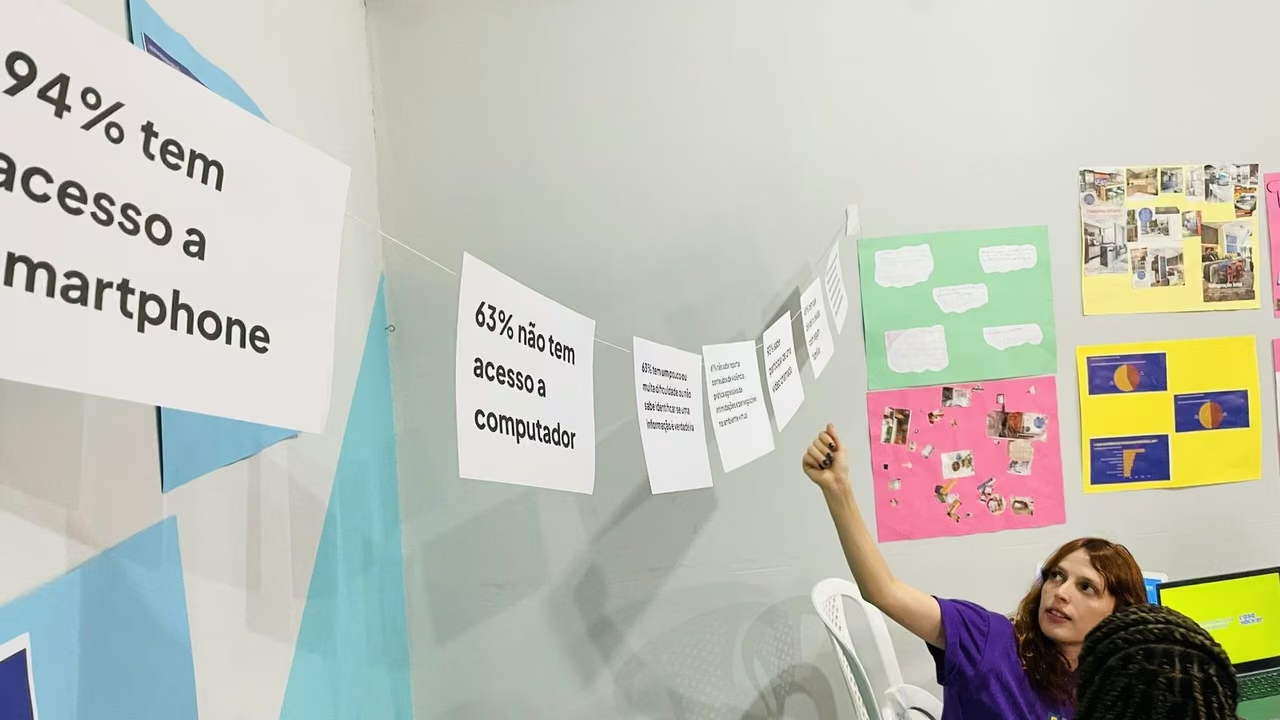
This whitepaper presents the trajectory, the foundations and the results of Bytes de Mudanças, a social innovation initiative of Instituto Semear, with technical partnership from Casa Hacker and private social investment from the FEAC Foundation.
Since it was created in 2023, the project has started from a simple and powerful premise: there is no digital inclusion without social inclusion, and no technological emancipation without a careful reading of the territory. Instead of “bringing technology in” from outside, Bytes de Mudanças was designed to build solutions with the territory, starting from its experiences, its pains and its strengths.
In the years after the Covid-19 pandemic, the digitalisation of services, working relationships, education and communication came to cut across everyday life even more intensely. What could have meant wider access and opportunity in practice deepened inequality for territories such as Vila Olímpia and Parque Via Norte, in Campinas (São Paulo State). At the very moment when the demands to use the internet, apps, digital government platforms and online study tools were increasing, many families had neither the infrastructure, the skills nor adequate support to deal with that transformation. It was in this context that Instituto Semear, with its long-standing presence in the territory, began to identify signs that the community was already directly feeling the impacts of digital transformation, especially among children, adolescents, young people looking for work, families and older people. Those signs gave rise to one central question:
How can we support the territory in critically appropriating digital technologies, turning them into allies for study, work, income, social participation and access to rights – rather than into one more barrier?
To answer that question, in 2024 Instituto Semear and Casa Hacker began a social innovation process. Instead of starting with a “course” or an “IT class”, the project chose to start with listening and with territorial research.
On the basis of robust research, with questionnaires, generative sessions and interviews with children, adolescents, adults and people aged 60+, it became possible to:
- understand how people accessed and used technology day to day;
- identify fears, barriers, interests and dreams connected to the digital world;
- recognise skills already present in the communities and the gaps that prevented fuller use of technologies.
That data did not stay on paper. It was the starting point for building a social technology of socio-digital inclusion – named that way precisely because it inseparably integrates social dimensions (relationships, rights, work, education, culture) and digital ones (devices, platforms, security, content production).
Across 2023 and 2024, Instituto Semear, Casa Hacker and the FEAC Foundation, in constant dialogue with educators and with the territory, developed the project “end to end”, combining different strands of work that feed one another:
- Territorial research as the basis for diagnosis and decision-making;
- Development of learning tracks specific to children, adolescents, adults and people aged 60+, structured around digital skills, multimedia, studying via the internet, opportunities and digital services;
- Assembling and upgrading the technology infrastructure in the units;
- Recruitment and selection of educators with a technical-pedagogical profile aligned with the project;
- Continuous technical and methodological advisory support to the Instituto Semear teams, with monthly training and asynchronous support;
- Creation and application of assessment instruments, a baseline and indicators, to track the evolution of digital skills and the socio-digital inclusion of participants;
- Rollout of the training open to the community, with permanent monitoring of results and fine-tuning in practice.
Along this path, Bytes de Mudanças stops being merely a project and becomes a replicable, territory-based methodology of socio-digital inclusion, able to inspire other organisations, networks and public policies.
Throughout this publication you will find:
- the description of the territorial research, which underpins the whole design of the project;
- the detail of the indicators of digital skills and socio-digital inclusion, as well as the results achieved;
- the presentation of how the learning tracks were developed by age group, showing how the curriculum was translated into concrete training experiences;
- the account of the technical and pedagogical advisory work carried out with the Instituto Semear teams;
- the process of recruiting and selecting educators, essential to ensure coherence between the proposal and whoever is in the classroom;
- analyses and recommendations for scaling and sustaining the social technology developed.
By bringing research, social innovation and pedagogical practice together, Bytes de Mudanças shows that technological emancipation is not a slogan but a process built step by step – listening to the territory, experimenting, evaluating, adjusting course and, above all, recognising that every person in Vila Olímpia and Parque Via Norte has the right not only to access technologies, but to use them to create, decide and transform their own reality.
Building the technology infrastructure
Instituto Semear developed a technology infrastructure based on a notebook-first model (laptops only in the classroom), prioritising the mobility and flexibility of digital resources. This approach lets pedagogical activities overcome the limits of fixed computer labs, integrating technology more fluidly into different learning spaces.
The infrastructure comprises laptops as the main devices for digital access, good-quality internet connectivity, distributed power sockets, furniture with tables and chairs that support both individual and collaborative work, and multimedia projectors to support presentations and group activities.
The setup was implemented in both Instituto Semear units, Parque Via Norte and Vila Olímpia, ensuring that both spaces offer the conditions to access technology as a pedagogical tool. The investment in infrastructure was fundamental to guaranteeing adequate conditions for implementing the next stages of Bytes de Mudanças.
Territorial research
Territorial research is the starting point of the innovation process. More than gathering data, it was conceived as a process of qualified listening and of citizen production of information about access to, use of and skills in digital technology in the territories where Instituto Semear works in Campinas (São Paulo State).
Historically, peripheral territories appear in the statistics far more as a problem than as subjects of rights and of strength. The lack of data produced from the local reality reinforces stereotypes and feeds public policies designed “from outside”, with little grip on the concrete living conditions of the children, adolescents, young people and adults who live in these spaces.
The Bytes de Mudanças territorial research was built to move in the opposite direction, seeking to:
- recognise the centrality of the territory in shaping socio-digital inclusion policies and programmes;
- produce data with, and not merely about, people, understanding them as subjects of knowledge;
- inform pedagogical and management decisions – from the design of the learning tracks to prioritising investment in infrastructure, educator training and community organising.
With that, the territorial research is also a pedagogical act: by recording practices, difficulties, dreams and interests around digital technologies, it contributes to the technological emancipation of Vila Olímpia and Parque Via Norte, shifting the lens from deficit to strength.
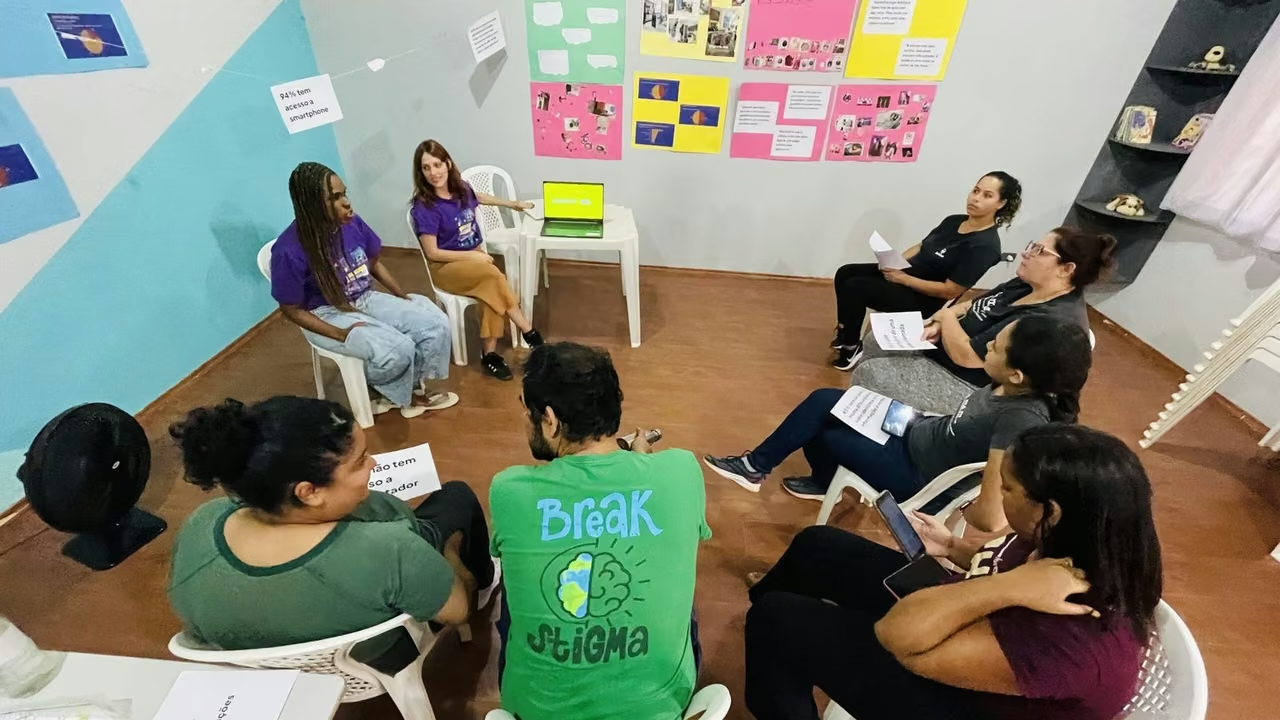
Educators from the territory gathered in a circle with the researchers Layne Gabrielle and Carolina Jansen to share the research results and carry out the validation of the data generated.
Territorial research is the starting point of the innovation process. More than gathering data, it was conceived as a process of qualified listening and of citizen production of information about access to, use of and skills in digital technology in the territories where Instituto Semear works in Campinas (São Paulo State).
Research leads
Layne Gabriele

Layne Gabrielle
Researcher, manager of educational and cultural projects and founder of social initiatives, with work centred on social technologies, critical and racial literacy, digital inclusion and the democratisation of knowledge. She holds a degree in Languages – Portuguese from Unicamp and is an alumna of the Interdisciplinary Higher Education Programme (ProFIS/Unicamp), with a trajectory marked by building bridges between the university, the peripheries and civil society organisations. She works as Junior Research Manager at Casa Hacker, conducting research on digital citizenship and technological skills in different territories, with a focus on building educational programmes with social impact. She is Archive and Outreach editor at Geledés – Instituto da Mulher Negra, responsible for publications and dissemination work at the Centre for Documentation and Institutional Memory. She founded and was executive director of Laboratório Ádapo, coordinating strategic planning, resource management and partnerships for a social project focused on women and the peripheries. Between 2017 and 2023 she was a researcher at Unicamp, on themes such as innovation, popular and peripheral education, multiliteracies, the creative economy, social technologies, diversity and inclusion. She has experience as a popular educator in university outreach projects, as a facilitator of workshops, talks and events, and in producing educational materials, reports and booklets. Her professional trajectory brings together project management, applied research, training in language, and work in archives and memory, always from a perspective of social justice and of valuing the knowledge of the peripheries.
Carolina Jansen
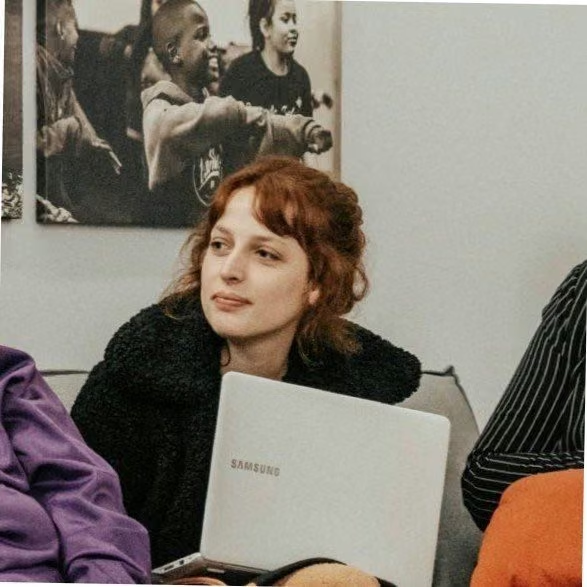
Carolina Jansen
Researcher and project manager focused on people, data and social impact, with experience in economics, communication, education and social development. She is a master’s candidate in Economic Development, with an emphasis on social and labour economics, at the Institute of Economics of Unicamp, and a researcher at the Public Policy Studies Centre (NEPP) and at the Interinstitutional Collaboration Centre for Artificial Intelligence Applied to Public Policy (CIAP). She collaborates as a researcher at the Centre for Trade Union Studies and Labour Economics (CESIT) and at the civil society organisation Casa Hacker. She holds degrees in Social Communication from PUC-Campinas and in Languages from Unicamp. She was manager and researcher of the impact evaluation of the Favela 3D programme of Gerando Falcões, aimed at transforming favelas into digital, dignified and developed territories through in-depth diagnosis, co-creation with the community, integration of public policies and impact evaluation. She has specialised in the evaluation and monitoring of public policies, social projects and the development of social technologies.
Objectives of the territorial research
The research was designed with interlinked objectives, oriented towards supporting managers and educators in decision-making. In general terms, it sought to:
- map the socio-demographic profile of the people served and of the territory, focusing on different generations (children, adolescents, young people, adults and older people);
- identify access to technologies (devices, connectivity, services) and the conditions under which that access happens (sharing, instability, family mediation and so on);
- characterise digital skills already developed, those under construction and those that still need strengthening;
- understand everyday uses of the internet and of devices, including communication, study, work, public services and leisure;
- gather training interests and aspirations for the future, especially regarding courses, professions and creating solutions with technology;
- produce inputs for designing the digital education learning tracks and for building a baseline to monitor the project’s impact.
These objectives guided the choice of instruments and the form of analysis, always seeking to balance technical rigour with practical usefulness for those in management and on the front line, inside the Instituto Semear units.
Theoretical and methodological approach
Guiding principles
The territorial research was structured around three main conceptual axes:
- **Socio-digital inclusion as a right and a public policy
The starting point is the understanding that access to the internet and to digital technologies, with the skills to use them critically and creatively, is a condition for full participation in economic, political and cultural life.**
-
This understanding takes on particular weight in Campinas, where a significant share of the population lives on a low income or in extreme poverty, which makes socio-digital inclusion a central component of social inclusion as a whole.
-
The production of information is treated as a tool of territorial empowerment: the data must serve the territory, the review of institutional practice and advocacy for fairer policy.
-
The research seeks to break with the logic in which communities are merely an object of measurement, repositioning residents as co-authors of the narrative about their own reality.
-
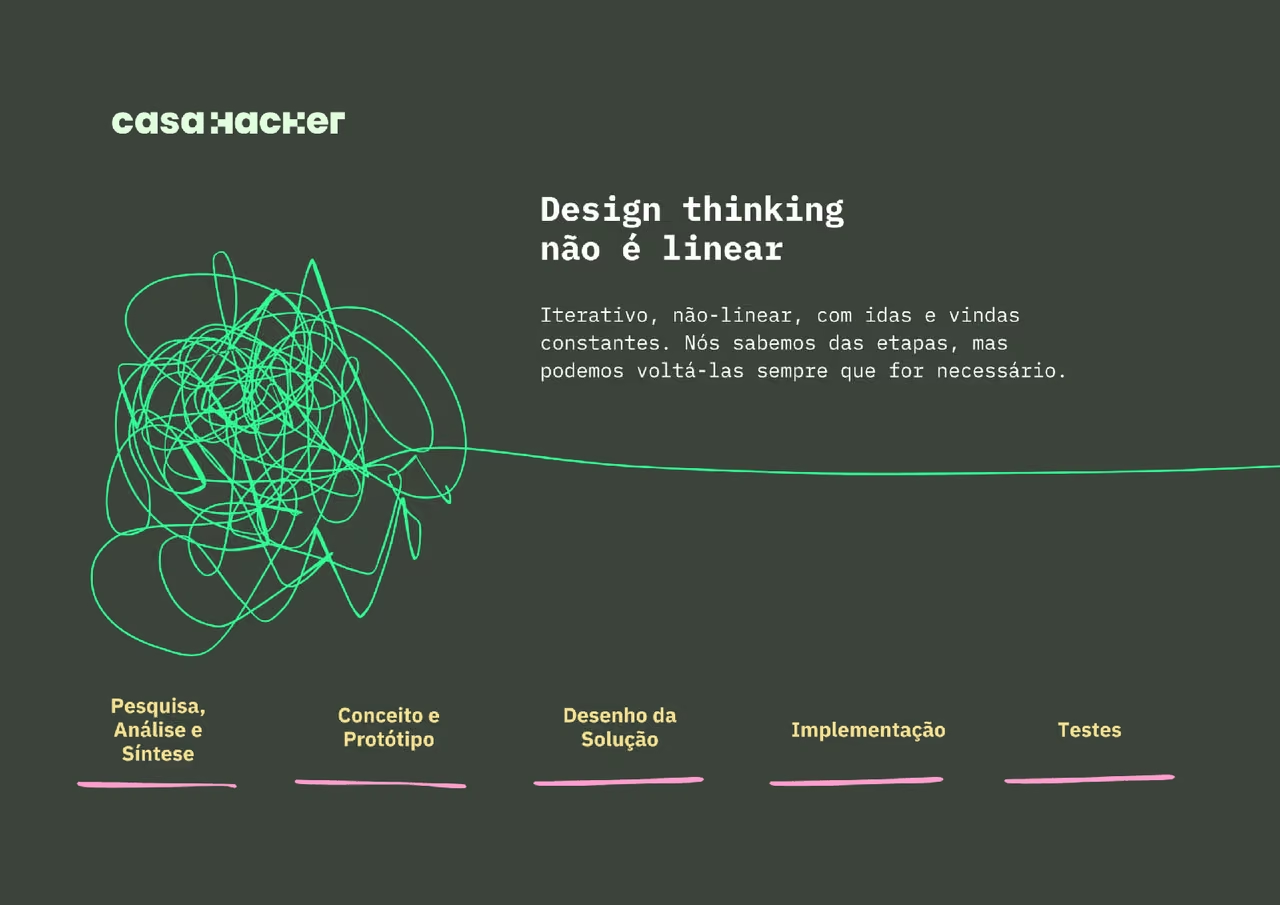
The initial stage, inspired by Design Thinking, was conducted as an immersion in people’s life context, seeking to understand not only what they say but also how they act, think and feel in relation to technology.
-
One focus was to identify extreme behaviours and profiles, which makes it possible to see latent needs and innovation opportunities that do not appear when you observe only the “average user”.
This combination of principles favours a mixed approach, integrating quantitative data (questionnaires) and qualitative data (generative sessions and interviews), articulated with moments of feedback and validation with educators.
Data collection techniques
The territorial research brought together three main investigation techniques, planned to complement one another:
- **Generative sessions
Held in groups with children and adults in both units (Vila Olímpia and Parque Via Norte), they involved activities that stimulated memory, imagination and reflection about technology.**
-
Past and present uses of the internet were explored, along with associated feelings (fear, enthusiasm, frustration, curiosity) and projections of the future.
-
In Parque Via Norte, for example, children built visual panels about “what technology is” and “who has access to it”, recording emotions on post-its and in drawings.
-
Among adults, in Vila Olímpia, the focus fell on uses connected to work, income, communication and access to services, as well as on barriers of digital literacy and insecurity in the online environment.
-
Questionnaires were applied to two age brackets, covering children and adolescents aged 6 to 11 and people from 12 years old to 60+.
-
The instrument covered:
socio-demographic profile (age, gender, race/colour);
-
access to devices and connection;
-
everyday uses of the phone and the internet;
-
digital skills already developed;
-
difficulties and fears while browsing;
-
interest in courses and professional paths;
-
the wish to create products or solutions with technology.
-
Held with a smaller group of children and adults, the interviews sought to dive into life stories, into experiences of using technology and into the affective dimensions of the relationship with the digital world.
-
What participants said reveals both familiarity with apps, games and social media and frustrations, fears, experiences of discrimination and barriers tied to literacy and income.
This methodological arrangement makes it possible to triangulate perspectives:
- what appears in the numbers is deepened in the narratives;
- what emerges in the generative sessions is tested and refined in the questionnaires;
- everything is taken back to the educators for joint interpretation.
Validation with educators
Recognising that educators know the children, the families and the territory deeply, the research included formal validation stages with the pedagogical teams:
- **Validation of the questionnaire
Meetings with educators to read and debate the questionnaire item by item.**
-
Adjustments of language, inclusion and exclusion of questions, adaptation of the order and of the way it is applied, to ensure it is understood by the different age brackets.
-
Presentation of the consolidated results (generative sessions, questionnaires and interviews) to educators from both units.
-
Collective discussion about how coherent the findings were with the reality observed day to day.
This movement turned the research into a co-responsible process: managers, educators and the research team shared decisions about what to measure, how to interpret it and which paths to prioritise for socio-educational action.
Characterisation of the territory and of the participating population
The research sits in the context of the city of Campinas (São Paulo State), marked by strong socio-economic inequality. A significant share of the population lives on a low income or in extreme poverty, which directly affects access to and use of digital technologies.
In this setting, the communities of Vila Olímpia and Parque Via Norte show:
- a high concentration of families in socio-economic vulnerability;
- a long-standing presence of stigmas and narratives that associate the periphery with violence and precariousness;
- little presence of qualified data expressing the many dimensions of strength of these territories.
From the point of view of the research sample, respondents include:
- **Gender diversity
a predominance of cis women and cis men, with trans people, non-binary people and other identities present in smaller proportion;**
-
a predominance of mixed-race people, followed by white and Black people, with Indigenous and Asian-Brazilian people also present;
-
participation ranging from children aged 6 to older people (60+), with the greatest concentration in school ages and among young adults.
This is therefore an intergenerational study, useful both for pedagogical planning in the units and for wider socio-digital inclusion strategies in the territory.
Access to technology and conditions of use
The data reveals a scenario of high connection levels but precarious conditions of access. In broad terms, what stands out is:
- a high proportion of households with fixed internet access;
- a wide presence of smartphones among residents;
- use of the mobile phone as the main (and often only) device for accessing the internet;
- the need to share devices among family members;
- absence or scarcity of computers at home;
- reports of using neighbours’ internet, indicating informal strategies to make up for the lack of infrastructure.
In the generative sessions, other important elements emerge:
- intense use of apps such as WhatsApp, YouTube and Google, for communication as much as for entertainment and study;
- absence or scarcity of internet cafés and print shops, which limits alternatives for access and services (printing, scanning, technical support);
- significant use of payment methods such as PIX, showing openness to digital financial innovation;
- a perception that the neighbourhood lacks essential services integrating the digital dimension into everyday life, such as libraries, telecentres and public facilities with in-person support for digital services.
For management and pedagogical practice, these findings indicate that a digital inclusion strategy cannot be limited to offering connectivity, and must:
- treat the shared mobile phone as the main device for access;
- incorporate educational solutions that work on small screens and with low bandwidth;
- promote qualified use of the equipment available in the units (computers, a stable network, printers);
- foster local partnerships to expand infrastructure and the offer of digital services in the territory.
Skills already developed, challenges and training interests
Despite the infrastructure constraints, the research shows that the territories hold a significant set of digital competences already acquired, especially among adolescents and adults. The skills most frequently reported include:
- connecting to a Wi-Fi network;
- downloading or installing apps;
- taking part in video calls;
- finding again websites already visited;
- using social media for communication, information and entertainment.
Among children, the quantitative and qualitative data shows a diverse and creative use of technology:
- communicating with family through video calls and messages;
- consuming content on YouTube (gameplays, tutorials, cartoons, series);
- an interest in producing videos, creating channels and playing on different platforms;
What children and adolescents said highlights:
- peer learning (siblings, cousins, schoolmates);
- frustration in the face of technical problems, but also pride at mastering new functions (installing games, editing videos, creating profiles on platforms);
- a perception that “knowing how to use a phone” is a form of recognition among friends and family.
Among adults, varied profiles appear:
- people who use the internet to sell products, advertise services, pay bills and learn how to make household repairs;
- people who feel they are “falling behind” as technology advances, whether because of reading difficulties or because of bad experiences with apps, scams or blocked accounts;
- families in which the children mediate the use of technology for their parents or guardians, inverting traditional roles of mediation.
At the same time, the research identifies important gaps, such as:
- difficulties in using the government’s digital services;
- little command of tools such as the Office suite (Word, Excel) and of text editors and spreadsheets in general;
- difficulty in recognising sponsored content, fake news and misleading information;
- insecurity about configuring devices, managing privacy, handling passwords and reporting problematic content on social media.
From the point of view of training interests, the data is consistent across age brackets:
- children aged 6 to 11 frequently mention:
IT and computer use;
-
creating videos and YouTube channels;
-
game development;
-
a wish to “use the internet better” and to “type faster”;
-
basic computing, Excel and computer use in general;
-
producing and editing video, including for social media;
-
programming and programming languages;
-
IT and English courses and training linked to technology, entrepreneurship, health, education and care.
When invited to imagine what they would create with technology, many children mention games, robots, apps for learning languages, solutions to offer free internet and even apps for tackling violence.
These results show that there is no shortage of interest or willingness to learn. The central challenge is to create the pedagogical and material conditions to turn that potential into concrete tracks of technological emancipation.
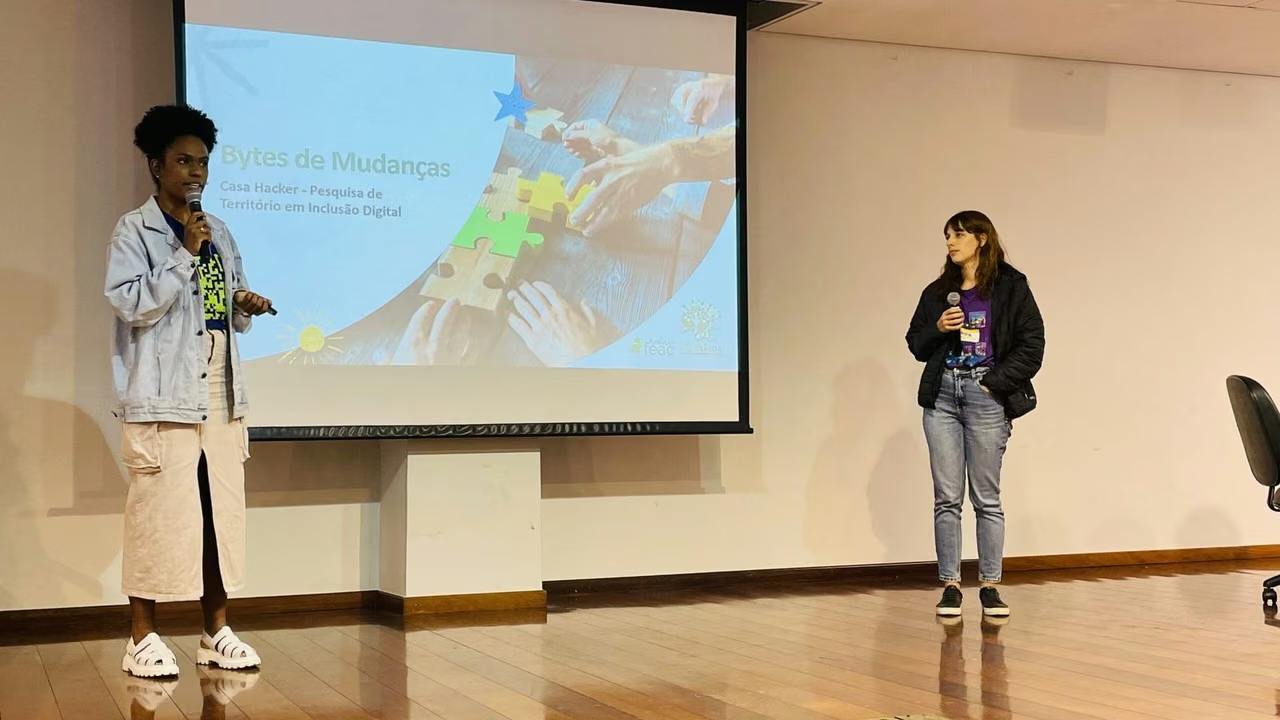
Layne Gabrielle and Carolina Janssen presenting the research at the FEAC Foundation’s “Convivência” event in 2024, to share good practice among civil society organisations.
Designing the learning tracks
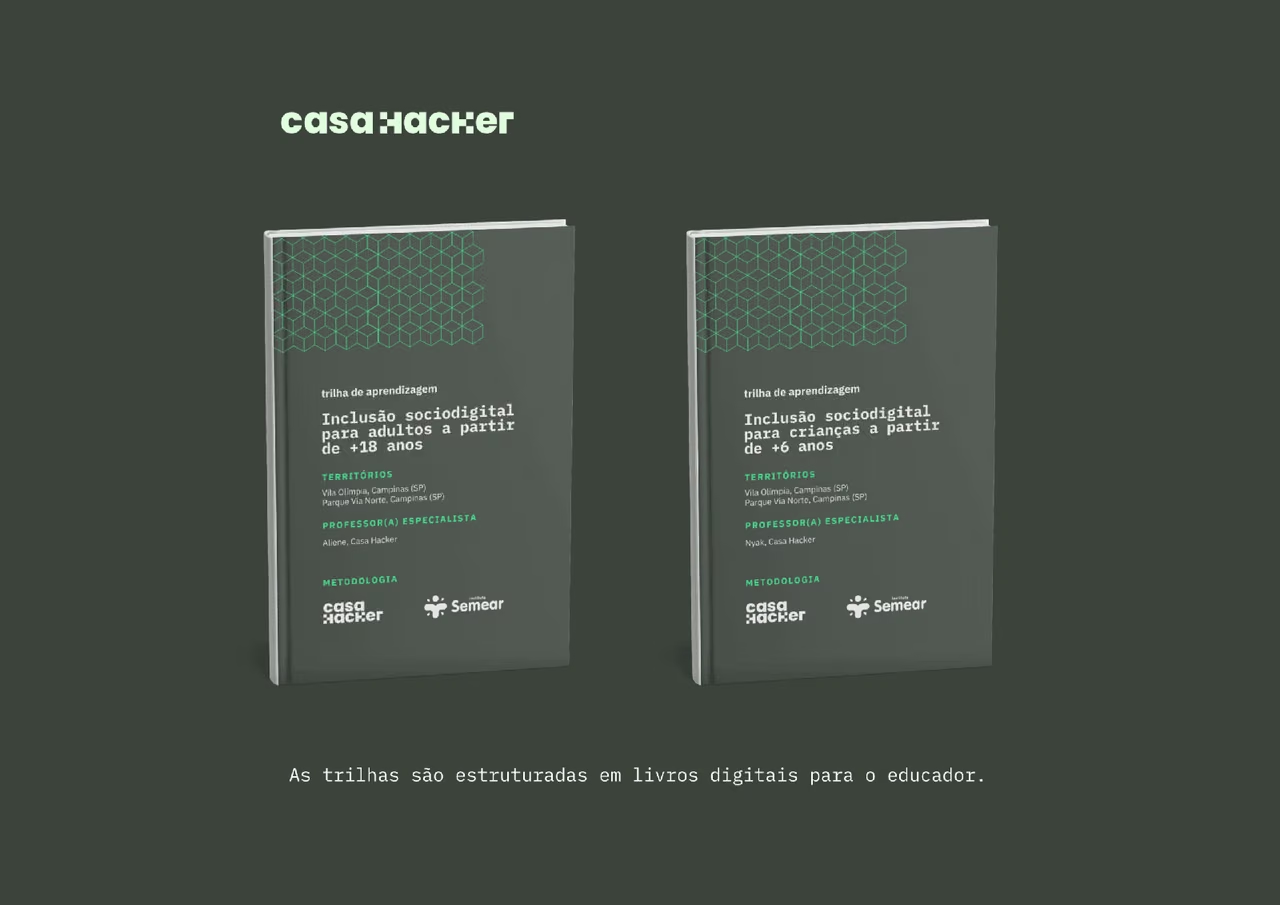
The design of the learning tracks was led by the Casa Hacker teachers:
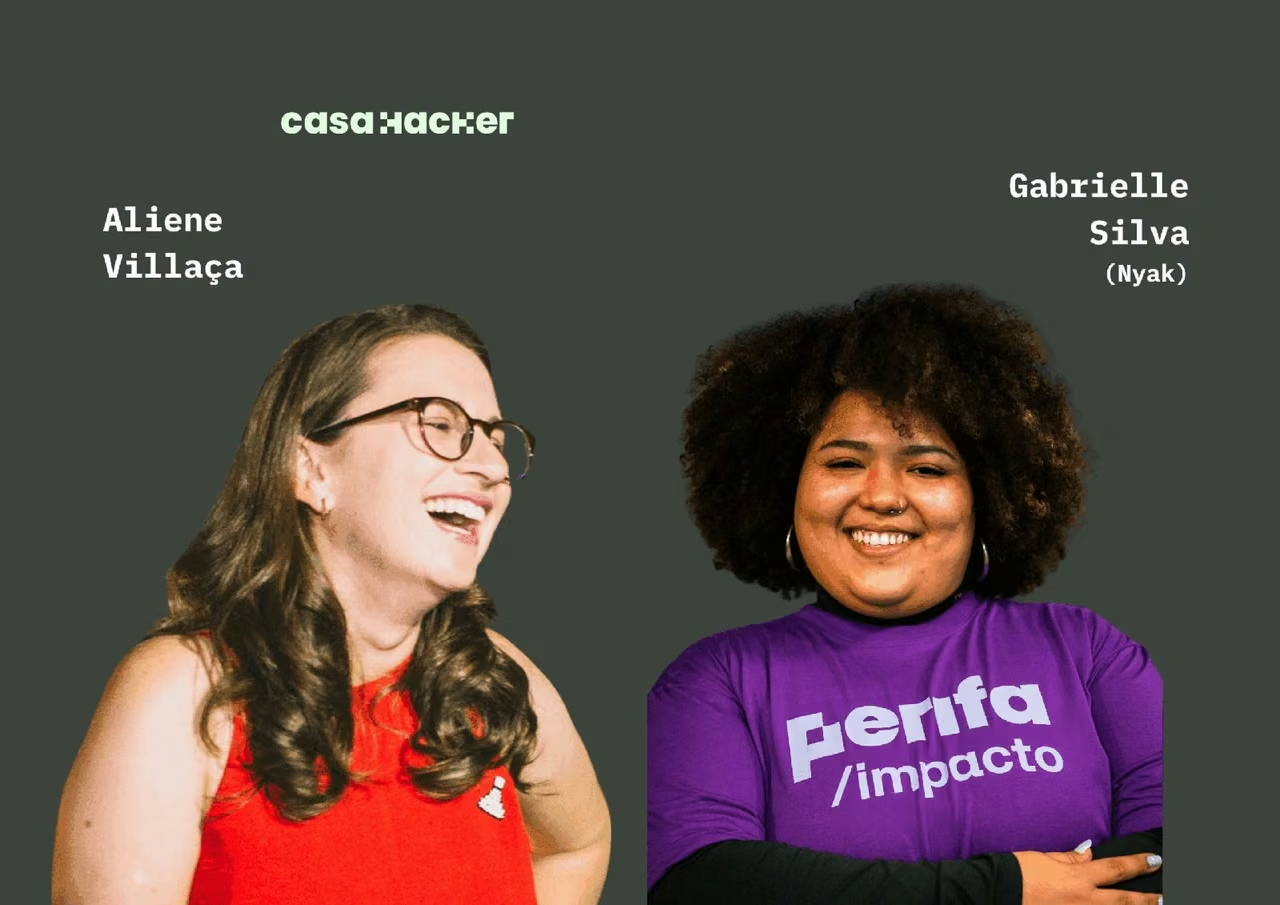
Aliene Villaça holds a doctorate and a master’s in Education from UFMG, with specialisations in Psychopedagogy and Neuroscience. At Casa Hacker since 2022, she is Lead Teacher in STEAM and coordinates the Minas em Tech project, which builds science and technology skills with secondary school girls. Since 2024 she has also taught on the Inclusão Tech project, building digital skills with children, adolescents and older people. Her doctoral research investigated how educational robotics can help students with learning difficulties, consolidating her expertise in inclusive education. With 8 years of experience at the Betim city council as a teacher and pedagogical adviser in Inclusive Education, Aliene worked with learning disorders, ADHD and dyslexia. She is an enthusiast of Creative Learning, Maker Culture and Educational Robotics, having previously taught at postgraduate and undergraduate level at UFMG.
and Gabrielli Silva, known as Nyak, is a manager of socio-environmental impact projects, a singer and a songwriter. At Casa Hacker she has been Project Manager of PerifaImpacto since April 2025, and was previously a teacher on Inclusão Tech and manager of Processes and Training at the Academy, Casa Hacker’s corporate university.
Guiding principles and pedagogical authorship
The learning tracks were systematised by Gabrielli Silva and Aliene Villaça, drawing on the socio-digital inclusion methodologies developed by Casa Hacker for four audiences: children (6+), adolescents (13+), adults (18+) and people aged 60+.
The design of the tracks starts from a few shared principles:
- Socio-digital inclusion as a vector of social and economic inclusion and of access to rights, especially relevant in working-class territories such as Vila Olímpia and Parque Via Norte.
- Centrality of the territory and of the prior research: the content responds directly to the demands identified in the Territorial Research on Digital Inclusion, incorporated as a reference in all the methodological materials.
- Project-Based Learning (PBL) as the structuring axis, turning each module into a concrete problem or challenge to be solved collectively, with a shareable final product.
- Andragogy for adults and people aged 60+, valuing life experience, immediate relevance and autonomy as the engines of engagement.
- Creativity and authorial expression as the way in for children and adolescents, bringing together technology, art, games and content production.
The pedagogical authorship of Gabrielli Silva and Aliene Villaça consisted in translating those principles into concrete tracks, aligned with the territorial diagnosis, organised by theme and by level of complexity, and designed to be taken up and adapted by the educators in the units.
The “architecture” of the tracks
Despite the specificities of each age bracket, the four tracks share the same methodological architecture:
- organisation into thematic modules, with increasing complexity;
- **each module containing:
a conceptual introduction;**
- a set of hands-on activities of increasing level;
- a “challenge project”, in which participants apply what they have learned in the form of a product (video, portfolio, blog, game, research, presentation and so on);
- a section of “tips for getting the most out of the activity”;
- an indication of “resources for study and deeper learning” (tutorials, platforms, games, online courses).
The tracks also use a standardised key to support the educator’s planning, classifying activities as compulsory, highly recommended or optional, and stating the estimated time, the resources needed and the suggested software.
In practice this means that managers and educators have a structured yet flexible script, able to:
- guarantee the development of a common core of digital skills;
- allow adaptations according to the pace of each group, the infrastructure conditions and the emerging demands of the territory.
Track for children (aged 6+)
The socio-digital inclusion track for children was conceived as a playful, creative way into the digital world, always mediated by the educator’s active presence.
Its central aim is that children should not merely consume technology but also use it as a space for expression, experimentation and learning, in dialogue with the territorial research, which showed the weight of videos, games and social media in children’s everyday life.
The track is organised around three broad axes:
- **Basic digital skills
an introduction to operating systems, file organisation, typing and mouse use, connections, safe web browsing, notions of data security, first use of apps, e-mail and settings;**
-
an introduction to multimedia; use of tools such as Canva and CapCut; image banks and soundtracks; scriptwriting; notions of basic and advanced equipment; an introduction to animation, stop motion, tools such as Animated Drawing and Code.org, and basic programming with Scratch;
-
activities that introduce learning platforms such as Duolingo, Khan Academy, Escola Virtual Bradesco, Google and Microsoft, emphasising the internet as a space for learning new content in a guided way.
In each axis, children are invited to develop concrete projects – simple games, educational videos, small blogs or podcasts, for example – culminating in presentations to classmates, family or the school community.
Track for adolescents (aged 13+)
For adolescents, the track was designed as a route that brings together digital inclusion, creativity, authorship and the winning of new spaces of participation, recognising that this group already moves intensely through social media, online games and content platforms.
The materials emphasise that digital inclusion, at this age, means being able to use technology to learn, create, take a position and map out future professional paths, and not merely to consume content.
The track is structured in three broad blocks:
- **Digital skills
deeper work on organising files locally and in the cloud; connections; data security; web browsing; apps; productivity tools; creating documents, spreadsheets and presentations; use of e-mail and settings;**
-
creative use of CapCut, Canva and image banks; soundtracks; scripts; publishing content; safe searching; curating references for digital creators;
-
searching for solutions; using AI for study; assessing research sources; choosing learning platforms; reflecting on the relationship between the internet and study; games and educational platforms as complementary resources.
The projects proposed range from creating blogs and channels to share the materials produced in class, through to audiovisual productions and educational games, always with attention to discussing privacy, exposure of one’s image and ethics online.
Track for adults (aged 18+)
The socio-digital inclusion track for adults was designed with a focus on widening the conditions for productive inclusion, access to rights and social participation, responding to concrete demands identified in the territorial research: employment, income, study, access to public services and safe use of the internet.
Its structure combines PBL and Andragogy, valuing the fact that adults bring experience of work, family and community and need training that is immediately applicable – putting together a CV, managing finances, selling products online or accessing Gov.br, for example.
The main axes of the adult track are:
- **Digital skills
use of operating systems, typing and mouse, organising files locally and in the cloud, connections, file types, web browsing, security and privacy, e-mail, productivity tools (documents, spreadsheets, presentations);**
-
an introduction to video and image editing with CapCut and Canva, games and digital art, publishing content on online platforms;
-
searching the internet, assessing sources, looking for solutions to everyday problems, using learning platforms, planning study mediated by technology;
-
putting together a CV, using social media and job sites, professional communication, strengthening one’s personal brand;
-
access to digital services in general, with an emphasis on government services;
-
an introduction to data science and AI, with research projects in the territory, data collection and analysis, and use of accessible tools such as AI assistants to propose solutions to local challenges.
The project challenges include, for example, creating a digital portfolio, producing videos to advertise services, planning a return to the job market and using platforms for qualification courses, always linked to the realities of formal work, informal work and entrepreneurship present in the territories.
Track for people aged 60+
The track for the 60+ audience replicates the logic of the adult track, but with important adaptations of pace, language, themes and affective approach, recognising the specificities of ageing and the centrality of accumulated experience.
In this track, digital inclusion is presented as a tool for:
- reducing social isolation through communication on social media and video calls;
- making mobility and care easier (using map, transport and health service apps);
- supporting financial autonomy and access to rights, using Gov.br and other online services;
- stimulating memory, curiosity and continuous learning with courses, cultural and religious content, hobbies and new interests.
The thematic axes include:
- Basic digital skills and security (including notifications, downloading and uploading);
- Multimedia and recording memories (editing photos and videos, Google Photos, sharing on social media and WhatsApp);
- Knowledge and study with the internet (searching, learning platforms, using the internet for study and personal interests);
- Mobility and communication (video calls, e-mail, WhatsApp, geolocation apps, Google Maps, ride-hailing);
- Digital platforms and services (digital services in general and government services);
- Opportunities (CV, social media, work possibilities, volunteering and community engagement).
The project examples include life portfolios, videos to advertise services, taking courses of personal interest and solving everyday problems with the support of digital tools, always in a collaborative and welcoming environment.
The educator’s role and the flexibility of the tracks
Across every age bracket, the tracks are designed so that educators act as facilitators and co-authors rather than transmitters of content. The materials devote specific passages to project-based pedagogy and the educator, stressing that the teacher can and should:
- adapt the schedule and the emphasis of each module to the needs of the group;
- go deeper into particular themes, reorganise sequences and propose new projects;
- adjust materials, include assistive technologies, diversify resources (videos, music, games, multimedia);
- constantly relate the content to the social and cultural reality of participants;
- create opportunities for students and participants to act as mentors to their peers, lead activities or present their projects at the culmination of the tracks.
This perspective reinforces the idea that the tracks are not a rigid script but a pedagogical infrastructure on which educators can build training experiences aligned with the local culture, the resources available and the demands identified by the territorial research.
Connection with the territorial research and the evolution indicators
Because they were developed from the results of the Territorial Research on Digital Inclusion, the learning tracks act as a structured response to the evidence produced in the initial diagnosis: what appeared as a desire, a difficulty or a potential in the communities is translated into concrete content, projects and challenges along the tracks.
At the same time, the way the tracks were organised by Gabrielli Silva and Aliene Villaça speaks directly to the system of digital skills evolution indicators, making it possible to:
- monitor how many people advance in depth of skills;
- track who overcomes relevant individual challenges (study, work, income, access to services);
- feed the pedagogical planning back with data, closing the cycle research → tracks → indicators → adjustment of the tracks.
In this way, developing the learning tracks is not merely a curricular choice but a social innovation tool of Bytes de Mudanças: it connects what the territory says, what pedagogy proposes and what the indicators show, building concrete paths of technological emancipation for different generations in Vila Olímpia and Parque Via Norte.
Recruitment and selection of educators
While the Territorial Research on Digital Inclusion was being carried out and the technology infrastructure of the Vila Olímpia and Parque Via Norte units was being set up (labs, connection, equipment and organisation of spaces), Instituto Semear began the process of recruiting the educators responsible for implementing the learning tracks.
The strategic choice was to hire one educator per territorial unit, dedicated to developing the socio-digital inclusion tracks in each territory. That made it possible to:
- guarantee a permanent pedagogical point of reference in each unit;
- strengthen the bond between educator, territory and participants;
- create the conditions for work with technology to be continuous and systematic;
- connect the day-to-day running of the tracks more easily with other Instituto Semear activities.
The profile sought
The selection process was designed to identify technology educators who combined, at the same time:
- a minimum technical command to work with digital tools, content production and safe browsing;
- experience (or potential) in pedagogical processes, especially with active methodologies and project-based learning;
- the ability to engage with different generations (children, adolescents, young people, adults and people aged 60+);
- social sensitivity to work in working-class territories, with attentive listening, respect for diversity and a commitment to people’s emancipation.
For that reason, the interviews were conducted so as to get to know the candidates’ life stories, their trajectory with technology and their relationship with initiatives that support bringing other people into technology. An important axis of analysis was to understand whether the candidate had already “given something back” to the community, through projects, mentoring, workshops, volunteering or other educational work.
Structure of the candidate assessment
The selection process recommended by Casa Hacker sought to go beyond checking technical skills, and to map different dimensions of the candidates’ professional and human profile. Among the main axes covered, the following stand out:
- **Personal history and trajectory in technology
understanding where the person comes from, how they arrived in the technology field, what they have been doing so far and which community projects or digital inclusion initiatives they have already been part of;**
-
identification of experiences in which they supported bringing other people into technology, showing a commitment to the social and educational dimension of the work.
-
the ability to deal with adverse situations, where “things do not go as expected”, and to improvise responsibly and creatively.
-
whether or not they have previous experience in technology education courses;
-
the age brackets they have already worked with (children, adolescents, young people, adults, older people) and the contexts of that work (school, NGO, open courses, community projects and so on).
-
familiarity with active learning methodologies (such as projects, hands-on workshops, problem solving, group activities);
-
experience with project-based teaching, including examples of situations in which they challenged participants to “learn by doing” and how they conducted that process.
-
experience in producing teaching materials (for a class, a course, a series of sessions);
-
involvement with pedagogical projects, lesson plans, monthly plans and progress reports on groups and students;
-
the ability to record processes, systematise results and produce clear reports – an essential aspect for engaging with the management team and feeding the project’s monitoring.
-
examples of unique strategies or initiatives the person has already developed to engage young people or other audiences in technology;
-
skills for stimulating creativity through the use of technology, proposing activities that connect participants’ interests (games, videos, social media) with training goals.
-
ways of dealing with unmotivated students, including how to motivate them to carry out tasks and engage in activities;
-
strategies to support those who do not keep up with the pace of the classes, without exposing or excluding them, offering alternatives for follow-up, reinforcement and adaptation.
-
confirmation of availability to start, an important condition for aligning the schedule for implementing the tracks with the units’ own calendar.
Coherence between the selection process and the project’s objectives
By structuring recruitment in this way, Instituto Semear sought to ensure that the educators selected would be more than technicians in digital tools:
- that they would be people able to act as cultural mediators, bringing technology closer to the reality of the families of Vila Olímpia and Parque Via Norte;
- that they would be able to work with active methodologies, welcoming error as part of the process and encouraging participants’ agency;
- that they would understand technology as a means for study, work, income, access to rights, expression, leisure and collective organisation, and not as an end in itself.
At the same time, the selection process took into account from the outset that these educators would be accompanied by Casa Hacker’s technical and pedagogical advisory support, in monthly meetings and asynchronous support. That made it possible to look for profiles with a good working base and high potential for development, on the bet that, with continuous support, they could become local references in socio-digital inclusion.
Technical and pedagogical advisory support
Casa Hacker’s role in supporting Instituto Semear
Throughout the implementation of Bytes de Mudanças by Instituto Semear, we also supported them with technical and pedagogical advice, ensuring that the research, the learning tracks and the assessment instruments were not merely finished materials but tools incorporated into the teams’ daily work.
That advisory support focused on:
- strengthening educators’ capacity to apply the socio-digital inclusion methodologies autonomously and in context;
- supporting Instituto Semear’s management in reading the data generated by the research and the assessments;
- creating a permanent support channel for questions, adaptations and pedagogical decision-making.
Casa Hacker therefore did not position itself as an external implementer but as a technical partner, helping to build the conditions for Instituto Semear to become, increasingly, the protagonist in leading the work of technological emancipation in Vila Olímpia and Parque Via Norte.
Initial and continuing training of educators
The advisory support began with a set of structured training moments for the educators and technical staff of the units:
- presentation of the project’s proposal and of the foundations of socio-digital inclusion;
- guided study of the Territorial Research and of the main findings about access, uses, challenges and interests in technology;
- introduction to the learning tracks by age bracket, highlighting objectives, thematic axes, proposed activities and the role of the final projects;
- discussion of the educator’s stance in active methodologies and in project-based learning.
Rather than presenting all the material at once, Casa Hacker chose to introduce the tracks gradually, in step with the pace of the groups and with the units’ calendar. That approach allowed educators to take ownership of the content as they put it into practice, revisiting concepts in monthly training cycles.
Continuing training took on a processual character: each month, the group revisited experiences lived in the classroom, questions arising in practice, difficulties of application and the groups’ achievements. From there, it moved on to reading new modules, exchanging strategies and adapting the proposals to the specific realities of each group and territory.
Monitoring the implementation of the tracks
Beyond the training, Casa Hacker systematically monitored the implementation of the learning tracks in the Instituto Semear units. That monitoring included:
- reading passages of the tracks together and planning how each activity could be conducted with the actual groups (children, adolescents, adults and 60+);
- support in selecting compulsory, highly recommended and optional activities, according to the time available, the level of the groups and the infrastructure conditions;
Technical support in applying the assessments and using the indicators
Another central axis of the advisory support was technical help in applying the assessment instruments (baseline, evolution surveys and the other instruments linked to the indicators).
Casa Hacker:
- explained the logic and the objectives of the Evolution Survey: Digital Skills and of the other instruments, setting out why each question mattered;
- gave step-by-step guidance for applying the forms with different audiences, including estimated time, language, care not to lead the answers, and strategies to support participants with greater reading difficulty;
- clarified recurring questions about the terms used in the instruments (for example, types of skill, digital security, digital autonomy);
After collection, Casa Hacker supported the reading and interpretation of the results, helping managers and educators to:
- understand what the indicators revealed about the reality of the groups;
- identify the most consolidated skills and the most present gaps;
Routine of monthly meetings and asynchronous support
The technical and pedagogical advisory support combined two complementary formats:
- monthly meetings with educators and management, working on specific themes (tracks, research, indicators, accounts of experience, planning of next steps);
- a permanent channel of asynchronous support via WhatsApp, in which Casa Hacker made itself available to answer questions, send materials, comment on lesson plans, support schedule adjustments or discuss specific situations arising in the units’ everyday work.
That combination allowed the support to be structured and responsive at the same time: the monthly meetings guaranteed a common training axis, while on-demand support took in the questions emerging day to day – doubts about an activity, technical difficulties, the interpretation of an indicator, adaptation needs for a particular group, among others.
Evaluation of results and indicators
The evaluation of the initiative is structured around a set of quantitative and qualitative indicators that make it possible to track, over time, the evolution of participants’ digital skills and the degree of socio-digital inclusion achieved.
These indicators speak directly to:
- the results of the territorial research, which identified concrete challenges of access to and use of technology in the communities;
- the design of the socio-digital inclusion learning tracks;
- the need for managers and educators to have evidence in order to make pedagogical decisions, adjust strategies and engage with funders and public policy.
Measurement is carried out through the Evolution Survey: Digital Skills, applied to track participants in digital or printed form, in regular cycles, with accessible language and a focus on self-declared perception of skills, challenges and digital autonomy.
Theoretical framework and measurement references
The project’s indicator system was not created from scratch; it is anchored in already consolidated references for measuring access to and use of ICT nationally and internationally. The “Evolution Survey: Digital Skills” adapts and brings together concepts and items inspired by:
- the Partnership on Measuring ICT for Development, coordinated by the International Telecommunication Union (ITU), especially the Manual for Measuring ICT Access and Use by Households and Individuals;
- research networks on children and the internet, such as EU Kids Online, Global Kids Online and TIC Kids Online Brasil;
- indicators from the TIC Domicílios survey, the national reference on internet access and use;
- materials and resources from Microsoft Digital Literacy.
Drawing on those references, the instruments were redesigned in order to:
- speak to the reality of peripheral territories;
- cover technical skills as well as digital security and autonomy;
- allow comparability across age brackets (children, adolescents, adults and older people);
- generate indicators that are at once rigorous and operational for the project’s day-to-day management.
Overall design of the indicator system
The monitoring system brings together three main axes of measurement:
- a quantitative indicator, focused on overcoming individual challenges along the learning tracks;
- a qualitative indicator, focused on the participants’ condition of socio-digital inclusion and digital autonomy;
- a scale of depth of digital skills, based on a set of 40 basic, security and autonomy skills, classified into levels of development.
These three axes converge to answer, in management language:
- “how many participants overcome concrete challenges related to using technology in their daily lives?”;
- “to what extent is the project genuinely including people socio-digitally and widening their autonomy?”;
- “how deep is the repertoire of digital skills developed by beneficiaries over time?”.
Quantitative indicators: overcoming individual challenges
The concept of “overcoming individual challenges”
In the context of the learning tracks, overcoming individual challenges is defined as developing the digital skills and competences that allow participants to use the computer and the smartphone as tools for carrying out activities aligned with their real needs – studying, looking for work, producing content, accessing services, generating income, among others.
Drawing on the territorial research and on the first listening sessions with the groups, five central digital skills challenges were identified for each age bracket, considered priorities for measurement:
- **Children and adolescents
editing videos;**
-
publishing videos on the internet;
-
creating and playing games (with a focus on educational, creativity-based games such as those built in Scratch);
-
drawing and creating digital art;
-
studying and learning new things using the internet.
-
putting together a CV;
-
finding a job on job sites;
-
selling services or products on the internet;
-
accessing Federal Government services through Gov.br;
-
studying and learning new things using the internet.
A participant is considered to have overcome individual challenges when, over the course of their participation in the track, they come to master at least three of those five challenges appropriate to their age bracket.
The central quantitative indicator is defined as:
Percentage of beneficiaries who overcome individual challenges upon completing the learning tracks.
In operational terms, the logic is:
- each participant answers, in a self-declaration questionnaire, whether or not they know how to carry out each of the five challenges defined for their age bracket, marking “Yes”, “No” or “I don’t know”;
- **these questions are answered at two or more moments:
at the zero mark (before the track begins);**
- at evolution moments, every six months, until the end of the socio-digital skills course;
From that classification, the indicator is calculated as the proportion of participants who overcame individual challenges in relation to the total number of participants who completed the learning track in each measurement cycle.
Managerial use of the indicator
For managers and educators, this indicator makes it possible to:
- check whether the content and methodologies of the tracks are responding to concrete challenges in participants’ everyday lives;
- identify differences in results between units (Vila Olímpia and Parque Via Norte), age brackets, groups, shifts or specific profiles (women, young people, older people, for example), guiding focused adjustments;
- monitor the effectiveness of complementary actions (additional workshops, one-to-one support, reinforcement in particular modules) on the most critical challenges;
- support reporting to funders and partners, showing in percentage terms how many people leave the course with a wider capacity for digital action in key areas such as work, study and access to public services.
Qualitative indicators: socio-digital inclusion and digital autonomy
Operational definitions
The qualitative dimension of the monitoring is summarised in the indicator:
Individuals socio-digitally included, with broader knowledge and digital autonomy.
This indicator rests on two structuring concepts:
- **Socio-digital inclusion
A process in which everyone has access to digital technologies and develops the skills to use them effectively and safely, furthering their social, economic and personal development.**
-
It involves not only “being connected” but being able to use technology to reduce inequality, take part in public life, access rights and pursue life projects.
-
The ability to use digital technologies independently, solve basic technical problems, adapt to new tools and take advantage of the opportunities of the digital environment.
-
It is connected to self-confidence, to a wider repertoire of tools and to the initiative to seek out new knowledge and solutions online.
Qualitative dimensions measured
To put those concepts into practice, elements measured include:
- skills of access to and practice of digital culture;
- knowledge about configuring and basic handling of digital devices and programmes;
- autonomy to access relevant content and take advantage of opportunities;
- interaction with the digital world safely and efficiently;
- development of simple digital solutions (creating content, using tools to solve everyday problems, for example);
- socialising and multiplying knowledge, such as teaching friends and family to use apps and features.
These dimensions appear distributed across the sections of the Evolution Survey: Digital Skills:
- Basic Digital Skills – for example, downloading apps, connecting to Wi-Fi, sending e-mails, creating documents, spreadsheets and presentations, posting one’s own content, recognising content with or without advertising;
- Digital Security Skills – for example, adjusting privacy settings, recognising bullying and offensive content, checking whether a website is trustworthy or encrypted, creating strong passwords, setting up multi-factor authentication, reporting content involving violence and cyberbullying;
- Digital Autonomy – for example, finding information online when needed, using digital tools without depending on other people, solving problems with those tools, showing an interest in learning new skills, teaching friends and family to use apps and basic functions.
In addition, the questionnaire includes statements on a frequency scale (often, sometimes, rarely, I don’t know), which capture perceptions such as:
- the sense of having the knowledge needed to configure and handle digital devices;
- ease in browsing the internet and using basic tools;
- the ability to access relevant content efficiently;
- autonomous interaction with the digital world for shopping, research, information, using programmes and social media;
- an understanding of the risks involved in using technology, especially in sharing personal data;
- the ability to identify whether information is true or false;
- creative use of data and information to develop solutions with digital tools.
These answers are analysed together, composing a qualitative picture of participants’ trajectory towards socio-digital inclusion with autonomy.
Scale of depth of digital skills
A set of 40 digital skills
The “Evolution Survey: Digital Skills” questionnaire assesses a set of 40 digital skills, covering:
- basic operations: installing apps, connecting to Wi-Fi, saving images, sending and reading e-mails, taking part in video conferences, browsing and searching the internet, finding websites again;
- content production and management: creating and formatting documents, building spreadsheets, creating presentations, posting one’s own content, editing photos and videos;
- interaction with services and applications: accessing government digital services, checking spending in apps, managing files in the cloud;
- security and privacy: adjusting security and privacy settings, recognising sponsored content, checking whether a website is trustworthy or encrypted, creating and managing passwords, protecting phone data, reporting offensive or violent content, recognising and confronting situations of bullying;
- autonomy and continuous learning: finding information online, using digital tools independently, solving technical problems, showing interest in new skills and teaching other people.
From that repertoire, each skill is coded as present or absent for each participant, based on the “Yes”, “No” and “I don’t know” answers in the questionnaire.
Assessment matrix by depth
For the purposes of aggregate analysis, participants are classified on a scale of depth, according to the number of digital skills they declare they know how to perform:
- “poor” level – no skills (0) developed;
- “fair” level – between 1 and 10 skills;
- “good” level – between 11 and 20 skills;
- “very good” level – between 21 and 30 skills;
- “excellent” level – between 31 and 40 skills.
This classification makes it possible to:
- track the evolution of each participant and each group across the measurement cycles;
- compare results between units, age brackets and different periods of the project;
- identify clearly, for management teams, which band of depth of digital skills most of the audience served falls into.
Consolidated results 2024–2025
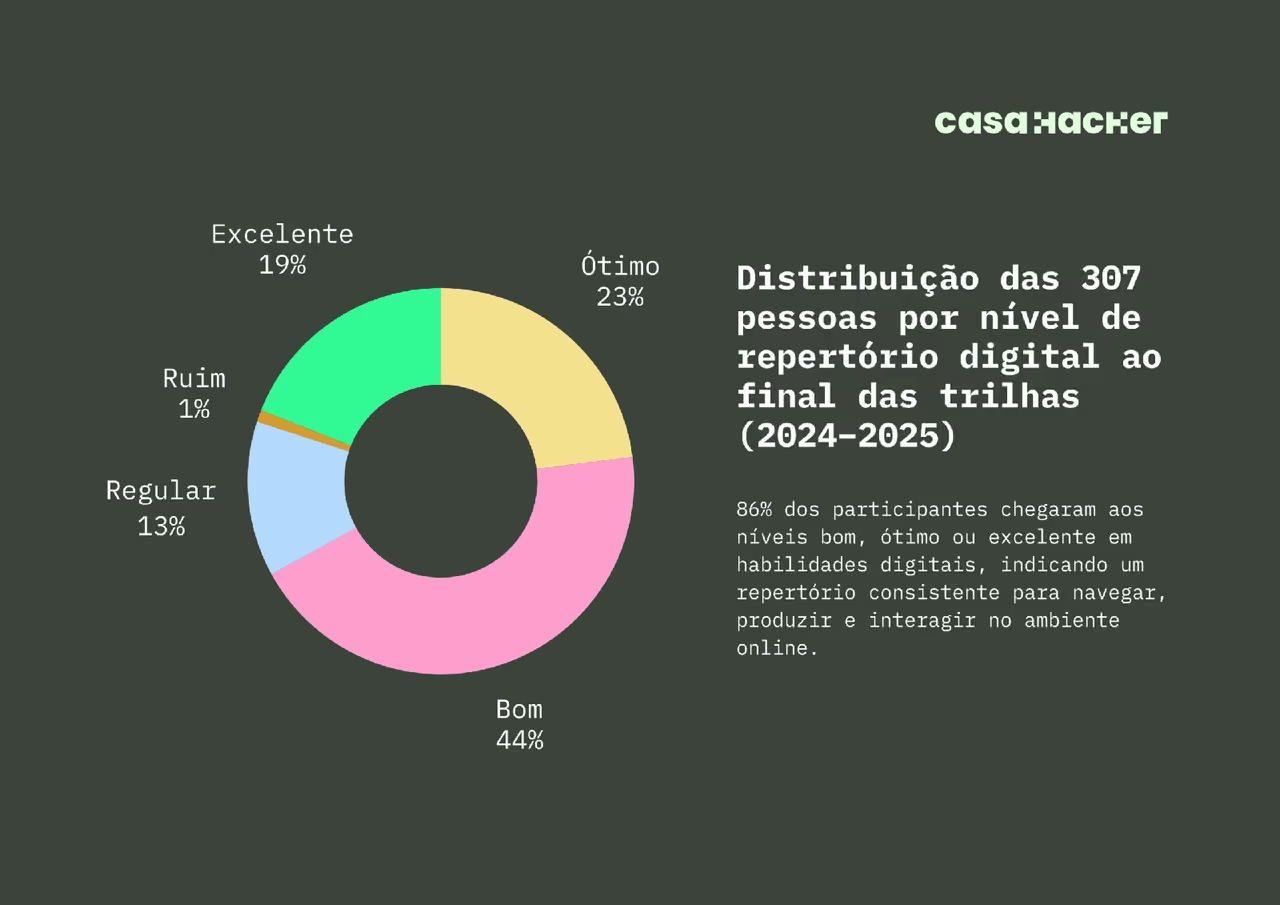
From applying the monitoring instruments between 2024 and 2025, considering all the audiences served by the socio-digital skills tracks (children, adolescents, young people, adults and older people), the project recorded 307 beneficiaries responding to the evolution survey.
In the matrix of depth of digital skills, the distribution of participants was as follows:
- Poor level: 3 people (1%)
- Fair level: 41 people (13%)
- Good level: 135 people (44%)
- Very good level: 71 people (23%)
- Excellent level: 57 people (19%)
In aggregate terms, this means that:
- 86% of the people assessed (good + very good + excellent) after taking part in the learning tracks are at levels of good or high repertoire of digital skills, able to carry out a significant set of operations, produce content and interact with services and platforms;
- only 14% remain at the poor or fair levels, indicating a smaller group that still needs more intensive support, reinforcement of basic content and close follow-up.
This data suggests that the learning tracks are not merely “starting” contact with the digital world but helping a significant share of the audience move towards a more robust and diverse use of technology, even with important challenges still to face in the most vulnerable layers.
Interpreting the depth of skills
The presence of 57 people (19%) at the excellent level and 71 people (23%) at the very good level indicates that, by the end of the cycle, more than four in ten participants already hold a broad repertoire of skills: handling devices, using productivity tools, browsing, producing content, security and digital autonomy.
That group becomes particularly strategic for:
- acting as multipliers of knowledge in their families, schools, social networks and workplaces;
- leading authorial projects (producing videos, games, channels, small apps, advanced use of tools for study and work);
- inspiring other participants, especially those at the fair level or in transition to the good level.
At the same time, the presence of 3 people (1%) at the poor level and 41 people (13%) at the fair level draws attention to the importance of:
- maintaining individual or small-group follow-up arrangements, above all for those with persistent difficulties;
- adapting pace, methodologies and language, so as to ensure that the basic content is understood and practised;
- connecting the digital skills track with other dimensions of vulnerability (literacy, income, emotional issues, caring for children and older relatives and so on), which can interfere with the pace of learning.
This data reinforces the relevance of a flexible, responsive pedagogical approach, in which teaching plans are anchored in evidence rather than in assumptions about what participants “ought to know”.
Beneficiaries who overcame individual challenges
On the specific quantitative indicator defined by the project – beneficiaries who overcame individual challenges upon completing the learning tracks – the consolidated result for 2024 to 2025 was 122 people, corresponding to 39.74% of the total of 307 beneficiaries.
In operational terms, as defined in the project methodology, beneficiaries considered to have overcome individual challenges are those who:
- start from a condition in which they did not know how to carry out certain prioritised challenges (such as editing videos, publishing content, putting together a CV, looking for work on digital platforms, selling products/services, accessing Gov.br, studying via the internet);
- come, over the course of the track, to declare that they know how to carry out at least three of five key challenges, according to their age bracket.
This result can be read in two complementary layers:
- on the one hand, it shows that almost 40% of participants experienced a concrete change in their relationship with technology, overcoming specific barriers relevant to study, work, income generation or creative expression;
- on the other, it indicates that around 60% have not yet reached the minimum mark of three challenges overcome, which does not mean an absence of progress but shows that the training processes need to continue to be offered systematically, with reinforcement, complementary modules and opportunities to practise.
For managers and educators, this indicator works as a direct thermometer of impact applied to everyday life: it is not merely about whether the person “likes technology more” or “feels more confident”, but whether they can turn that relationship into objective action – producing materials, applying for jobs, offering services, studying more autonomously, solving everyday tasks.
An integrated reading of the results
Combining the depth of digital skills with the overcoming of individual challenges allows a finer reading of the impact:
- the fact that 86% are at good, very good or excellent levels suggests that the tracks as a whole are able to raise participants’ average level of digital literacy, widening access to tools, services and languages;
- the finding that around 40% overcame specific challenges indicates that, within that broader group, an important part managed to convert the increase in skills into practical changes in everyday life – at school, at work, in income generation, in communication or in dealing with public services;
- **the coexistence of high skill levels in some groups with a core of participants at the poor and fair levels reinforces the need for differentiated strategies, combining:
deeper work and the creation of advanced tracks for those already at very good and excellent;**
- intensive support and personalisation for those who still have many gaps;
- strengthening the logic of peer learning, drawing on the potential of participants with greater digital autonomy to support the others.
The 2024–2025 results show that the project not only widens the territory’s repertoire of digital skills but also helps a significant number of participants use those skills to tackle concrete challenges and advance in their socio-digital inclusion.
What we have learned so far
- There is no good solution without good listening: the territorial research showed that starting from local data, stories and perceptions completely changes the quality of pedagogical and management decisions.
- Technology does not arrive at “point zero”: even in contexts of vulnerability, children, adolescents and adults already make intense use of phones, social media and video – the challenge is not to “introduce technology” but to qualify and widen that use.
- The impacts of post-pandemic digital transformation are concrete: those who do not master the digital basics feel it directly when trying to access services, study, look for work or communicate.
- Working-class territories produce knowledge: by involving residents as active participants in the research, the project showed that the territory is not only an “object” of study; it also offers diagnoses, hypotheses and solutions.
- A well-made track is born of the territory, not of a ready-made book: the tracks only made sense because they translated directly the needs and interests mapped in the research.
- **Different ages, different ways in:
children come in through play, curiosity and creation;**
- adolescents come in through identity, social media and plans for the future;
- adults come in through work, income and services;
- people aged 60+ come in through communication, autonomy, care and memory.
About the organisations involved
Instituto Semear
Instituto Semear is a non-profit civil society organisation, founded on 11 April 2002 out of the work of a group of volunteers from the El Shaddai Baptist Church who were already doing social work in communities in Campinas (São Paulo State). Over more than two decades it has consolidated itself as a local reference in serving children and adolescents in situations of social vulnerability, through socio-educational programmes of community life and the strengthening of bonds, also involving their families and the surrounding community. With units in Vila Olímpia and Parque Via Norte, Instituto Semear runs daily activities with hundreds of participants, combining basic social protection, capacity building, cultural expression, youth agency and support to families. In 2019 it received the Phomenta Seal of Good Practice in Transparency and Management, reinforcing its commitment to good governance, transparency and institutional sustainability. In the Bytes de Mudanças project, Instituto Semear is the territorial protagonist: it opens its units, mobilises the families, hires and supports the educators, integrates the learning tracks into its socio-educational project and makes the daily bridge between technology and the concrete lives of the children, adolescents, young people, adults and older people served in Vila Olímpia and Parque Via Norte.
FEAC Foundation
The FEAC Foundation is an independent private social investment organisation that has worked in Campinas (São Paulo State) for more than six decades, with the aim of contributing to a fairer, more sustainable society with equality of opportunity. Its mission is human advancement, assistance and social wellbeing, through work in education, social assistance and the strengthening of civil society organisations. FEAC invests in programmes that combine territorial development, support to the management of civil society organisations, the defence of rights, education and health, working especially in the most vulnerabilised regions and populations of Campinas. Its focus on territorial development and institutional strengthening means the Foundation acts not only as a funder but also as a strategic partner to territorial organisations. Within Bytes de Mudanças, the FEAC Foundation plays the role of social investor and convener, making financial resources available and supporting the construction of a social technology of socio-digital inclusion that speaks to its agenda of territorial development and of strengthening civil society organisations in Campinas. Its investment makes it possible for Instituto Semear and Casa Hacker to develop, test, evaluate and systematise a replicable methodology of technological emancipation starting from the realities of Vila Olímpia and Parque Via Norte.
Casa Hacker
Casa Hacker is a non-profit organisation working in Campinas, São Paulo and Rio de Janeiro, community-based and with peripheral roots, dedicated to putting territories in control of their digital experiences and to shaping the future of information and communication technology for the public good. It works on digital inclusion, science and technology education (STEAM) and social innovation. In the Bytes de Mudanças project, Casa Hacker is the technical partner responsible for:
- designing and conducting the territorial research on digital inclusion;
- co-creating, together with Instituto Semear, the learning tracks for the different age brackets;
- supporting the setting up of the technology infrastructure in the units;
- providing continuous technical and pedagogical advisory support to the teams;
- developing and applying assessment instruments and indicators of digital skills and socio-digital inclusion;
- systematising the experience as a social technology potentially replicable in other territories.
Press relations: Vira Comunicação Luiz Felipe Leite E-mail: luizfelipe.leite@viracomunicacao.com.br
References
-
INTERNATIONAL TELECOMMUNICATION UNION (ITU); PARTNERSHIP ON MEASURING ICT FOR DEVELOPMENT. Manual for Measuring ICT Access and Use by Households and Individuals. Geneva: ITU.
-
EU KIDS ONLINE. Research network on children and the internet. Available at: https://www.lse.ac.uk/media-and-communications/research/research-projects/eu-kids-online.
-
GLOBAL KIDS ONLINE. International research network on children and the internet. Available at: http://globalkidsonline.net.
-
BRAZILIAN INTERNET STEERING COMMITTEE (CGI.br). TIC Kids Online Brasil: survey on internet use by children and adolescents in Brazil. São Paulo: Cetic.br/NIC.br.
-
BRAZILIAN INTERNET STEERING COMMITTEE (CGI.br). TIC Domicílios: survey on the use of information and communication technologies in Brazilian households. São Paulo: Cetic.br/NIC.br.
-
MICROSOFT. Microsoft Digital Literacy. Available at: https://www.microsoft.com/digital-literacy.