
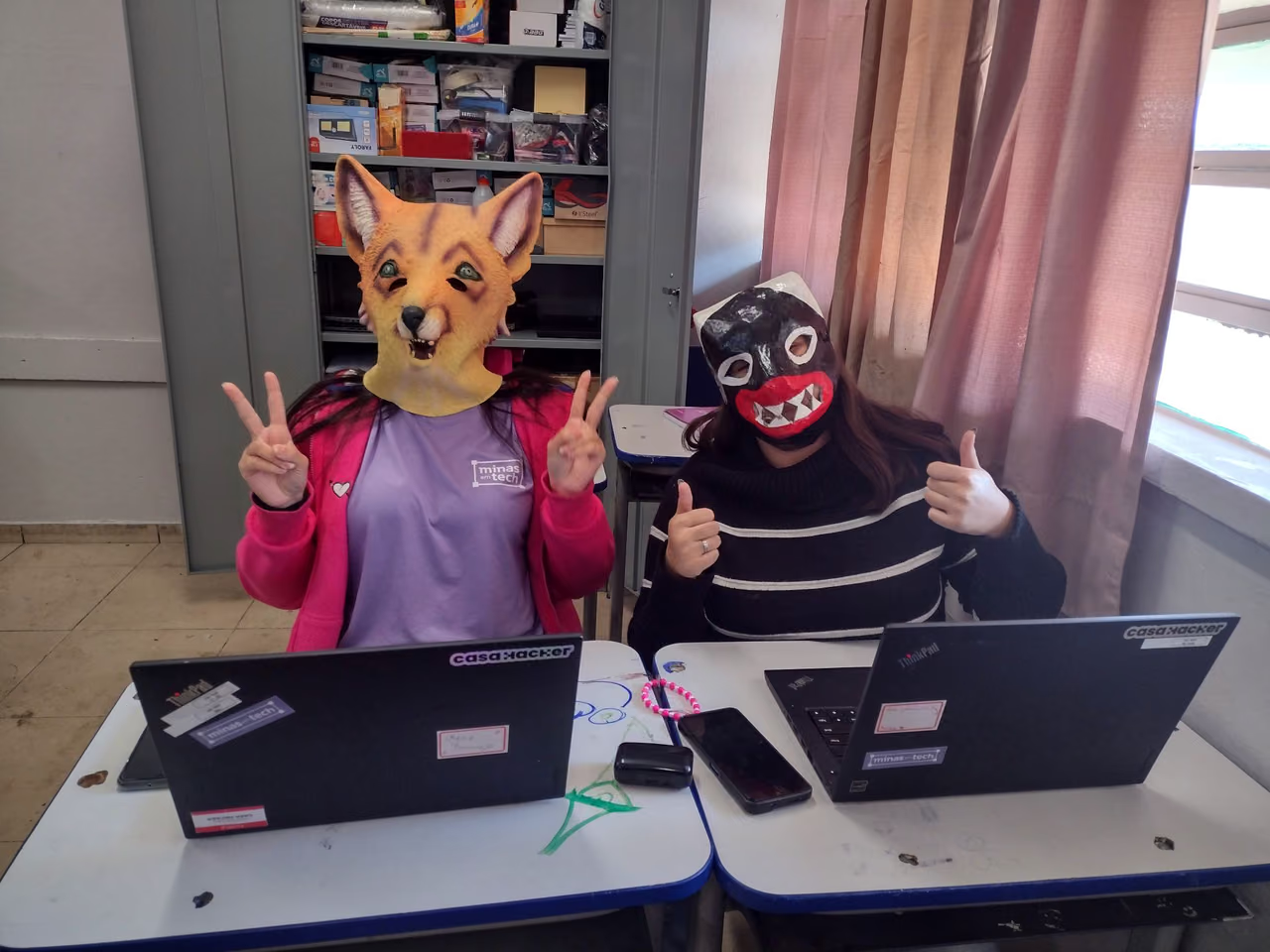
 Participants of Minas em Tech during an activity with computers.
August kicked off with the start of classes for the second cohort of Hackerclubes in Sumaré. Starting a new cohort is always thrilling: meeting the new students, the parents, introducing ourselves as educators, slowly breaking the ice until everyone gets to know each other and feels comfortable within the group.
Among the many concerns we have when planning our classes, and the methodological and didactic strategies to achieve our goals — whether they are the content to be taught, ensuring a welcoming environment for students, or making classes pleasant and engaging — is creativity and how to achieve it.
Creativity is also a pedagogical tool
As an educator, creativity is the guiding term for my lesson planning, and it goes beyond just developing students’ creative skills, teaching them how to draw, create stories, or other similar languages. Creativity is also a tool for pedagogical design: in how to connect contents so they make sense, how to instigate questions and reflections, and how to encourage students to feel comfortable and safe to think beyond the obvious, step out of the box, and create on their own in an authentic way.
However, within STEAM thinking and the democratization of technology, some might ask where creativity fits in and becomes so important. Why should it guide classes where the goal is to teach computational logic and 3D printing, for example? The answer lies in a question that precedes this one. Why are we teaching our children technology? Why do we choose active methodologies and project-based classes, where teamwork is the basis of all learning? Simple: because with technical knowledge alone, there is no transformation, no autonomy.
Creativity, technology, and innovation
Creativity is important to transform scenarios, to allow us to imagine situations and solutions that do not yet exist, or even to perceive extraordinary perspectives in reality. It is also tied to the ability to express what bothers us or what we imagine, to feel free to express our ideas in a way that suits us, and this, when coupled with technical knowledge, is what drives innovation.
However, it is noticeable that students, regardless of age, are rarely encouraged to create and express what they think in the classroom, or even in their daily lives. I see this with my students in every class I teach. It is always a long journey until they understand how to open the doors of imagination and, from there, work to materialize their ideas. I believe part of this fear stems from not being accustomed to being encouraged to “step out of the box,” and part because there is always the fear of making mistakes.
It is safer to follow a well-trodden path than to run the risk of trying something new and failing, and we do not always remember that it is often through failure that we reach places and situations that change for the better the way we see certain things. Either way, even though the period the cohorts spend with us is short, during this learning process our activities always strive to encourage creativity to be a part of the proposals.
Creativity in lesson planning
Of course, as I mentioned, there is a preparatory exercise for the classes, done by us educators, which already demands creativity in full swing:
How to teach computational thinking without a computer?!
How to connect electronics with virtual reality and the environment?
But more than that, within the activities, in the way we conduct them, the attempt is always in the questions: “what if…?”, “have you ever thought about what it would be like if…?”
Learning through the exchange of experiences
And another important point: the exchange of experiences.
Thinking of classes as a collaborative gathering, where we, as educators, know the desired final goal of those classes (such as successfully modeling and printing a 3D part), but the paths to get there also depend on the flow and interest of the students.
Because of this, we encourage them, in groups, to listen to their peers, ask questions, share things they have experienced, and discuss how they solved everyday problems.
Sometimes, actions like asking a student to explain to the class something they learned or something they got wrong and had to fix is already enough to motivate others to think of different solutions to the same problem.
Creating is also learning
It is important to emphasize that, as I said, thinking outside the box is not easy, and promoting this within the short period of a semester or eight months may seem like a difficult task with no results. But I can guarantee that, from my experience, with patience, results appear in different ways, following each person’s own pace.
It is not just about teaching how something works, but about creating space for them to discover what they want to do, and what they can do with what they have learned. And perhaps this is one of the greatest contributions of STEAM education: not just shaping people who know how to use technologies, but people who feel capable of creating with them critically, and who know how to share their creative processes.
Technology as a tool
Because, in the end, technology is a tool. Technical knowledge teaches us how to use it, but creativity allows us to imagine where we can go, and how to get there—even more so in peripheral contexts where a greater dose of creativity and resourcefulness is needed to make things happen. And it is in this space, between what we learn, what we are still capable of imagining, and knowing how to unite, that I believe transformation begins.
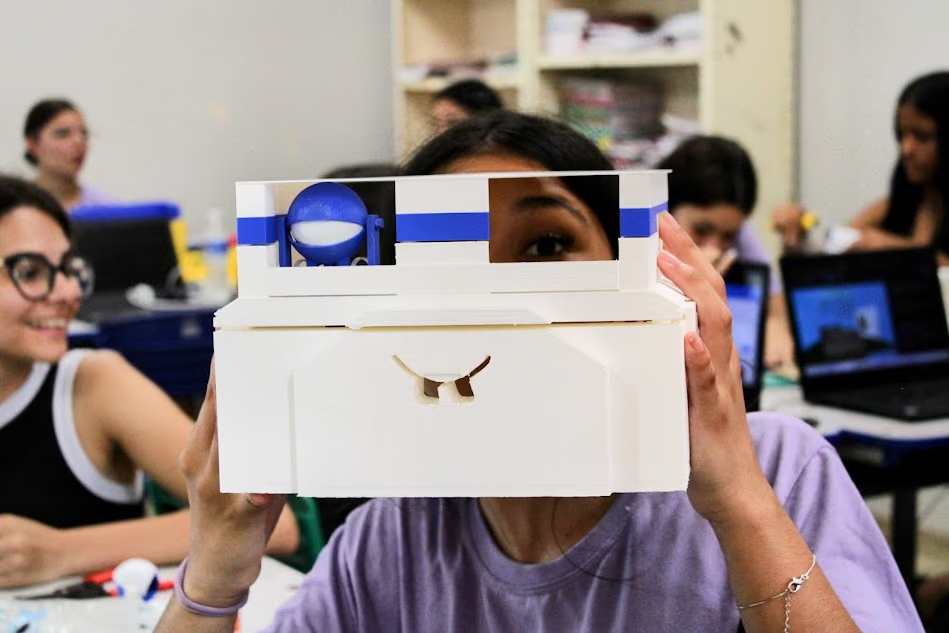 Student presents a prototype developed during Hackerclubes activities.