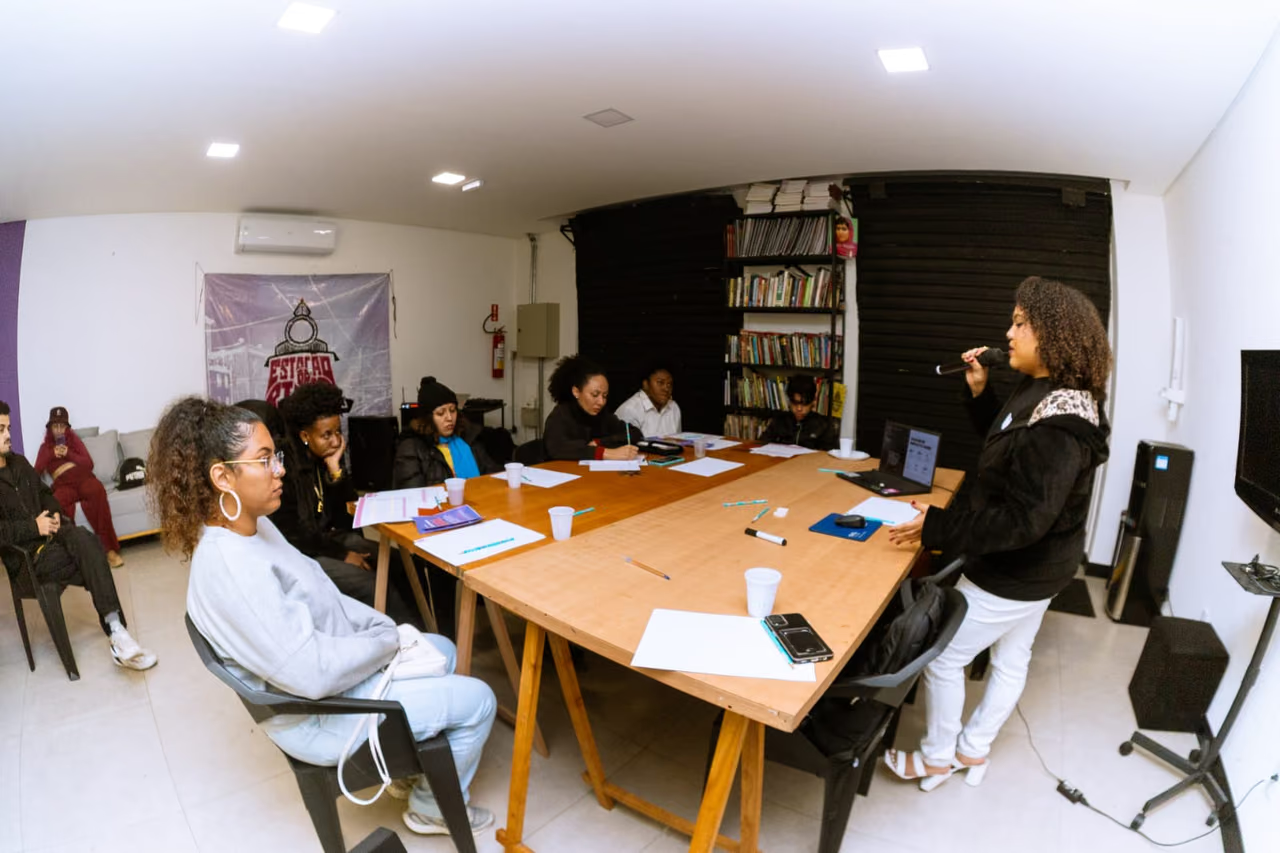
“Why do you want this data anyway?”
This is a question I frequently hear when I take part in a mapping initiative, when we talk to community members, or when we need to gather information to report back to a funder or sponsor of a social impact project. And it is a legitimate question. Anyone handing over information has the right to know why it is being requested, how it will be used, and what it might produce.
What I’ve noticed, after a few years working with project management in highly complex contexts, is that this question is often accompanied by a sense of mistrust toward the monitoring process itself. As if collecting data were just another bureaucratic requirement from someone far removed from the community who needs to fill out a spreadsheet to justify an investment.
Today, when someone asks me “why do you want this data?”, I also think of another question: who has the power to produce, interpret, and use data about a community?
What are we asking when we collect data?
When we talk about data within social projects, perhaps the first image that comes to mind is large databases, complicated charts, or some artificial intelligence analyzing thousands of records. But in practice, we are often talking about quite simple things. How many activities were held? How many people participated? What are their ages? How do they self-identify? Which community did they come from?
If we are talking about a training activity, other questions arise. How did these people relate to the topics that were going to be covered when they arrived? What did they already know? What did they learn? How did they feel when leaving the activity? Can they apply that content to their own reality? Can they share this knowledge with others? Can they adapt what they learned and do it their own way?
For me, this last question is especially important. Training shouldn’t end when a person manages to repeat what was taught. There is a much more interesting moment when they manage to take that knowledge, take it apart, adapt it, and use it to address their own needs and the causes they consider a priority.
If the activity is cultural, the questions change too. Has this person ever participated in something similar in their community? How did they get to that activity? What did they find there? How did they feel after watching a play, attending a concert, or watching a rap battle?
Behind each of these questions is an attempt to understand something quite simple: does the experience we are offering make sense to the people it is meant to benefit?
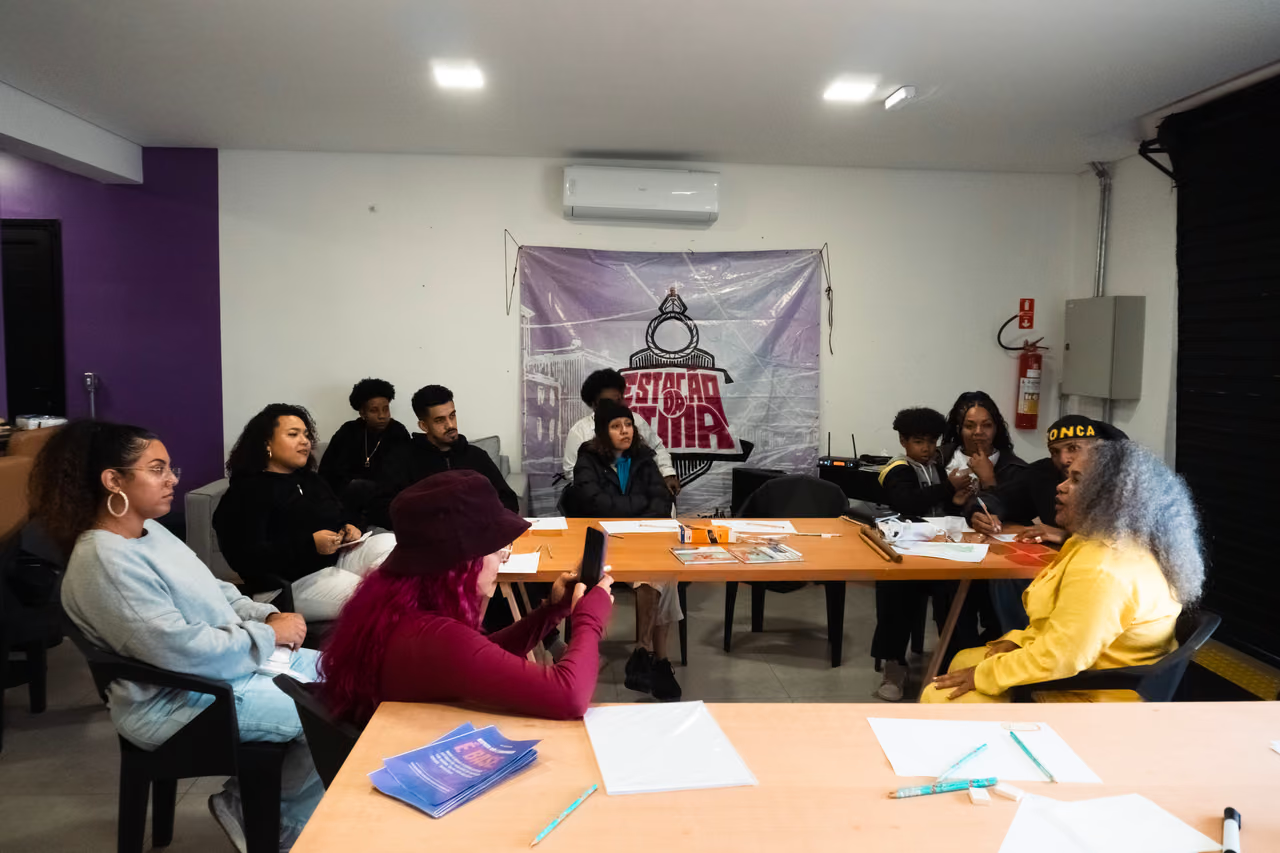 Participants in an Active Citizenship Hubs activity chat and follow a group dynamic around a table.
Monitoring is also a form of care
It was through working with projects that I began to change my own relationship with data. For a long time, monitoring could easily seem synonymous with control. Indicators, goals, forms, attendance lists, reports, and evidence can easily be perceived as a bureaucratic layer between those who execute a project and those who fund it.
But there is another possibility. Monitoring is also care.
If very few people are participating in an activity, we need to understand why. Maybe the schedule doesn’t work. Maybe public transit is unsafe or expensive. Maybe the communication isn’t reaching people. Maybe the content doesn’t resonate with that reality. If a training session yields results below expectations, maybe the problem isn’t the participants. Maybe the methodology needs to be revised. If someone drops out halfway through a journey, perhaps there is a story there that we need to listen to before simply logging that person as a dropout.
Data can help us see these things. And once we can see them, we can make better decisions.
That is why resources are not just money. Resources are also technology, knowledge, support networks, food, safe transportation, time, access, and care. When we monitor a project looking at all these dimensions, we stop asking just whether the activity happened and start asking what was necessary to make that activity happen in the best possible way for the people involved.
Training and monitoring in the Hubs
Recently, the teams at the Active Citizenship Hubs underwent training in Agile Project Management and Social and Environmental Impact Monitoring. For me, there is something very important about this experience that goes beyond certification or the methodology learned. Today, we have teams operating in three peripheral communities who have mastered tools and knowledge that are often concentrated in organizations, consultancies, funding institutions, and specialized management teams.
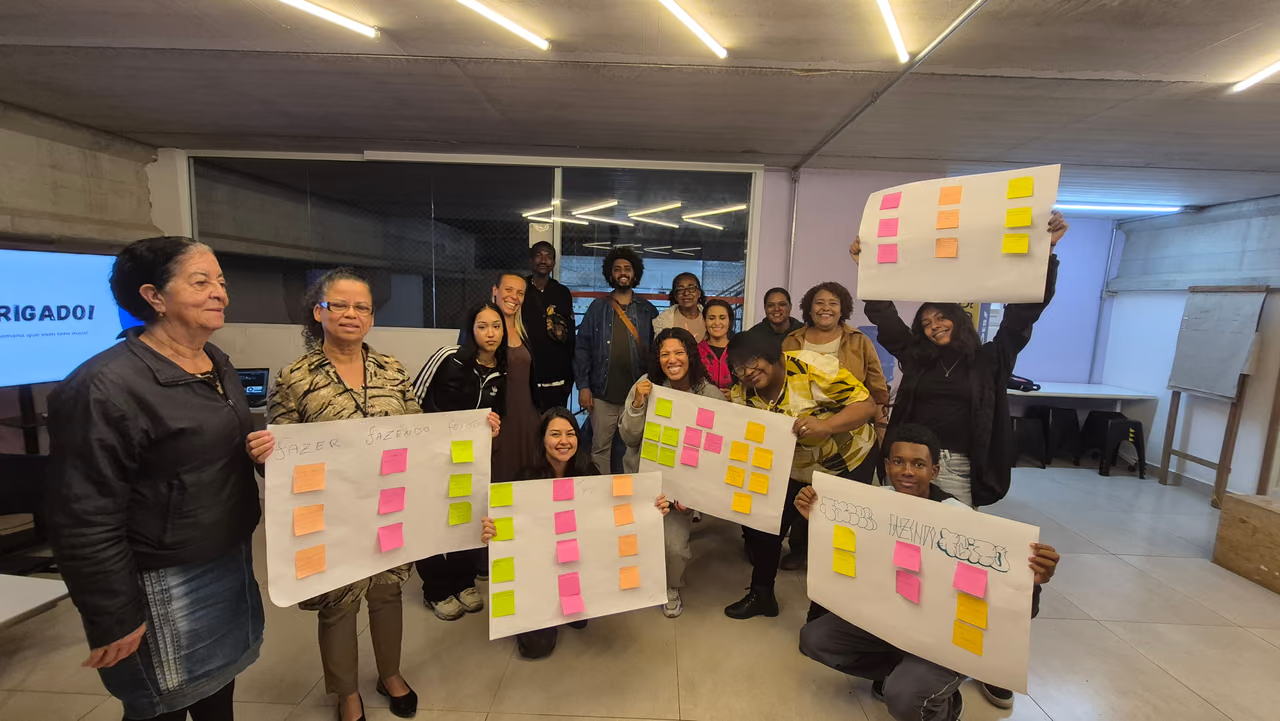 Participants of different ages gathered during an Active Citizenship Hubs training activity, taking part in a co-creation dynamic with post-its.
Data can also be a tool for autonomy
That changes things.
Because it is not enough for an organization to know how to produce a report for a funder. It is not enough for funders to know how to interpret the indicators presented by an organization. The people living in these communities also need to be able to look at this data, understand what it says, and, above all, use it to make decisions.
When a leader can look at data from their own work and realize that a certain strategy is working, that another needs to be modified, or that a demand is growing in their community, that data stops being just a reporting requirement. It becomes a tool for autonomy.
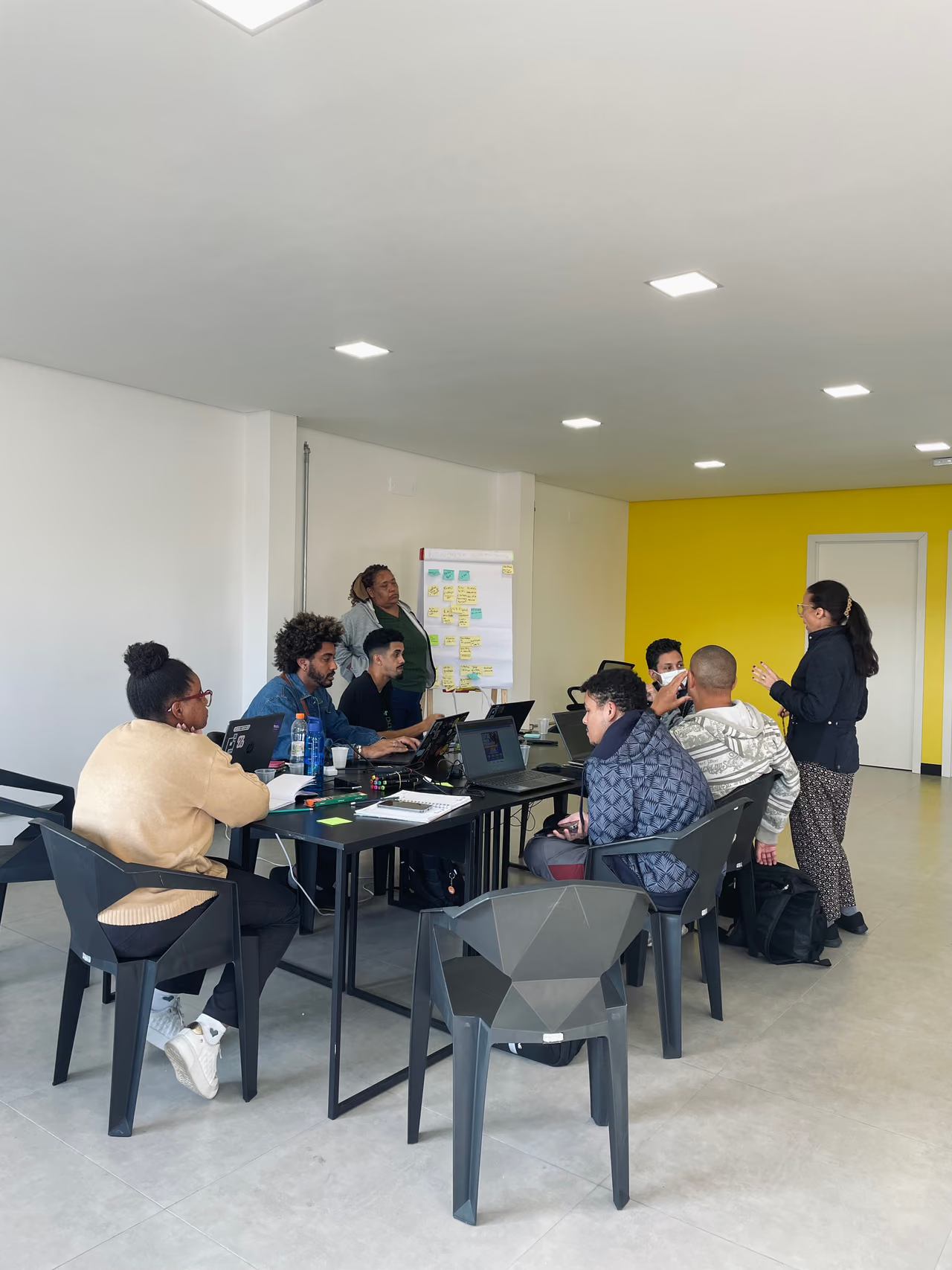 Participants in an Active Citizenship Hubs training session work in groups with laptops during an activity led by a facilitator.
And perhaps that is where one of the greatest potentials of impact monitoring lies. Knowledge about what is happening in a community shouldn’t just flow upward, in the form of a report, so that someone else can decide what to do with it. That knowledge also needs to flow back to the community and serve the people who are building solutions every single day.
Who produces, interprets, and uses data?
I know that data is the new oil. The phrase has been repeated so many times it has almost become a cliché. But there is a question that keeps bothering me: who will own this oil?
Because producing data does not necessarily mean having power over it. We can take part in a survey and never know what was done with the answers. We can fill out dozens of forms and never see the results. We can provide information about our community and later find out that important decisions were made based on it without anyone ever coming back to talk to us.
That is why, when I think about data in the context of social impact projects, the question that interests me most is not just how much we manage to collect. It is who produces this data, who decides which information is important, who can access it, who manages to interpret it, and who turns that information into a decision. And above all, who gets left out when those decisions are made?
Democratizing access to data
After a few years working with project management in highly complex contexts, I learned that data can be a key. It helps demonstrate that a demand exists, show that a strategy worked, identify what needs to be fixed, communicate results, advocate for investments, and contest priorities. In many contexts, it also helps move communities that have historically been the objects of decisions into the position of subjects making those decisions.
But a key only provides autonomy when we can hold it in our hands.
Therefore, I believe that democratizing access to data must go hand in hand with democratizing the tools to produce, interpret, and use it. It is not about turning everyone into an indicator expert. It is about ensuring that more people are equipped to understand the information concerning their own lives and to use it to shape the decisions that affect their communities.
And what can we do with this information?
The question “why do you want this data?” remains legitimate. Perhaps the most interesting answer is precisely the one that allows us to turn the question back on those producing the data: and what can we do with this information?
I wake up and sleep in the periphery. I roam the world and return. It is from this place that I continue to work with project management, technology, impact, and participation.
And perhaps the question that stays with me the most today is less about the size of this new oil and more about who will hold the key to the vault.
Who is ensuring that more of us can occupy these seats and take part in decisions about the problems and solutions that, at the end of the day, affect us the most?